
Is there a consensus in Brussels to condition Serbia's European path with the Ohrid Agreement?
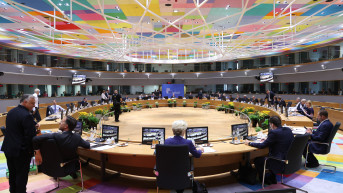
The upcoming days and meetings of the European summit in Brussels could be decisive regarding Serbia's further European path. Ahead of the gathering of the heads of states and governments of EU member countries, there is a possibility that the obligations from the Agreement on the normalization of relations between Belgrade and Pristina and the annexes from Ohrid could be included in Chapter 35 of the negotiation framework. This is interpreted as conditioning Serbia's integration with de facto recognition of Kosovo. However, Kosovo Online's interlocutors point out that for such a change in the content of Chapter 35, which would practically mean that Serbia cannot become an EU member without admitting Kosovo to the United Nations, the consensus of all EU members is required. It remains a big question whether such a consensus can be reached at this moment.
They remind us that five EU member states do not recognize Kosovo, and some of those that do, such as Hungary, are highly reserved regarding this plan.
In Brussels, ministers for European affairs are scheduled to meet tomorrow, and according to some information, the General Affairs Council meeting will discuss conclusions suggesting that the European Council should ask the European Commission to amend and supplement the criteria for Chapter 35 of Serbia's pre-accession negotiations before the end of January 2024. This would include the obligations from the agreement reached in Brussels in February and the annex agreed upon in Ohrid in March, and this area also concerns Kosovo.
If the ministers for European affairs adopt these conclusions, the next step is for the European Council to confirm them at the Summit of European leaders on December 14 and 15.
In Article 4 of the Agreement on the normalization of relations between Kosovo and Serbia, it is stated that "Serbia will not oppose Kosovo's membership in any international organization", including the United Nations. This is why this agreement, primarily, remains unsigned by Belgrade.
President of Serbia Aleksandar Vucic stated that if Kosovo's UN membership was included as a part of Chapter 35, it was clear that the EU did not want Serbia. He revealed that two countries strongly advocated for the Ohrid Agreement to become a part of Chapter 35, thus becoming a condition for Serbia's accession. Still, he did not believe it was possible because he was not sure if others wanted it.
Among them is Hungary, whose Prime Minister Viktor Orbán stated that if the European Council included agreements from Brussels and Ohrid in the negotiation framework, even if Serbia opposed it, Belgrade could always count on Budapest.
Attempts to include the obligations from the Agreement on the normalization of relations between Belgrade and Pristina and the Ohrid annex into Chapter 35 of Serbia's negotiation framework with the European Union are a part of the EU's efforts to permanently resolve the issue of Kosovo's status. Still, achieving consensus on this matter at the European Council at this time is difficult, according to Nikola Perisic from the Center for Social Research.
Perisic told Kosovo Online that in Brussels, besides attempting to change the content of Chapter 35 to put an end to the Kosovo issue, they also aimed to accelerate Serbia's European integration.
"As we can see, this process has been stagnating in recent years, while on the other hand, Euroskepticism in Serbia is growing. Something tangible is needed for the citizens of Serbia to realize that the European path still exists and that work is being done on it", he said.
In that context, the attempt to change the content of Chapter 35 is also noted by Perisic, who points out that it is questionable whether the EU will succeed in implementing this desire now, as all decisions within the Union are made by consensus, which is uncertain.
"There are five EU countries that do not recognize Kosovo. Also, some countries may change their stance in the future, such as Hungary. The question is whether the EU will succeed in its intention to apply it at this moment. All of this is a result of the desire to resolve the issue of Kosovo as soon as possible to prevent any new conflicts in Europe that could lead to new economic and political crises in this area", Perisic says.
Strahinja Subotic, Program Manager and Senior Researcher at the Belgrade Centre for European Policy says that no one yet knows what will be on the table at the meetings in Brussels or in what format a conclusion will be reached regarding Serbia's European path and the normalization of relations with Kosovo.
He points out that negotiations on enlargement policy are taking place in the EU in the Ukrainian context as well as the context of the Western Balkans and the dialogue between Belgrade and Pristina, and these matters are interconnected.
Subotic emphasizes for Kosovo Online that he expects discussions in Brussels to focus on the integration of the Ohrid Agreement into Chapter 35 of Serbia's EU negotiation framework, which has been announced as a possibility in recent days. One of the points of the Ohrid Agreement is that Serbia does not prevent Kosovo's membership in international organizations, including the United Nations, which is a "red line" for Belgrade.
"In the annex, there was an obligation that EU member states unanimously adopt that annex, so that it formally, i.e., de jure, becomes a binding criterion on our path to the EU, and also to further strengthen the status of Chapter 35 as a blocking one. Depending on whether there is progress or not in that chapter, our progress towards full membership will depend, along with progress in the rule of law and foreign policy alignment", Subotic explains.
In response to the question of whether there will be consensus in the European Council to change the content of Chapter 35, Subotic emphasizes that Hungary unexpectedly turned out to be an ally for Serbia, as one of the states that has recognized Kosovo, and from which Serbia expects support regarding Chapter 35.
"France and Germany are the duo pushing for the complete integration of the Ohrid Agreement and the implementation of the annex, considering that they initiated the Franco-German plan. Although we have five member states that do not recognize Kosovo today, they have agreed to this European plan, and we do not expect them to significantly hinder the integration of that document into Chapter 35. Unexpectedly, Hungary has turned out to be an ally in this issue, which, on the one hand, recognizes Kosovo, but, on the other hand, is a country whose leader has established a personal relationship with the leader of Serbia. From Hungary, Serbia expects a favor, which is to delay the integration of the mentioned agreement into Chapter 35. Of course, on the other hand, Hungary is striving to strengthen its position because it is currently bargaining with the EU regarding the opening of negotiations with Ukraine", Subotic points out.
He adds that he doesn't know whether relying on Hungary's veto is "smart for us" because, as he points out, we cannot proceed further towards the EU if there is no normalization of relations. On the other hand, he questions whether it is wise to "collaborate closely or have a disruptive relationship like Hungary, which is currently the 'black sheep' in the EU".
Reflecting on the contentious point of the Ohrid Agreement, which implies that Serbia will not oppose Kosovo's membership in international organizations, Subotic says that Serbia committed to this back in 2013.
"Whether they integrate the mentioned agreement or not, they will hold us accountable; France and Germany will tell us that they expect us to fulfill that. Whatever the EU decides at this Summit of the European Council, we will still have to implement everything we committed to in the Ohrid Agreement", Subotic concluded.
The normalization of relations between Belgrade and Pristina will be high on the agenda of the European Council Summit because, apart from the war in Ukraine, which is happening in the immediate European neighborhood, the question of any future, potential conflict in our region is one of the greatest fears for EU states, according to political analyst Dimitrije Milic from the New Third Way.
He says for Kosovo Online that at tomorrow's meeting of ministers for European affairs at the General Affairs Council and then at the gathering of heads of states and governments of EU member states on December 14 and 15, efforts will be made toward further progress in implementing the agreement between the two sides.
"When we look at the closest European neighborhood, apart from the war in Ukraine, which is still a very relevant issue, the potential new conflict in the region always stands as a warning for European states and is a topic that will almost certainly be addressed at these meetings. It is difficult to expect that the current negotiation process remains incomplete in a way that all points are not implemented, or at least their implementation is not initiated", Milic says.
When it comes to the possibility of including the obligations from the Ohrid Agreement in Chapter 35 of Serbia's negotiation framework with the EU, which also implies that Belgrade does not hinder Kosovo's membership in international organizations, including the United Nations, Milic believes that "there are solid chances that this will happen".
"The Ohrid Agreement is defined in a way that EU member states, which have not recognized Kosovo's independence, can support it, and it does not seem that this stance will change. Of course, the question is how everything will be formulated, especially when we talk about the most controversial point for Serbia, which is the entry of Kosovo into the UN, as emphasized by the President, the Prime Minister, and the Minister of Foreign Affairs of Serbia. If the formulation is generalized, in the sense that Serbia does not oppose Kosovo's entry into various international organizations, it leaves room for interpretation", Milic says.
He adds that regardless of whether Serbia supports it or not, the question is whether Kosovo can even gain the majority and secure the support of many countries that are generally against Kosovo's entry into the UN.
"What could be positive, looking from the Serbian side, if the Ohrid Agreement were implemented within this negotiating chapter, it would mean that any progress on the part of the Pristina side in European integrations would imply the establishment of the Community of Serb-majority Municipalities, thereby giving this issue much greater guarantees for implementation. So, it's just a matter of formulation. As long as you have five EU member states that do not recognize Kosovo as an independent state, plus Hungary, which recognizes it but often aligns with Serbia's views on many issues, the formulation probably should not be too explicit", Milic concludes.



0 comments