
The Western Balkans as an investment potential: How attractive is the region for foreign investors?
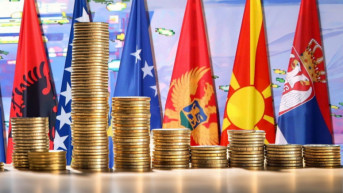
The investment forum held this week in Tirana with the support of the European Commission highlighted the region’s great investment potential, and EC President Ursula von der Leyen said at the opening that now is the right time to invest in the Western Balkans. However, experts from Belgrade, Tirana, Skopje, and Pristina told Kosovo Online that stronger regional cooperation and the implementation of reforms could further increase the attractiveness of the region’s countries to foreign investors, at a time when, as they point out, that attractiveness is in crisis.
Written by: Petar Rosic
“Think about the latest waves of accession to our Union. Poland’s economy has tripled in less than three decades. In Croatia, unemployment has fallen from 17 percent to four percent in just over a decade. The same will happen throughout the Western Balkans, and I am not talking about some distant future. Your economies are already ready for rapid growth in the coming years,” said Ursula von der Leyen.
She also announced the establishment of artificial intelligence factories in the Western Balkans.
“We have built a network of artificial intelligence factories across Europe, and these are places where our businesses and start-ups can develop, train, and launch the next generations of artificial intelligence models. Today I can announce that we will open our AI factories in the Western Balkans as well. We will start by installing two factory antennas in North Macedonia and Serbia; this way we will cover the entire region and enable companies in all six countries to connect with these factories,” she added.
An Albania–Turkey Investment Forum was also held in Tirana today, at which Prime Minister Edi Rama said that the volume of trade between the two countries, which once amounted to €250 million, exceeded €1 billion in just the first nine months of this year.
Rama pointed out that the number of companies with Turkish capital in Albania has risen from 300 to over 1,000, while the number of employees has exceeded 15,000.
He added that Albania today represents an open and attractive environment for investments, thanks to low taxes, green energy, growing tourism, and support for technological development.
On the other hand, Serbian President Aleksandar Vucic, in a public address last week, spoke about EU tariffs on steel, which will primarily affect Serbia and Turkey, but also other European producers. Commenting on foreign investments in the country, he said that significant funds must be invested in the construction of new industrial zones in order to remain attractive to foreign investors, together with state subsidies.
“We have serious problems; we are no longer as attractive to investors. One reason is that labor costs have risen... Therefore, we will have to invest heavily in the construction of new industrial zones, particularly in expanding the three zones—Leskovac, Cuprija, and Indjija—which will cost €220 million,” he announced.
“Serbia Is the Absolute Choice”
Speaking about the potential of the Western Balkans, Sinisa Naumoski, analyst and member of the Board of the Heidelberg University in Skopje, told Kosovo Online that Albania is recording record growth in industries such as tourism and infrastructure, but that Serbia leads in the absolute amount of foreign direct investment.
He emphasized that North Macedonia has the best results relative to its gross domestic product, while Kosovo shows the strongest ambition to accelerate investments in 2025.
“Serbia has about €5 billion in 2024, which is the largest inflow in the region. When looking at structure, Macedonia leads in the share of foreign direct investments in GDP—around 8 or 8.1 percent, that is, about €1.2 billion in absolute terms for 2024,” he said.
He assessed that the current situation in Serbia will negatively affect the attraction of foreign direct investments and that Albania and North Macedonia could benefit in that respect, but that Serbia remains the most attractive destination, primarily due to its market size and state subsidies.
“Serbia is the absolute choice because it has a large market. Currently, for 2024, it is number one statistically. In 2025, it will slow down somewhat, but remains alongside Albania. There is major logistics, and the advantage lies in the so-called cash subsidies provided by the Serbian state,” he stated.
Speaking about North Macedonia, Naumoski reminded of the long-standing model of encouraging foreign investment.
“We are somewhere in second place because, in our country, benefits for foreign direct investors exist within technological-industrial zones, where we grant ten-year benefits—no certain taxes and specific privileges in the cost sphere, except for corporate tax and employee contributions,” he explained.
He reminded that the countries of the region offer various forms of support to investors.
“As I said, cash grants per job—from zero to ten years—and certain logistics from local suppliers are cost-effective. This can be viewed as the way in which we, as Western Balkan countries, compete with one another,” he said.
He believes that Western Balkan countries should not be viewed exclusively as competitors.
“It would be a smart strategy to simplify the fiscal systems of all member states, to make markets more open, to enable greater exchange and movement of citizens throughout the Western Balkans. We should not exclude one another, but help each other,” he concluded.
Changes in Investment Structures
The editor-in-chief of Skan TV in Tirana, Kreshnik Kuçaj, expects that in the coming years the process of integration into the European Union will influence an increase in foreign investments in Albania and bring more revenue to the country.
“In the past ten years, Albania has grown from about €870 million in annual foreign direct investments to €1.5 billion per year. This shows that we have annual growth, and on average, around six percent per year, which means that Albania is attractive to foreign investors and has a satisfactory growth rate,” Kuçaj told Kosovo Online.
According to him, there is also a change in investment structures.
“There is a shift in the sectors being invested in, since the trend used to be in two areas—energy and natural resources (minerals)—while now we see diversification of the ‘investment portfolio’. Investors are mainly focusing on real estate, which is a strong magnet for attracting foreign investments. We also see investments in energy and renewable sources, as well as a major rise in financial services and other sectors of the economy, especially tourism, which is one of the most important branches,” Kuçaj emphasized.
Speaking about the countries from which the investments originate, Kuçaj said that EU countries continue to play a key role.
“EU member states remain the main investors, with Italy ranking first. Italian investments increased especially after the pandemic, but we must also mention the trend of recent years—Turkey, which has become an important investor with a well-prepared plan, whether for trade exchange or foreign direct investment,” he said.
He cited Albania’s geographical position and internal economic conditions as advantages and emphasized the importance of the workforce and fiscal incentives.
“Albania has great potential in terms of labor force, which is cheaper than in other countries, and this is an advantage that helps it compete in attracting foreign investments. Our country has fiscal incentives designed to stimulate foreign investments. Special economic zones have been created where investors can invest using fiscal and procedural benefits. These are measures undertaken by the Albanian government to attract foreign investments,” Kuçaj explained.
Speaking about cooperation with regional countries, Kuçaj said that Albania maintains good relations and joint projects with Western Balkan states.
“Albania cooperates with other Balkan countries—with Kosovo, with Serbia, with Macedonia. If we look at the Investment Forum held these days, projects financed by the European Union included two for Albania, two for Serbia, while Kosovo and Montenegro were also involved. These are projects that foster cooperation,” he said.
Kuçaj added that the EU finances projects that connect the region’s economies.
“The EU financed a project in Albania for energy production from waste. Another project was for energy production and storage, in cooperation with Montenegro. We also have cooperation with Serbia for a battery production plant. Therefore, there are numerous projects aimed at economic integration of the Balkan countries,” he explained.
Discussing obstacles for foreign investors, Kuçaj emphasized that corruption remains a problem.
“In every report by foreign investors, the level of corruption in our country and the informality of the economy are cited as concerns. There are complaints regarding legal certainty and other safety elements. It remains to be seen how Albania’s EU integration process will affect this in the future—whether it will serve as a kind of pressure to implement necessary reforms in this regard,” he said.
Unlike Albania, 75 percent of foreign investments in Kosovo come from the diaspora, and Professor of Economics Shkumbin Misini from Pristina told Kosovo Online that the political elite does not know how to use that potential.
“As far as Kosovo is concerned, 75 percent of investments come from the diaspora, and most of these funds go into the real estate market. That represents a major weakness, because the Kosovan political elite does not know how to utilize this potential to foster business development and raise the country’s socio-economic level,” Misini warned.
Speaking about investment opportunities in the region, he particularly highlighted the importance of support from EU funds.
“When it comes to investments that the Western Balkans could benefit from under the EU package, they could be very substantial. Here, of course, investments in renewable energy sources stand out, as the Western Balkan countries need investments in that sector, since they currently face high environmental pollution and rely heavily on coal as their main energy source,” he said.
According to him, the region needs radical reforms and stronger cooperation with its neighbors.
“The Western Balkan countries should invest in radical reforms and cooperation with neighbors, because only through good relations and moving away from nationalism as a political survival card can leaders show that they want to be true statesmen, rather than remaining in power through corruption. It is not enough to raise the flag of nationalism when the country suffers from population outflow. Verbal patriotism is not enough; a leader should not drive his citizens out of their own country,” Misini stated.
Nevertheless, he concluded that reforms and the fight against corruption are key conditions for the European future of the region.
“Reforms are essential, and the fight against corruption is absolutely indispensable,” Professor Misini emphasized.
Although regional cooperation is highlighted as key, Mihailo Gajic of the Belgrade-based economic research network Libek told Kosovo Online that Western Balkan countries are primarily competitors.
“Of course, everyone wants to attract an investment that brings, for example, technology transfer, the creation of new jobs, and naturally, higher wages if those are productive industries. From that perspective, each country has an incentive to attract an investment that comes to the region into its own economy, rather than letting it go to a neighbor,” he said.
“Everything Stays on the National Market”
He added that the reason for mutual competition also lies in the structure of foreign investments. Many foreign investments entering Western Balkan markets, he explained, do not involve a large number of domestic companies in their supply chains.
“In other words, they come to take advantage of certain competitive benefits that exist here—primarily a relatively well-trained and relatively inexpensive workforce—but we lack the spillover effect on the overall industry in these countries. The fact is that the Western Balkan countries are not part of a common market, so, for instance, a company from Macedonia cannot easily include a company from Bosnia and Herzegovina or Serbia in its production process, or vice versa, so more or less everything stays within national markets,” he explained.
Gajic pointed out that, looking solely at the gross inflow of foreign direct investments in Serbia, they grew during 2023 and 2024, reaching a kind of historical maximum, measured directly in euros—about €5.2 billion. However, he noted, they are now in decline.
“It seems that, at this moment, when the German economy has been stagnating or in recession for five years, Serbia and the entire region are beginning to lose the race for investments,” he said, adding that this is part of a broader regional trend.
“Foreign direct investments are decreasing throughout Central and Eastern Europe, so our region and Serbia are not an exception—we are following general trends. Also, some of the factors that once attracted foreign investors to Serbia are no longer as appealing. Wage growth has outpaced productivity growth, and energy prices—especially for electricity and gas—have risen, somewhat eroding the types of advantages that used to attract investors to Serbia and the region,” Gajic said.
Speaking about Serbia’s measures to attract investments, he noted that they are both direct and indirect.
“The direct ones, as we often see, are subsidies from the budget paid per job created for foreign investors. Indirect measures are less visible—exemptions from various taxes, social contributions, costs for equipping industrial zones, free land, or relief from local fees. Because they are less visible, we cannot fully assess how much money has been allocated, but directly from the budget, between €120 and €150 million is spent annually on subsidies,” he emphasized.
He added that these investment-attraction policies are indeed effective, as Serbia still draws the most foreign investments in the region.
“When we look at the size of the economy in the European context, Serbia attracts significantly more foreign investment than other countries—not measured by share of GDP, but in absolute terms. So, we can say that these policies are effective. However, the overall investment level is not significantly higher, which shows a problem with relatively low domestic business investment and the general conditions for investing in the country,” Gajic concluded.


0 comments