
What consequences could the region face if the Israeli-Iranian conflict escalates — and should Tirana be especially concerned?
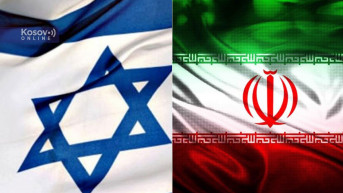
A ceasefire agreement followed by its immediate breach. While U.S. President Donald Trump announced that Israel and Iran had agreed to a truce to end the conflict that began on June 13, mutual attacks resumed within hours. Trump blamed both sides for violating the ceasefire.
Written by: Dusica Radeka Djordjevic
If the conflict continues and escalates, experts warn that the Western Balkans could face multiple consequences — primarily economic, due to disruptions in global oil markets — and could be among the first hit by a potential new wave of migrants. One question that arises is whether Albania, in particular, should be on high alert.
Potential Hybrid Threats to Albania
The possibility of hybrid warfare targeting Albania is real, some analysts say. A recent cyberattack on the official website of the Municipality of Tirana and threats circulated on social media — warning of consequences unless members of the Iranian opposition group Mujahedin-e-Khalq (MeK), based in Durrës, are expelled — are seen by some as clear warnings.
However, Dragoslav Raseta from the organization Novi Treci Put believes the Iranian regime no longer has the capacity to target Albania in that way, given its internal challenges.
“For nearly a decade, Albania-Iran relations have been in a constant state of decline. NATO has supported Albania significantly in facing Iranian cyberattacks, which have not been as dangerous in recent years as they were initially, when they targeted key government institutions and threatened national stability,” Raseta told Kosovo Online.
He recalled Albania’s alignment with the United States and Israel, especially during the visit of the Israeli president to the Western Balkans, when only Tirana and Belgrade were visited, signaling their status as regional allies.
“I don’t believe the Iranian regime currently has the capacity to launch major cyberattacks, especially since it no longer controls its own airspace, and both its military and government leadership have been severely weakened. I think the ayatollah’s primary concern is staying in power — not retaliating against the Western Balkans for supporting Israel,” Raseta said.
Cyberattacks as a Signal of Escalation
On the other hand, political analyst and Tema editor from Tirana, Ili Pata, sees the recent cyberattack as a signal of potential hybrid warfare, a prelude to open conflict.
He described the cyberattack on Tirana’s municipal website as a clear warning from the Iranian regime and an attack on a NATO member state.
“Albania has for years hosted the most active opposition to the Iranian regime — the MeK — which played a central role in exposing Iran’s nuclear capabilities. MeK members were reportedly also partners of the West and Israel inside Iran, during events that led to the assassinations of Iranian military and Revolutionary Guard leaders,” Pata explained.
He warned that Tehran is signaling it will not stop at anything, and that NATO should view this as a serious development. According to him, this wasn’t just an Iranian attack — Russia and China also have significant strategic interests in the Balkans and could be involved indirectly.
Albania’s Position: Tactful Neutrality
Skopje-based analyst Blagojce Atanasovski observed that Albania is currently taking a tactful diplomatic position — avoiding direct involvement in the Iran-Israel conflict.
“Albania has always been considered one of the most reliable U.S. allies in the region, while Israel is America’s strongest and most loyal partner in foreign policy. For now, Albania is wisely keeping a low profile, avoiding logistical, diplomatic, or military involvement, so as not to provoke hybrid threats to its security,” Atanasovski stated.
He noted that given Albania’s ongoing EU accession talks, any deterioration in domestic security would be highly damaging.
Economic and Migration Consequences for the Entire Region
The greater concern for the Western Balkans, beyond Albania alone, lies in the economic and humanitarian fallout if the Israeli-Iranian conflict escalates.
Raseta warns that if Iran carries out its parliamentary proposal to shut down the Strait of Hormuz — through which one-fifth of the world’s oil flows — global markets could be affected. However, he also points out that neither Europe nor the U.S. is heavily dependent on Iranian oil.
“Over 80% of that oil goes to India and China. Iran produces around 3–4% of the world’s oil, most of which is used domestically. Only about a third is exported. At present, there’s more supply than demand on the oil market, so I don’t expect a major impact on fuel prices — though that could change if the U.S. increases its involvement,” Raseta explained.
Still, Alma Lama, a political analyst from Pristina, warns that any prolonged conflict could have global effects — including on the Balkans.
“If escalation leads to regime collapse in Iran, analysts predict a civil war may follow. That could result in terrorist groups and security threats spreading to our region. Economically, Iran has announced possible interruptions in oil and gas trade, which would have significant consequences for many economies,” Lama said.
She added that the European Union’s focus could shift away from the Balkans if global tensions grow, while the U.S. is already scaling back its involvement in the region.
“For small countries like Kosovo and others in the region, the behavior and engagement of major powers is crucial. If they withdraw, that void may be filled by regional actors — and if those actors are not democratic, it could undermine democracy in our own countries,” she warned.
A Renewed Migrant Crisis?
Atanasovski further emphasized that if the Israeli-Iranian conflict turns into a prolonged war — especially one resembling the Syrian civil war — the Western Balkans would be directly affected by a new refugee crisis.
“Being part of NATO, we are safe in terms of military security. But if there’s a wave of migrants, the region will be the first hit — just like with the previous waves from Syria and Afghanistan,” he said.
He added that mass evacuations from Iran to neighboring countries are already underway, but it's too early to predict outcomes.
“We’ll know more in the coming weeks or by summer — whether this conflict will intensify or if a diplomatic solution can still be found, even temporarily,” Atanasovski concluded.




0 comments