
Who would benefit from New Elections being called?
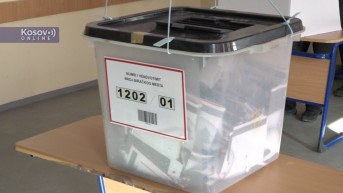
If electing the President of the Assembly remains a mission impossible, new elections will become inevitable. Experts on political developments in Kosovo offer differing opinions on who would be more skilled at mobilizing a larger number of voters than on February 9. According to one view, a new round at the polls would benefit the opposition, as support for Self-Determination may wane. However, there are also views that Albin Kurti’s party could improve its result. Finally, some analysts believe that no one would benefit and that elections would not bring a solution.
Written by: Dusica Radeka Djordjevic
Ahead of tomorrow’s continuation of the constitutive session of the Assembly, Self-Determination and the opposition parties are blaming each other for the failure to elect the President of Parliament.
Self-Determination maintains that it should not change its candidate, Albulena Haxhiu, despite her failure to secure election after multiple attempts, and calls on the opposition to vote for her. Meanwhile, the opposition insists that Self-Determination must propose a candidate acceptable to all.
Under such circumstances, Kosovo is increasingly sliding toward new elections. If they occur, analyst Shenol Muharemi notes that citizens should ensure the results differ from the current outcome.
“A clear winner is needed between the two blocs. Until we have a victor or a clear majority, stability cannot be achieved,” he stated.
Eugen Cakoli, a fellow at the Kosovo Democratic Institute, told Kosovo Online that he does not believe new elections would yield significantly different results and argues they would not suit either Self-Determination or the opposition.
“No one would benefit from elections—not only due to procedural and financial implications but also because we cannot expect a significantly different outcome. Even after a potential election cycle, political compromise within the Assembly would still be needed to elect the president, vice presidents, and form institutions,” Cakoli emphasized.
He believes the scenario of new elections would merely highlight the lack of political culture and maturity among the parties represented in the Assembly, as they are unable to find common ground even on procedural issues like electing the President of Parliament.
Cakoli adds that if political parties continue to maintain entrenched positions, new parliamentary elections will become a realistic option. However, he also points out that elections cannot be called without first electing the President of the Assembly.
Aleksandar Sljuka, a fellow at the NGO “New Social Initiative,” told Kosovo Online that it is difficult to determine who would benefit more from new elections. He notes that it seems unlikely the opposition could replicate its relatively strong February 9 performance, which was better than in previous cycles.
“There was a belief that the opposition would have the necessary majority and succeed in asserting itself as the future ruling force. But now it appears more likely that Self-Determination is closer to achieving that. If there was trust in the opposition acting decisively, that trust has now been shaken. In case of new elections, Self-Determination might even improve its result enough to elect the Speaker of Parliament with its existing partners and form a government. Some of their actions during the technical mandate could position them for a better outcome. Still, without concrete polls, it's hard to say definitively,” Sljuka said.
He added that the international community would likely react positively if new elections were held as a way out of the current crisis. The EU has already called for a swift resolution and emphasized that Kosovo needs a functional parliament and government.
“This will remain impossible unless parties reach an agreement, and we haven’t seen any willingness to do so. Self-Determination wants the compromise to involve the opposition backing Albulena Haxhiu, while the opposition demands that the candidate be changed or not come from Self-Determination at all. If this deadlock continues for another ten days or so, I think the international community would gladly support new elections, as they could lead to some restructuring—meaning that either the government or opposition would gain more votes to resolve the situation,” Sljuka explained.
In contrast, Milos Pavkovic from the Center for European Policies in Belgrade argues that the February 9 elections showed Self-Determination entering a trend of declining voter support. For this reason, he doesn’t expect the party would perform better in new elections, while the opposition may have room to improve.
“With how things are unfolding, new elections are becoming the most realistic scenario. However, I do not expect Self-Determination to achieve a better result—at best, it would remain the same, or perhaps even worse. New elections do not favor Self-Determination, and I believe their strategy will be to try forming a government at all costs. If elections are held, there’s also a chance parliamentary and local elections could be combined, raising the question of Self-Determination’s hold on power not only centrally but also locally,” Pavkovic told Kosovo Online.
He added that a new campaign would allow the opposition to intensify criticism of Albin Kurti’s government, potentially winning new votes, broader support, and backing from the international community.
“Even now, the opposition potentially has the numbers to form a government. With new elections, a slightly better result and more mandates, plus international support, such a government could be more stable than anything that might be formed today—regardless of whether it’s by Self-Determination or a united opposition. From this perspective, it seems the opposition’s strategy is to push for new elections and seek a better result to definitively replace Albin Kurti and establish a new political structure in Pristina,” Pavkovic concluded.



0 comments