
Will the meetings of EU leaders with Vucic and Kurti in Brussels today bring any concrete results?
The exact details of the new EU plan for continuing the dialogue and normalization of relations between Belgrade and Pristina are not yet known. Moreover, the interlocutors of Kosovo Online are unsure whether today's separate meetings of European leaders with Serbian President Aleksandar Vucic and Kosovo Prime Minister Albin Kurti in Brussels will bring progress in a positive direction. They indicate that there will be persuasion, sticks, and carrots around the beginning of the implementation of the Ohrid Agreement, but it is uncertain if and at what speed the dialogue will continue, given the diametrically opposed positions of the two sides.
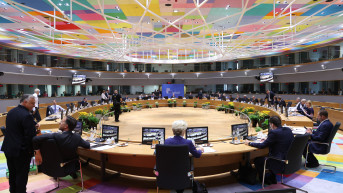
In addition to Miroslav Lajcak and the EU's chief diplomat Josep Borrell, the talks with Vucic and Kurti will involve the President of the European Council Charles Michel, French President Emmanuel Macron, German Chancellor Olaf Scholz, and Italian Prime Minister Giorgia Meloni.
President Vucic, on the eve of today's meetings on the margins of the European Council, stated that, regarding Belgrade, "they are knocking on open doors" and that he hoped the discussions would progress towards reaching a compromise.
From Pristina, however, conflicting messages are coming. While the Government of Kosovo announced that it had accepted the plan proposed by the EU's quintet of envoys, consisting of representatives from the EU, the US, Germany, France, and Italy, which, according to the Union's spokesperson Peter Stano, includes a draft statute for the establishment of the Community of Serb-majority Municipalities following "European models", Kurti and his closest associates state that without sanctions against Serbia for the events in Banjska, there will be no dialogue and that the CSM is not the subject of negotiations.
In response, President Vucic raised the question of what would be the subject of the talks.
"Konjufca stated immediately after Kurti that the CSM was not and would not be the subject. I don't know what will be the subject then. Because they don't want to be the culprits, although it is clear to everyone in Europe who does not want dialogue and the CSM. Banjska is being used to equate blame or to accuse Serbia for something, as was done in the 1990s. But, I don't think European leaders can be blind and deaf to Kurti's attempts to never form the CSM," Vucic emphasized.
Dragisa Mijacic, the Coordinator of the National Convention on the EU for Chapter 35, stated that the dialogue must continue regardless of how it was viewed in Belgrade or Pristina, as well as that he expected this message to be reiterated today in Brussels, where leaders of EU member states would gather.
"There is simply no alternative to dialogue. The 'big five' conveyed this last week during the meetings in Belgrade and Pristina with Vucic and Kurti. They emphasized that dialogue had no alternative, and the format of the negotiations would not change," Mijacic said for Kosovo Online.
He added that the EU, US, Germany, France, and Italy envoys had not come to Belgrade and Pristina on October 21st without proposals and without an idea of continuing the dialogue.
"They have obviously put forward some proposals regarding the continuation of the dialogue. We haven't heard those proposals yet, but we will find out very soon, by the end of this week when the European Council will deliver decisive measures both toward Belgrade and Pristina regarding further implementation of the agreement on the path to normalization, as well as its annex signed earlier this year. I believe that the main focus will be on the formation of the Community of Serb-majority Municipalities, de-escalation, organizing elections in northern Kosovo, but also transparency in the investigation of everything related to the recent events in Banjska," Mijacic emphasized.
According to our interlocutor, there are many topics on the table.
"I believe negotiations will continue in Brussels in some form. President Vucic has announced that he will be in Brussels, and we will probably see Kurti there as well. There is a possibility of a trilateral or bilateral meeting in Brussels before the EU summit, to define all the proposals submitted last Saturday and for both sides to position themselves regarding these proposals, all before the meetings of the heads of state and governments of EU member countries," Mijacic noted.
Aleksandar Mitic, a research fellow at the Institute of International Politics and Economics, states that great powers are once again trying to pressure Serbia to give up on Kosovo by setting some new, as he put it, artificial deadlines in the dialogue between Belgrade and Pristina.
"The fact is that we are witnessing an attempt to urgently resolve the issue of Kosovo and Metohija, an artificial urgency. These artificial deadlines, which we've witnessed in previous years, are simply a pressure instrument; they don't mean anything essentially. We've had various deadlines before. It's like now, people are talking about the need to resolve this issue before the US or European Parliament elections. We had that five years ago, too, when the previous US and European elections were held," Mitic says for Kosovo Online.
He adds that Serbia is always required to make some gesture at such moments and, as he says, is forced to give up some vital interest.
A few years ago, the Washington Agreement was signed just before the US elections, which brought nothing except for Israel recognizing Kosovo. So we must not fall into the trap of artificial deadlines imposed by Western intermediaries who are biased and have a very clear goal: to solidify Kosovo's independence and give it legality and legitimacy on the international stage. Why should we participate in that game? The Community of Serb-majority Municipalities is an obligation of Pristina and those who are guarantors of the Brussels Agreement. It was detrimental to Serbia, but that obligation remains, and neither Pristina nor the EU has fulfilled it," Mitic recalls.
He adds that the key provisions of the Brussels Agreement have not been implemented for an entire decade, and Western countries are now trying to "deceive Serbia by changing the essence of the signed agreement".
"Now, after 10 years of non-implementation of the Brussels Agreement, they are trying in various ways, not only this year but in previous years as well, to dilute the Community of Serb-majority Municipalities. They are even changing the name, mentioning 'municipalities with a Serb majority'. They are doing everything to destroy the original document and guarantee, what was originally stated in that agreement, which is the CSM that should have executive powers. The CSM without executive powers is an empty shell that serves no purpose. They can create non-governmental organizations with various Serbian prefixes, but if they don't have executive powers, what's the point? It's clear that one of the key objectives at this moment is to, in a way, deceive Belgrade again," Mitic emphasizes.
He believes that Serbia no longer has a place in negotiations where fixed ultimatums are imposed upon it.
"In these conditions, given the degree of coordination between the Quint countries and Pristina with the aim of pressuring Belgrade to accept the provisions of the Franco-German plan and the Ohrid annex, given the terror that Pristina is imposing on Kosovo Serbs, the unilateral mediators, who are allegedly mediators but essentially come with different, non-diplomatic methods, participation in the dialogue at this moment is counterproductive because it will not lead to any results," Mitic believes.
He adds that the Quint countries are very clear about what their ultimate goal is.
"We hear this from both Belgrade and the US Ambassador, Mr. Hill, and other officials. Their goal is for Belgrade to relinquish Kosovo and Metohija by accepting these agreements and for the so-called Kosovo to become a state. In such a context, I don't see any interest for the Republic of Serbia to participate in such a dialogue with a predetermined outcome, a dialogue about the modalities of handing over Kosovo. I don't see any specific reason for that. Of course, one thing is what I believe would be right, and another is the pressures we are obviously witnessing. Now we have a new set of ultimatums and threats for Belgrade to return to the dialogue despite everything that has happened in recent months," he says.
He adds that Western countries constantly refer to the events in Banjska on September 24, forgetting what has happened before that.
"They are doing this, both the Quint and Pristina, not just the Kosovo authorities. The Quint has given them carte blanche to do everything they are doing, and no one is doing their job, not KFOR, not EULEX," Mitic emphasizes.


comments