
Stanic: Serbia invested 500 million Euros in the region over four years
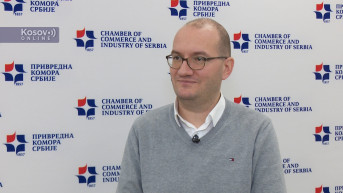
Bojan Stanic, the Assistant Director of the Sector for Strategic Analysis at the Chamber of Commerce of Serbia, told Kosovo Online that Serbia's investments have been at a record level for several years and that Serbia is a significant investor in the region, having invested about 500 million euros from 2019 to 2023.
"When we talk about investments in Serbia, they have been at a record level for several years, amounting to around 4.5 billion euros in foreign direct investments. This is an excellent indicator, considering that investments are a source of economic activity growth in Serbia as they expand the production potential," Stanic stated.
He explained that the European Union, as a group of 27 members, is the biggest investor in Serbia, while China has been the most significant individual investor in recent years.
"Looking at a longer period of about ten to fifteen years, almost 60 percent of all investments that came to Serbia are from the EU. If we consider the most significant, apart from Germany and the Netherlands, mentioned China, there are significant investments from the United States. Although the amount has decreased in recent years, Russia also had significant investments, then Turkey, and so on," our interlocutor says. Regarding the region, he notes, there are no significant investments.
"We have investments from Croatia, Bosnia and Herzegovina, Montenegro, but, of course, they are at a more modest level. Hungary also has its investments…," he says.
He explains that these are mostly investments in real estate and to a lesser extent in the manufacturing industry.
"These could be agriculture and the metal industry, but the fact is that real estate is quite attractive, as well as certain service activities such as information technology," he notes.
On the other hand, he is explicit, Serbia is a very significant investor in the region.
"Thanks to the positive economic growth in recent years, which has been explosive, over three percent, Serbia has accumulated certain funds, and the economy in general, to invest in countries of the region. If you look at the period from 2019 to 2023, there were about 500 million euros of foreign direct investments from Serbia into the region, mostly going to Montenegro and Bosnia and Herzegovina," the Assistant Director of the Sector for Strategic Analysis of the Chamber of Commerce of Serbia indicates.
He emphasizes that significant investments in the region continued in 2024.
"For example, if we take the case of Montenegro, Serbia has been the most significant investor in the past few years. If a longer time period is considered, then Serbia is in second place behind the Russian Federation, but due to the war in Ukraine, this list of significant investors has changed, and now Serbia is the leading investor in Montenegro, but also in Bosnia and Herzegovina, alongside Croatia," Stanic says.
Regarding Montenegro, the most investment is in real estate and certain financial services, while in Bosnia and Herzegovina, investments are in the energy sector and certain service activities. He expects that in the coming year, regarding the region, the continuation of Serbia's economic activities will increase.
"Serbia continues to be a driver of intra-regional trade, given that it is the most significant economy. However, a lot depends on external factors. In this specific case, also on the situation in the Eurozone. Here, the engine of growth is the German economy, which is also one of the largest foreign trade partners of the region," he emphasizes.
He explains that a very mild growth is expected in Germany next year, but another external factor could cause the German economy to enter a recession zone.
Also, he emphasizes, a lot depends on the situation with energy resources, but also on the decisions of the new administration in Washington. "Whether the so-called protectionism will be accelerated, introducing those additional tariffs on imports, which can indirectly reflect on the region, as Europe can give some countermeasures that can affect the region as collateral damage," Stanic says, recalling 2019 when America introduced tariffs on imports of steel and aluminum, then the EU reacted and introduced quotas on steel imports from Serbia, thereby disrupting the free trade agreement that Serbia has.
"These are all consequences of a geopolitical situation that is truly unpredictable in the coming year," concludes Stanic.



0 comments