
Arsenijevic: Pristina simulates dialogue, no progress without international engagement
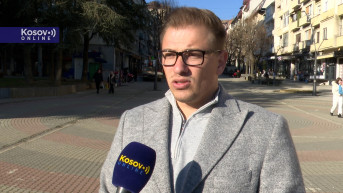
The dialogue between Belgrade and Pristina is at a deadlock, and without stronger international engagement, there will be no progress, according to Aleksandar Arsenijevic, leader of Serbian Democracy and a candidate in the upcoming elections. He adds that the security of Serbs in Kosovo is weakening, and the solution lies in returning Serbian personnel to police and judicial institutions.
In an interview with Kosovo Online, Arsenijevic emphasized that Pristina is only simulating dialogue, and that when there is no real dialogue, a crisis emerges on the ground.
He stated that the formation of the Community of Serb Municipalities (CSM) would improve the protection of the Serbian population and stressed that a special law should be introduced to facilitate the return of Serbs to Kosovo’s institutions.
What is the fate of the dialogue, and how can it be revived?
“The dialogue has stalled—Pristina is only pretending to engage in dialogue, but nothing is actually happening. The only way to revive the dialogue is through pressure from the U.S., Europe, and the rest of the international community. That is the only way to strengthen the process, because when there is no dialogue, we end up with a crisis on the ground,” said Arsenijevic.
Is it time for Serbs to return to institutions (police, judiciary)? What are the prerequisites, and with which potential candidates for Prime Minister could this be achieved?
"As politicians are already returning, I see no reason why others shouldn’t return to institutions as well. The real issue is that Pristina does not allow the return of Serbian police officers. Instead, they promote a new narrative about recruiting ‘new Serbian officers’ to mislead the international community and others, as if saying, ‘Look, we have new Serbs in the police.’
However, what really needs to happen is for experienced officers with ranks to be reinstated. This should be done through political will by passing a special law enabling their return. Otherwise, we would need five to seven years to train and promote a police commander, shift supervisor, or other key positions.
To put it in perspective, imagine a company where all the directors and senior staff are Albanians, while Serbs are only security guards. That is what we are dealing with in the institutions today."
How to Improve the Security of Serbs in Kosovo?
"The security of Serbs in Kosovo is a very delicate and serious issue. The situation differs between the north and the south, but both regions face significant problems.
Once we enter parliament, we will demand the formation of a special team, including international representatives, to investigate interethnic incidents that contribute to the displacement of Serbs from southern Kosovo.
In northern Kosovo, we have already mentioned the issue of the monoethnic police force, which acts unprofessionally, assaults civilians, and uses violence against the local population. I, along with my colleagues, have personally experienced police repression, including arbitrary arrests and mistreatment, just like many other citizens we have tried to help.
Of course, the formation of the Community of Serb Municipalities (CSM) would significantly improve the situation and make security efforts more effective.
One of the most critical issues for security is ensuring that the Supreme Panel of the Supreme Court follows the Brussels Agreement—which states that there should be two Serbian judges and one Albanian judge. This would prevent politically motivated indictments and the arbitrary detention of Serbs for months or even years without fair trials."
Kosovo Online invited all six Serbian parties participating in the upcoming elections to answer several key questions concerning the Serbian community in Kosovo. By the deadline, representatives of three lists responded, while the Party of Kosovo Serbs, Serb List, and the Civic Initiative "People’s Justice" did not provide answers to our portal.


0 comments