
Djuric: The Kosovo issue remains a special challenge
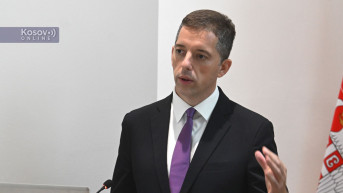
The key pillars of Serbia’s foreign policy remain clear and unchanged—European integration as a strategic goal, military neutrality as the foundation of security policy, and a multivector approach that enables cooperation with various global actors while safeguarding national interests—Serbian Minister of Foreign Affairs Marko Djuric said today, noting that a special and enduring challenge remains the Kosovo issue, not only as a political and security matter, but also as a factor influencing regional dynamics, international credibility, and internal social cohesion. For that reason, he added, Serbia needs a diplomacy that is professional, disciplined, strengthened, and capable of acting simultaneously in Brussels, Washington, Moscow, and Beijing, as well as in Africa, Asia, and Latin America, where decisions within multilateral institutions are increasingly being made.
In an interview with Politika, Djuric observed that the world—and, of course, the European continent, with which Serbia and the Serbian people share both good and less good experiences—has changed significantly.
“We are moving from a unipolar concept toward a multipolar world. We all feel the conflicts of interest and geopolitical battles of the major powers. Three blocs have formed—the collective West in confrontation with Moscow; the Russian Federation with countries that support it economically and militarily; and a significant number of states striving to remain outside that confrontation. This affects Serbia and its immediate surroundings in more or less direct ways. And I am not referring only to the military conflict between the Russian Federation and Ukraine, armed conflicts in the Middle East and Africa, or tensions in other regions of the world, but also to climate change, the energy shift away from fossil fuels toward renewable sources, the availability of rare metals, and many other factors,” Djuric said.
How would you describe the current state of Serbian diplomacy in 2025? What are its key pillars and challenges?
Much has changed in recent years in how the role of diplomacy is understood. Today, Serbian diplomacy is not made up solely of formal state institutions—the president, the government, and the Ministry of Foreign Affairs—but also of the economy, the scientific and innovation community, culture, sport, and the digital public sphere in which narratives about states and their policies are shaped. Diplomacy has become a comprehensive system for managing reputation, risks, and partnerships.
The key pillars of Serbian foreign policy remain clear and unchanged: European integration as a strategic goal, military neutrality as the basis of security policy, and a multivector approach that allows cooperation with different global actors while preserving national interests. The greatest challenge lies in the fact that the world is rapidly shifting from a unipolar to a multipolar structure. The room for maneuver has narrowed, and states are increasingly expected to align clearly and exclusively. Serbia, however, seeks to build relations pragmatically and rationally—where interests coincide—while maintaining clearly defined red lines on issues of sovereignty, territorial integrity, and security.
A special and lasting challenge remains the issue of Kosovo and Metohija, not only as a political and security matter, but also as a factor affecting regional dynamics, international credibility, and internal social cohesion. That is precisely why Serbia needs a diplomacy that is professional, disciplined, adequately staffed, and capable of acting simultaneously in Brussels, Washington, Moscow, and Beijing, as well as in Africa, Asia, and Latin America, where decisions within multilateral institutions are increasingly made.
What are the biggest challenges Serbian diplomacy faces today, especially in the context of global crises such as the war in Ukraine, the situation in the Middle East, and economic instability?
I would systematize the challenges into three interconnected circles.
The first concerns the overall resilience of the state. Modern diplomacy implies not only classical negotiations but also managing reputational risks, strategic communications, combating disinformation, and strengthening institutional stability. In a world where influence is increasingly exercised through information, finance, and technology, a state’s ability to maintain predictability and legal certainty directly affects the economy, investment, and international trust.
The second circle is regional. The Western Balkans is a space where global competition often manifests through local issues. Our approach is therefore twofold: on the one hand, strengthening practical cooperation—infrastructure, energy, trade, transport, crisis management—and on the other, preventing miscalculations that could lead to heightened tensions. Serbia offers cooperation based on interest and mutual respect, while remaining firmly committed to protecting its legitimate interests and the security of its people.
The third circle is global. The war in Ukraine, instability in the Middle East, and economic turbulence affect flows of energy, food, capital, and industrial supply chains. For Serbia, this means that foreign policy must be closely linked to economic and energy strategy: diversification of supply sources, access to new markets, attracting investment, and preserving space for dialogue with all relevant actors. In such an environment, the policy of military neutrality and a multivector approach becomes more demanding than ever—but also more important. Our task is to turn that complexity into an advantage: to build cooperation where possible and defend state interests where necessary.
How does Serbian diplomacy contribute to internal stability and economic development?
Diplomacy today is directly linked to economic development. It affects the cost of capital, investment decisions, market access, technological partnerships, and a country’s credit rating. Our goal is therefore to position Serbia as a stable, predictable, and reliable state—a partner that can be counted on. In that sense, the concrete contribution on which the president, several ministries, and our own ministry are working lies in investment and exports. The diplomatic-consular network increasingly functions as an active economic service: connecting investors with institutions in Serbia, protecting the interests of our companies abroad, and opening doors to new markets. We place special emphasis on positioning Serbia within Europe’s new industrial geography through nearshoring and friendshoring models.
Another important element at this moment is energy security. The stability of the energy system is not only an economic but also a strategic issue. Diplomacy participates in building partnerships, negotiating long-term arrangements, and managing risks arising from geopolitical tensions.
The third segment is technological and innovation diplomacy. Serbia is strengthening its position through digitalization, development of the ICT sector, science and technology parks, and data infrastructure. A country that possesses knowledge and technology has greater resilience and a stronger negotiating position. In December, Serbia is successfully concluding a one-year presidency of the Global Partnership on Artificial Intelligence. This may not be widely known outside expert circles, but it is very important. A special place is also given to work with the diaspora, which represents a strategic resource—not only financially, but also through knowledge, capital, and contacts. Our goal is for the diaspora to be a two-way bridge between Serbia and the world.
What are the expectations for Serbian diplomacy in the coming years, given that it is evident we will not conclude 2025 with concrete progress toward the EU?
Full and equal membership in the EU remains Serbia’s foreign policy priority. However, this process today is not purely a technical matter, but largely a political one. Although Serbia meets the necessary conditions in certain areas, the pace of the process also depends on internal dynamics within the Union itself, bilateral issues, and broader security assessments by European partners. Serbia insists on the principles of predictability and measurability of the process. We are not seeking privileges, but a clear and credible framework in which results are evaluated and political issues are not turned into permanent blockades. At the same time, I believe the Western Balkans is a matter of strategic stability for the EU, not merely an administrative procedure.
Therefore, we will continue reforms for the sake of our citizens and our own future, while simultaneously strengthening Serbia’s international capacities. A responsible state cannot build its future on the uncertainty of others’ political cycles, but must be prepared for different scenarios.
What are the long-term goals of Serbian diplomacy? How do we see Serbia positioned in the world of tomorrow—by 2030 or 2040?
The long-term goal of Serbian diplomacy is to position Serbia as a stable, modern, and internationally relevant European state. In the medium term, we will continue reforms necessary for EU membership and the building of institutional capacities required to assume the obligations that membership entails. In parallel, Serbia must ensure energy and economic security in a world where energy and resources have once again become geopolitical issues. The aim is for Serbia to become a technological and logistical hub of the region—a country integrated into European value chains, but also capable of innovation and exporting knowledge.
Regionally, Serbia seeks to be a factor of stability and an initiator of cooperation. In the long run, by 2040, our goal is a state with strong institutions, a preserved identity, and a society open to new generations and challenges.
Finally, what message would you send to the Serbian people about the future of our diplomacy?
Serbian diplomacy is entering a period in which knowledge, professionalism, and perseverance are key resources. That is why we are working on rejuvenating our base and strengthening capacities, combining the experience of our diplomats with the energy of new generations. We have launched the campaign “Be a Serbian Diplomat” to attract the best young people into public service.
We will improve the network of diplomatic and consular missions where there is a clear political, economic, and consular rationale, using modern and flexible models of cooperation. We will continue to strengthen the role of women in diplomacy, because an institution that recognizes talent and results becomes stronger and more resilient.
In a world of great pressures and rapid change, Serbia must remain committed to peace, international law, and its own interests. The task of diplomacy is to expand the space of the possible—to open doors, build partnerships, and ensure that Serbia is respected because it is a credible, stable, and responsible state.

0 comments