
Nastic: Germany tramples on UN Resolution 1244 – pressure needed on Pristina, not always seeking blame in Serbia
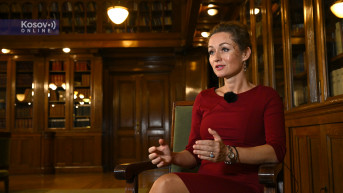
German Bundestag member Zaklin Nastic has emphasized in an interview with Kosovo Online that Germany should insist on Pristina fulfilling its obligations, such as the establishment of the Community of Serb Municipalities, and work on de-escalation instead of always seeking blame on the side of Serbia.
According to Nastic, Germany and other countries are trampling on UN Security Council Resolution 1244, and she notes there are double standards – instead of working towards de-escalation, they support what she calls Pristina's "racist" policy, aimed at creating a "Greater Albania."
How do you view the situation in Kosovo, especially after the events in Banjska?
I find the situation extremely challenging, especially after the events in Banjska. I have a different assessment of the events in Banjska compared to many countries and Pristina. There was a reason why this happened. Since Albin Kurti took office in Pristina, the situation has escalated significantly. His policy has been directed towards escalation, as evidenced by his refusal to implement the agreements from 2013 and 2015 regarding the Community of Serb Municipalities. The event in Banjska, which should be condemned, is being used to prevent the establishment of the CSM, even though Pristina is committed to it by the agreement. I do not think that, under these circumstances, Pristina will respond to the EU's request to establish the CSM. I believe that countries that support Pristina are using the Banjska event to push the issue under the rug. Unfortunately, many countries, including Germany, are using that event against Serbia and are not considering how it came about. That is regrettable. When I hear from Pristina that they knew for months that such activities were being prepared, I have to ask, why didn't they do something in time to prevent it?
What is needed for de-escalation?
I would definitely call on Pristina not to contribute to further escalation. It is evident that members of minorities, especially Serbs, are leaving Kosovo. I saw during my visit to Kosovo that the number of ethnic attacks has increased significantly. On Christmas Eve, children were shot. De-escalation is needed. The international community and the German government should request that Pristina stop escalating instead of always seeking blame in Serbia.
The EU is determined to resolve the Kosovo issue as soon as possible, and Germany is the most active in that regard. It most wants it to be resolved through recognition. Why is that?
I do not share the opinion of the German government. Kosovo was seceded from Serbia in violation of international law through the NATO bombing. Now, with the war in Ukraine, Germany keeps referring to respect for international law. This international law must apply to everyone, including the territorial integrity and sovereignty of Serbia. UN Security Council Resolution 1244 also says that, but some countries, including Germany, are trampling on it.
Kosovo Prime Minister Albin Kurti does not want to fulfill any of the agreements, including the CSM. It seems that Germany sees it the least or does not want to see it. Is that the case?
Unfortunately, that is the case. But when we look at the development of the conflict, Germany led the attack on the Federal Republic of Yugoslavia in 1999 with Green Party Foreign Minister Joschka Fischer. This "tradition" of the Greens is now being continued by Minister Annalena Baerbock. It would be important to de-escalate the situation, but it is not happening. Double standards are being applied. Instead, I can say, a racist policy of Pristina is supported, which aims to create a "Greater Albania." This goal became quite clear after Kurti's visit to North Macedonia. When I was in Kosovo at the end of March, I saw only Albanian flags and had to ask, if there is Kosovo, why is Albania everywhere, as well as the narrative of the "Greater Albania." It is regrettable that the German government supports such a policy. I never recognized Kosovo's independence and always condemned Germany for doing so because it violated international law.
We have statements from Germany that there is a danger of a Third World War. Do you see current events in the world, in Ukraine and the Middle East, as the beginning of such a war, or are these just regional conflicts?
The danger is great, definitely. Especially due to arms deliveries from Germany. Germany is the second-largest supplier of arms to Ukraine after the United States. Considering Germany's history, it is terrible to see tanks and weapons from Germany being sent to the east. I believe that should be condemned. The problem is that diplomacy is not being pursued, but armament is, and after so many months, we see that weapons have not contributed to peace but have only prolonged the war. Therefore, I believe we should welcome the efforts and statements from countries like China or Brazil that call for a diplomatic solution and negotiations. What Germany is doing is extremely dangerous. Germany and European countries are neighbors of Russia, and we have different interests than the United States. Therefore, as Europeans, we should try to live peacefully with Russia. We should also consider how the war started, and this involves the expansion of NATO to the east and the related violation of promises made to the then-USSR. Many Western and German politicians deny that there were promises that NATO would not expand to the borders of Russia, but they existed, and there is evidence to support that. It is clear that no one would tolerate foreign tanks and a military alliance on their borders. The US does not tolerate that either.


0 comments