
Simic: Challenging times ahead; we warned Washington and everyone there is aware that Kurti is the culprit for the escalation
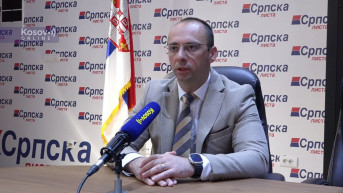
The next period could be very challenging for the Serbs in Kosovo because there was a real danger that Albin Kurti would take another action that could further complicate the situation on the ground, warned the Vice-President of the Serb List, Igor Simic.
In an interview for Kosovo Online, Simic pointed out that this was precisely why the visit of the representatives of the Serb List to Washington had been important at this very moment because they had warned their hosts of the consequences of Kurti's possible moves and that only they could stop the opening of a new hot spot on the soil of Europe and guarantee the safety of the Serbs.
He adds, however, that he is returning from the USA to Kosovo with a dose of optimism when it comes to future events.
The fact is, he says, that in the conversation with all the associates of Gabriel Escobar, as well as with him personally, but also with people from the Senate and Congress, they could conclude that they are more than well acquainted with the situation on the ground when it comes to escalation which is a consequence of the unilateral moves of Albin Kurti, who wants to solve open political issues with violence.
What are the messages that you carry from Washington to the Serbs in Kosovo?
The messages are very clear. We must remain restrained, united, and unified in defending our basic human rights. The most important thing is that our interlocutors are more than well-acquainted with the problems we face in the field, and that is no surprise. But what is surprising is that everyone is aware that the culprit for the situation in which the Serbs in Kosovo and Metohija are at this moment is Albin Kurti. Of course, there were also questions about the role of the Serb List in de-escalating the situation on the ground, but we clearly answered that we had not taken any action that had led to the situation we were in and that we did not see a way in which we could reduce tensions on the field. Both the Serb List and the Serbs have been protesting peacefully for more than 60 days in the fight for basic human rights. They peacefully protest and demand that the situation return to normal, i.e. that there are no illegal Special units in the north of Kosovo and Metohija, which are harassing the Serbs and have repeatedly threatened the lives of our people, shooting at them for no reason, unfortunately, and without any responsibility. Just as it is important that all our fellow citizens, who have been unjustly arrested, be released. If necessary, let the proceedings be conducted, but they should be released pending trial, and that detention should not become a punishment for fellow citizens who will be detained in the Pristina casemates, in a situation where their rights are threatened and without the possibility to defend themselves against false accusations.
Let me remind you, until today we have not had the opportunity to see any proof of their guilt. Only when we have such developments, we can discuss further steps. That is why I especially emphasized, with my colleagues, that the position of the Serb List is more than clear and consistent with the positions and demands coming from the EU on the need to de-escalate the situation, that is, for Albin Kurti to take steps that will return the situation to normal. In particular, we pointed out to our interlocutors the fact that from the moment when the EU, together with the USA, had demanded de-escalation, Pristina, meanwhile, had made thirty moves in the north of Kosovo and Metohija that had contributed to further escalation, not de-escalation, such as the expansion of illegal bases in the north of Kosovo and Metohija, especially on the Bistrica bridge, that Serbs in Kosovo and Metohija who do not accept being second-class citizens and disenfranchised live in these areas are still threatened with arrest. We also presented material evidence of Kurti's actions that threaten peace, and that is what particularly worries us, and what, one gets the impression, also worries the people in Washington.
What do you expect from Washington, did they understand the problems and the fact that the situation on the ground has worsened compared to two months ago?
We highlighted several proposals and demands, above all when it comes to the protection of the security of the Serbs in the area of Kosovo and Metohija. We demanded that in this period of vacations when there was almost no one in Brussels, a situation would not happen in which Albin Kurti would want to take advantage of that vacuum and further threaten the peace in these areas with new unilateral moves. This is where we see, first of all, the significant role of KFOR, and that is what we specifically requested - that KFOR be at the critical points and that, if necessary, security be strengthened. That this should be done in the presence of international organizations, primarily EULEX and KFOR, and not Special Forces armed to the teeth, who are illegally present in the north of Kosovo and Metohija. The understanding on their part is quite good, first of all, because they are very familiar with the situation on the ground, but on the other hand, our visit was extremely important because they were able to hear first-hand the real problems of the citizens, who live in these areas and share the fate of these people.
What does Washington expect from you?
They expect the Serbs to be calm and restrained, not to fall for provocations, and not to allow Kurti to have any argument for further strengthening of the Special Forces or justification for their units that are present in the north of Kosovo and Metohija. In this sense, among other things, there was also talk of new elections in the north of Kosovo and Metohija, and we were more than clear, we are open and in the conversation with the citizens we repeated several times - without the withdrawal of Special units from the north of Kosovo and Metohija, the release of our arrested citizens, there are no basic conditions to discuss elections at all.
Also, we do not want to forget the fact that it is extremely important to implement the agreements reached, because we would not be in the situation we are in today if they had been implemented. I am primarily referring to the formation of the Community of Serb-majority Municipalities, which represents an obligation of Pristina that has not been fulfilled for 10 years. We were met with the understanding of our demands by the US representatives, and I can emphasize that a significant contribution was also made by the Embassy of Serbia in Washington. Ambassador Marko Djuric and his very professional team are doing an excellent job, and as a Serb and a representative of the Serbs and the Serb List, I am truly delighted with the way our team in the US represents the interests of the Serbs from Kosovo and Metohija, to the extent that they literally familiarize their interlocutors with the smallest details that burden our life. We can all be proud of the way Ambassador Djuric and his team are fighting for the Serbs and Serbia in Washington.
What awaits us in the coming period?
The next period can be challenging, primarily because there is a vacation period for international representatives and there is a real danger that Kurti will take some action that can further complicate the situation on the field. That is why it is important that we had the visit at this very moment, to warn those who are in charge, who are making decisions, that their engagement, politically, but also through their presence in the forces of KFOR, will stop anyone who wants to open a new hot spot on the soil of Europe. This is what particularly worries people in Washington, who absolutely could not accept having another war zone in Europe.
Kurti said he had begun de-escalation by withdrawing 25 percent of police officers from municipal buildings. Are the events on the ground really going in the direction of de-escalation?
On the ground, we can see a further escalation. It is not the first time that the statements coming from high-ranking officials of Pristina absolutely do not correspond to the facts on the ground - Special Forces are still present in the buildings of the municipalities of Zvecan, Leposavic, and Zubin Potok. Absolutely illegally. They made parapolice and military bases out of those buildings, and they should not be there. Even our interlocutors, when we presented them with the facts that Kurti said that he would move 25 percent of the forces, reacted absolutely negatively to it, repeating the same position from the beginning of June, when the EU demanded that Prishtina withdraw Special Forces and fake mayors and pave the way for talks that would allow for the normalization of the situation on the ground.
One gets the impression that no one has control over Albin Kurti. How much closer are we, therefore, to conflicts than to de-escalation of the situation?
During the conversation, we repeatedly pointed out that it was incredible that someone like Albin Kurti could be so resistant to the pressures of the international community if they were really sincere. The USA has a lot of instruments in their hands, and we have clearly told them that, with which they can bow down Kurti and point out to him the necessity of some moves, in a political and any other sense, that will return the situation on the ground to normal. And they are aware of it. On the other hand, we should not forget that the Albanian lobby in the USA is very strong and organized, and what Ambassador Djuric has been doing in the past few years with his team, the Albanian community has been doing for decades. And through the talks, he expressed such an attitude that there was too much pressure on Kurti, on Pristina, and too little on Belgrade. That's why I emphasize once again that this visit was important in order to present all the problems and point out that the facts are that the responsibility lies with Kurti, the moves that were made, were made exclusively from Pristina and with one intention - to expel the Serbs from Kosovo and Metohija, preferably without the use of weapons, but in such a way as to create conditions in which each parent will have to think about whether they want their child to grow up in such circumstances.
Nevertheless, we came from Washington with a certain amount of optimism, on the one hand, because of what our ambassador Djuric is doing, and on the other hand, because we encountered understanding and people who decide on many things on the ground, who are more than well-informed and aware who is responsible for the situation we are in.
That is why I once again call on all fellow citizens to remain calm and restrained but never to stop fighting for the rights of the Serbs. As we walked towards the State Department, I saw a significant cultural and historical monument with the message that "Freedom is not free", and we must fight for freedom by peacefully, democratically persevering in our demands.



0 comments