
Stoilkovic: Serbs and Macedonians see each other as best neighbors and closest people
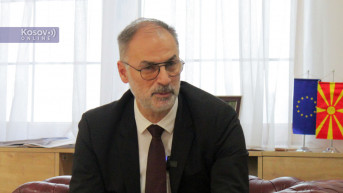
In an interview for Kosovo Online, the Vice President of the North Macedonian government and Minister for Relations with Communities, Ivan Stoilkovic, mentioned that there are no open issues between Serbia and North Macedonia, except for Kosovo. Importantly, both Serbs and Macedonians perceive each other as some of the best neighbors and as the closest people.
He highlighted the significant potential for economic cooperation between the two countries and emphasized the importance of the Open Balkan initiative for North Macedonia, which he believes should be supported and which the Macedonian government will continue to endorse.
Stoilkovic also criticized the ministry he leads, which was previously managed by Artan Grubi, who has an active warrant for his arrest, describing it as more of a "private firm of Grubi and Ali Ahmeti" rather than a state institution, a perception he is determined to change.
As the first Serbian Deputy Prime Minister and Minister in the Government of North Macedonia, Stoilkovic expressed that the election of the new government in the country is a correction of historical injustice towards the Serbian people. He reflected on the status of the Serbian community he encountered upon taking office:
"I mentioned this, and then some Media Institute claimed it wasn’t true. But it is true. I am the first Serbian minister since the health minister in 1946 was Montenegrin. What I said speaks volumes about what we, as the Serbian community in Macedonia, have become. We mustn’t forget the communist past, but also the period after the breakup of Yugoslavia, when Serbia’s influence and economy were expelled from Macedonia. Serbia had too many of its own problems and couldn’t attend to us in the surrounding areas who had certain expectations from Serbia as Serbs. This process has lasted for many years and continues today, but times are slowly changing. We have now become part of the new government of Macedonia, actively participating in all projects for the country - including Corridor 10, the railway, the high-speed rail passing through Macedonia, and Macedonia’s involvement in the Expo exhibition in Belgrade. The perception in Macedonian public and politics has significantly changed when it comes to Serbs. When you see who attacks you and from what position, you realize what you have achieved. So, I am quite satisfied, given the situation in the previous period."
Regarding the relationship between the two countries and the priorities for improving relations between North Macedonia and Serbia, Stoilkovic noted:
"For us, as Serbs in Macedonia, it is crucial that there are no contentious points between Serbia and Macedonia, which opens space not only for political cooperation but also for increasing economic cooperation that has been substantial but, frankly, not large enough compared to the spatial and other opportunities available to us. Therefore, I expect further growth in economic cooperation, as well as several Serbian investments in Macedonia. There is an anticipated signing of a quadrilateral agreement for the construction of a high-speed railway involving Hungary, Serbia, Macedonia, and Greece, which will, in a way, enable Corridor 10 for seamless economic cooperation."
He added, "What is very important in these relations is that Serbs see the Macedonian people as one of the best neighbors and as the closest people, and vice versa - Macedonians see Serbs as the best neighbor and as the closest people. These are sufficient indicators that open space for optimism for what follows. I hope that irresponsible politicians and all those who would like to jeopardize such development of relations will be defeated by the citizens. After all, we politicians are here to ensure that this is not compromised in any way."
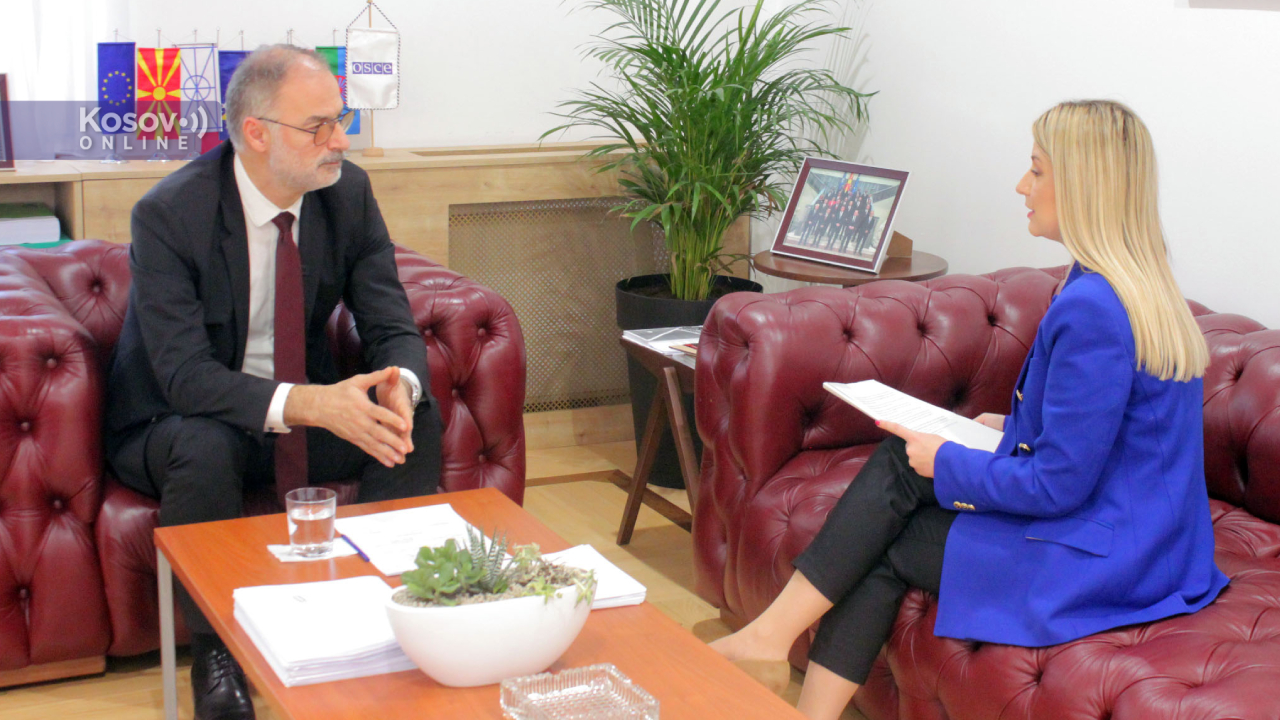
Concerning the upcoming joint session of the governments of North Macedonia and Serbia, Stoilkovic shared:
"There is no open issue except the one you mentioned. The joint session of the governments is expected to be held in the second half of February. This meeting between the two governments provides an opportunity to open new avenues for economic cooperation. I mentioned expecting several Serbian investments in Macedonia and the engagement of the Macedonian economy at the Expo exhibition in Belgrade. Macedonia is one of the first countries that consented to participate in this significant international fair, thus opening considerable possibilities for cooperation on both sides."
"In any case, a significant economic development in the region is forthcoming, and both Macedonia and Serbia should seize it in the best possible way. What is crucial for the joint session of the governments is that several bilateral cooperation agreements will be signed at that time, between the ministries of energy, culture, and others. These are ongoing processes, and work is being done on these documents. Nothing is final yet; there is still a month to prepare everything in the best possible way. But generally, just holding a joint session of the governments after so many years speaks in favor of the fact that relations are moving in a positive direction and that new perspectives will open up on both sides of the border."
Preparations for the Expo 2027 have already begun, and the fact that Macedonia was one of the first countries to give its consent to participate in the exhibition speaks volumes about our enthusiasm. Over the next few months, we expect to organize a visit from the Expo director to Macedonia to explain to the citizens what the exhibition means and what opportunities it presents. On the other hand, we are awaiting a response from the Expo director about what needs to be prepared for the exhibition so that the Macedonian economy can be involved in the realization of this project. These are all profitable ventures that, in a way, improve the lives of the citizens. These are key tasks for the new Macedonian government, and I hope we will utilize them in the best possible way.
The Open Balkan project is a frequent topic of debate among the Albanian political bloc in the country. The future of this initiative is crucial, and its focus of interest among Albanian political circles is understandable.
Every connection between Macedonia and Serbia involving Albanians, whether it be Albanian political parties or elites, is not warmly received by their representatives, making their opposition understandable. The paradox is that it all depends on where you are sitting. The party that is now in opposition, which had previously consented to participate in the Expo, is now against it. This changes depending on whether you are in power or in opposition. The Expo is important for Macedonia as it allows for a somewhat freer and more concrete approach to economic cooperation in the region, and it also presents a significant diplomatic or international, politically favorable opportunity for Macedonia.
Macedonia, regarding the Open Balkan initiative, finds itself between two perhaps largest nations in the Balkans, Serbian and Albanian, which in some ways have conflicting interests. This is an opportunity for Macedonia to secure its place in the economy, politics, and everything else between these two interests. In this sense, I am convinced that the Open Balkan is of vital importance to Macedonia and should be supported. I believe that the government will continue to support it in the future. It is expected that Montenegro and Bosnia and Herzegovina will join this initiative in a broader format, which is an opportunity for better cooperation in the region.
You cannot be against any kind of cooperation in the region and talk about the European Union. Therefore, those who speak against the Open Balkan are essentially against any integrations, primarily in the economic sense, and subsequently in a broader political context.
After Artan Grubi, against whom a warrant was issued for abuses in the National Lottery and who was also placed on the "blacklist" of the State Department, what did you inherit in the Ministry?
Grubi was not placed on the "blacklist" just because he was a criminal. The explanation states that he endangered regional cooperation and stability. It's a very serious accusation. And, that he engaged in criminal activities is best confirmed by what he left in the Ministry. There is so much so-called administrative crime that, simply put, in the Ministry, whatever you touch – there is a problem. There is no appropriate documentation, nothing was recorded about what was done, money that was withdrawn was not recorded, not returned to the cash register, an inventory was not made... When we started to make an inventory of financial assets, we concluded that they were taking money, but it was never 'read' in the state cash register, only the party army was employed and at the expense of the budget. Those who were employed did not come to their workplace, but received their salaries regularly. These are million sums that have been paid out for years. State resources were used in the worst possible way, and here you see not only criminal behavior but also an attitude towards the state. Documentation has remained, these are cases that are being resolved and forwarded to the competent state institutions. So far, about ten such cases have been sent to the Prosecutor's Office, the financial police, the Ministry of Interior, and it is up to them to proceed further.
We managed in just a few months to establish elementary order and put some things in their place to start functioning normally. I promised that after a few months I would talk to Prime Minister Hristijan Mickoski, to tell him that I managed to return the Ministry, which was a private firm of Ali Ahmeti and Artan Grubi, to the state. This was more of a private firm than any state institution.
What can we expect at the end of your term, and will relations among communities be improved?
We have started some new programs. We organized an event to mark January 27th, Saint Sava's day, the day of the Serbian people in Macedonia, which is a non-working day for the Serbian people in the country. We received funds to distribute to the non-governmental sector, to members of all communities. This is a completely different approach, considering that in the last few years, this Ministry allocated money to mono-national organizations. Funds were used only by members of the Albanian community in Macedonia, no other was a recipient of state funds. We are correcting this injustice.
It is an important political message that Macedonia is not only a bi-national but a multi-national state. Here live Serbs, Turks, and others, and we will try to impose ourselves more, not only in the Macedonian public but also in the international community, to fight for more places for our members in the state we live in.
Journalist: Marija Dimiskova
Production: Kosovo Online Correspondence in Skopje

0 comments