
The attacks on Serb institutions are more perilous than outright serbophobia
Written for Kosovo Online by Srdjan Garcevic, founder of The Nutshell Times
From the shocking incident of a member of the so-called security forces firing on children during Serbian Christmas Eve, to the more recent incident where his colleagues harassed a women’s cultural group for purely being Serbs, and the now normalized lawfare against Serbs, the persecution of Serbs for being Serbs by the Prishtina authorities has intensified under Kurti’s now illegitimate regime. Adding to that, the frequent attacks on Serbian heritage sites and culture, paired with the organized attempts to claim them as Albanian and put them under the direct control of Priština, one cannot deny the Serbophobic nature of the current policies in Kosovo.
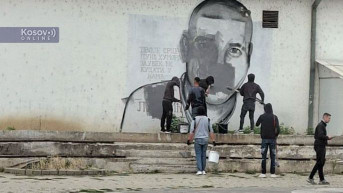
Yet while this outrageous campaign of outright hate demands condemnation and response, an even more insidious threat lurks in subtler measures: the nominal acceptance of Serbian culture coupled with the systematic dismantling of Serbian institutions and independence. Nowhere is this more evident than in Northern Mitrovica, where an illegitimate municipal government has imposed the renaming of streets. On the surface, such gestures seem to honor Serbian culture—adding, for instance, the assassinated reformist Prime Minister Zoran Đinđić to the roll of street names. In reality, however, they erase what the local Serbs truly cherish, including murals venerating their saints and notable citizens.
This “de-institutionalization” masquerading as concern for Serb interests underpinned the removal of Srpska Lista representatives from positions guaranteed to them in Priština’s parliament, as well as the idea to bar it from running in the coming municipal elections. It also explains the decade-long refusal to establish the Association of Serb Municipalities—an agreement ostensibly reached, yet perpetually deferred.
While his serbophobia is probably unmatched, this part of Kurti’s strategy is hardly novel.
The Balkans have seen this play before. In 1990, Croatian nationalists stripped Serbs of their constitutional status as a constituent nation, denying them even minority protections. The resulting crisis spiraled into war, culminating in the ethnic cleansing of Serbs in 1995. Today, although Croatia grants Serbs certain cultural rights, their political power remains hollow, their presence reduced to a bargaining chip in disputes between the Croatian left and right. Slovenia, despite the historic and significant presence of Serbs and other Yugoslav peoples, continues to deny them minority recognition. Montenegro, for its part, has long pursued discriminatory policies against Serbs; its former regime even attempted the outright nationalization of the Serbian Orthodox Church.
As in Northern Mitrovica, such policies are rationalized as efforts to foster inclusivity or improve government efficiency—arguments rarely, if ever, applied against other ethnic or religious groups. In this context, the specter of Republika Srpska is often invoked: the only functioning Serb-majority institution outside Serbia, created by the Dayton Agreement thirty years ago to secure peace. Far from being a destabilizing force, Republika Srpska has served as an anchor of political stability and economic vitality in Bosnia and Herzegovina, while offering the state a measure of strategic autonomy with its international connections. Yet its institutions face constant assault, most recently through questionable legal maneuvers against its president, Milorad Dodik.
Interestingly enough, Serbs are not a nation defined merely by folklore or ritual: our identity since the Middle Ages rests on the building of institutions. This was even noted by the historian Eric Hobsbawm when discussing the development of nationalism in the Modern Age. Saint Sava, our national patron, is revered not only for his piousness but for his tireless efforts to establish structures of education, faith, and governance. Serbian identity has always been pragmatic, grounded in the idea of the state rather than confined to tribal or religious boundaries, which have always been muddled in the Balkans. For centuries, anyone who carried the memory of the medieval Serbian state—through epic poetry or shared struggle—was considered part of the nation, regardless of faith. The Serbian pursuit of autonomy expanded outward, encompassing other South Slavs in Yugoslavia, and even attracting foreigners who made Serbia their home. This identity based on institutions is why, despite all the challenges, Serbia is perhaps the most genuinely multiethnic society in the Balkans, with minorities enjoying real and recognized rights and high participation in government.
The true Serbian question has never been one of folklore or autochthony, of who was here first and has first made this or that dish, but of autonomy: who has the will, and the right, to independently govern this complex yet vital crossroads of the world for the benefit of all living here.



0 comments