
FEUILLETON Henry Kissinger, America, and Kosovo (16): Reassessing the concept of humanitarian intervention
Writing for Kosovo Online: Dragan Bisenic
A good example, as mentioned by Kissinger, was the visit of Chinese Premier Zhu Rongji to Washington in early April – generally considered one of the most reformist and market-oriented Chinese leaders. This visit was cast into doubt by the announcement – just before Zhu's arrival – that the United States would support a UN resolution condemning China's human rights practices and immediately thereafter sell long-range radar to Taiwan.
During the visit, the administration refused to sign an agreement for China's entry into the World Trade Organization, for which the Chinese had made significant concessions and had reason to believe it would be a central part of Zhu's visit. To aggravate Zhu's embarrassment, the administration publicized all the concessions he had made.
Examining the essence of these decisions, their timing gave the impression of a government that, according to its critics, had been forced to subordinate the policy based on common national interests to domestic politics, Kissinger noted.
Nevertheless, the bombing of the Belgrade Embassy was an event that triggered an explosion. Mutual suspicions fed on each other. The Chinese initially considered the President's apology – given in response to a question at a press conference during a visit to Oklahoma and related to the justification for NATO bombing – inadequate.
Confrontation introduction to catastrophe
Americans considered the Chinese violence against the US Embassy in Beijing unacceptable. However, to prevent Sino-American relations from evolving into confrontation, it is necessary to stop mutual accusations and strive to restore dialogue.
Kissinger noted that leaders of both countries were aware that confrontation would be catastrophic for both sides and world peace. However, both are under pressure from ideological opponents at home. Still, there is no way to avoid this debate. In the United States, critics are serious, and so must be the administration.
He pointed out that critics of cooperative Chinese policies were divided into two camps. The first group believes that the rise of China as a great power automatically threatens America's vital interests, especially under communist leadership. The second group is concerned about China's specific human rights policy. Of course, China's actions on many fronts reflect a pragmatic policy of an emerging power. However, patient and firm diplomacy can prevent conflicts between China and America. And there are many areas of overlapping interests.
"If, in the absence of a direct challenge, China's emergence as a great power and its political system become a pretext for American hostility, we will embark on a lonely path without the support of any major nation in Europe or Asia. I would caution against such an adventure that will distort our Asian policy for decades. There is no more important task for American foreign policy than devising a strategy that will recognize and manage the adversarial elements in our relationship with China while simultaneously drawing Beijing further into the international system. We must not repeat in Asia the emotional and thoughtless policy that brought us such misfortune in the Balkans. The law of unintended consequences continues to operate", Kissinger emphasized.
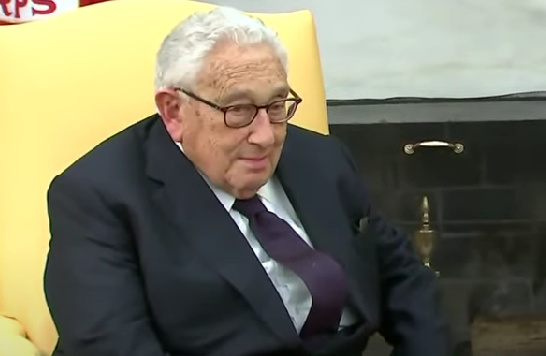
The third question was the future of NATO, which, according to Henry Kissinger's opinion, was not at all improved by the bombing. Despite the apparent unity of the NATO summit, Kosovo made the debate about the future of the Alliance inevitable, he stated. New European leftist governments – especially in Germany and Italy – fear being accused of undermining the legacy of their conservative predecessors regarding a pro-American and pro-NATO foreign policy.
However, these new governments are likely to consider that they have now shown enough respect for the traditions of alliance solidarity, so it can be expected that the growing bitterness within their ranks, which would lead tens of thousands to protest on the streets of Germany if former Chancellor Helmut Kohl had won the elections and pursued a similar policy, will influence them. When the crisis in Kosovo ends – or if the war continues – these electoral circles will become more dominant. And their influence has already been demonstrated by the unprecedentedly rapid refusal of the German chancellor to consider sending ground troops to Kosovo.
All of this raised much more fundamental questions.
NATO's credibility is questionable
"The questions obscured at the NATO summit cannot suffer further delays. Specifically, what is NATO's true mission in so-called 'out-of-area' conflicts? What are the relative roles of Europe and America? Does the Alliance have a serious political or military strategy for stabilizing parts of Europe or neighboring strategic regions? Europe (including the United Kingdom) has already begun to draw the conclusion from Kosovo that it needs to accelerate the development of its own institutions to strengthen its autonomy from the United States – a vote of confidence amid war is unlikely", Kissinger argued.
He foresaw a scenario that has been unfolding in US-European relations for some time. "But if Europe does not provide resources for this task – as is likely – the Alliance will remain the worst of all scenarios: Europe seeking greater freedom of action from the United States but with little real capacity to act alone, and America alienated from Europe", Kissinger outlined.
However, for him, no question was as important as the "reassessment of the concept of humanitarian intervention presented as the administration's contribution to a new approach to foreign policy". The air war in Kosovo was justified as establishing the principle that the international community – or at least NATO – will now punish governments for offenses against their own people. "But we did not do this in Algeria, Sudan, Sierra Leone, Croatia, Rwanda, the Caucasus, Kurdish areas, and many other regions. And what will be our attitude toward the newly emerging ethnic conflicts in Asia, for example, in Indonesia and the Philippines? The answer is often given that we act where we can without unnecessary risk, not elsewhere. But what are the criteria for this distinction? And what kind of humanitarianism expresses its hesitation to endure military casualties by destroying the civilian economy of its opponent in the decades to come?" Kissinger asked.
Moral principles are expressed in absolutes, but foreign policy must forever deal with reconciling goals and means.
"The fact that ethnic cleansing is abhorrent does not eliminate the need to devise the most appropriate response. At every stage of the Kosovo tragedy, other blends of diplomacy and force were available, although it is not clear that they were ever seriously considered. A strategy that justifies its moral convictions only from altitudes above 15,000 feet – while destroying Serbia and rendering Kosovo uninhabitable – has already produced more refugees and casualties than any conceivable alternative mix of force and diplomacy. Therefore, it deserves to be questioned on both political and moral grounds", Kissinger concluded.
Although these were all criticisms of US foreign policy, Kissinger believed that NATO's credibility had been jeopardized by such thoughtless moves; therefore, the Alliance needed to persevere, as otherwise, it would call into question its existence.
Continuation tomorrow: I would be surprised if, when the smoke clears, there are many Serbs left in Kosovo

comments