
FEUILLETON Henry Kissinger, America, and Kosovo (18): Bosnia is an agreement, and Kosovo is a NATO Imposition

Writing for Kosovo Online: Dragan Bisenic
Kissinger, in his article "When the Ovations Subside" published in "Newsweek" on June 21, 1999, analyzed the conditions under which the bombing of Serbia was concluded on June 10, 1999.
He first commended the Clinton administration for the courage with which it had persevered and the skill with which it had supported allied unity and secured Russian approval. However, he warned that "victory poses an equally serious challenge - to avoid being permanently stuck in the corner of the Balkans as the modern equivalent of the Ottoman and Austro-Hungarian empires".
The reason for this is that the Petersberg Plan led to deeper American involvement, "placing us in the role of the region's policeman amidst passionate hatred and where we have little strategic interests".
He then pointed out the differences between the plan presented by Finnish President Martti Ahtisaari, based on which the cessation of military operations against Serbia was signed, and ratified by the Yugoslav parliament, and the proposals from Rambouillet on behalf of which the bombing was initiated. There were important nuances and consequences in these differences.
Many "landmines"
NATO forces entered Kosovo based on a UN mandate, not an agreement between Belgrade and NATO. Kosovo is explicitly described as a part of Yugoslavia, albeit autonomous (point 5); the territorial integrity and sovereignty of Yugoslavia are affirmed (point 8). The provision for a referendum at the end of three years was abandoned, and the initial insistence on complete NATO control was diluted by a series of UN mandates and the presence of Russian forces.
But even where the peace plan still runs parallel to the Rambouillet agreements, it threatens almost permanent American involvement in an endless series of predictable conflicts, Kisinger pointed out.
The sharp language of the agreement is designed to be firm, yet each party can interpret the inevitable ambiguities favorably for itself. This diplomatic tool is not unprecedented, but it becomes a particular problem when it involves parties that have "purged their fickle passions in the cauldron of mutual slaughter for centuries".
The Petersberg Plan envisioned four stages of political evolution: (1) temporary governance of Kosovo by a designated administrator; (2) international civilian presence; (3) substantive autonomy for the people of Kosovo within Yugoslavia, under the auspices of the UN Security Council; (4) the development of temporary democratic self-governing institutions.
For Kissinger, "every aspect of this scheme is a potential landmine".
According to point 8, the political framework should fully take into account the Rambouillet agreements and the principles of sovereignty and territorial integrity of the Federal Republic of Yugoslavia. Therefore, he raised the question of how these objectives could be reconciled. Rambouillet envisioned the occupation of Kosovo by NATO and a referendum on the future of Kosovo at the end of three years. The peace plan stops at autonomy and repeatedly affirms Yugoslav sovereignty. However, the KLA fought for independence, not autonomy. After what its members and the population of Kosovo endured during the bombing, staying in Serbia would be unthinkable for them. The additional provision of point 8, for the "demilitarization of the KLA" by NATO, is even harder to imagine.
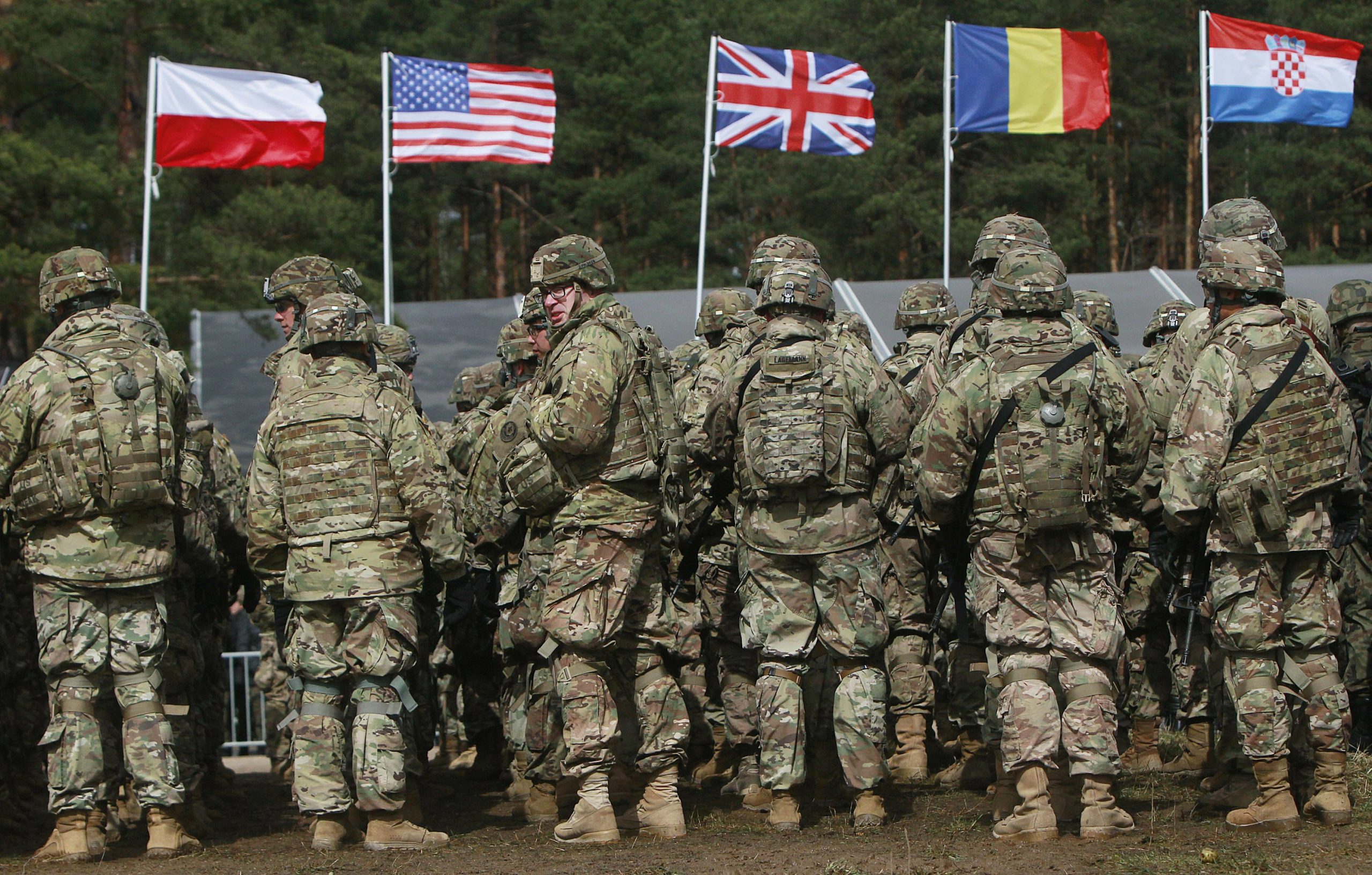
Kissinger saw these provisions as a possibility for America to end up in a paradoxical situation. For any of these provisions to be realized, American and other allied military forces must impose them. "We will be in the ironic position that, by fighting on the side of the Albanians for their autonomy, we may find ourselves resisting them (or even fighting against them) on the issue of their independence. And since we went to war to defend the Albanian population from Serbian ethnic cleansing, we are now perhaps obliged to protect the Serbian population from the rage of their Albanian neighbors. Unless we are willing to endure almost permanent military occupation, ethnic cleansing of the Serbian population could be the outcome of our action", Kissinger pointed out.
He further noted that the confusion was compounded by another provision of point 8 which foresaw "negotiations between the parties". "But who are the parties? I assume they are the Serbs and Albanians. It is added that the impasse should not delay or disrupt the establishment of self-governing institutions, a provision that paradoxically could guarantee a standstill. The agreement does not address who should take on the task of imposing such self-governing institutions - implicitly leaving that responsibility to the United States. Not only are we inconspicuously on the path to replacing the Ottoman and Austro-Hungarian empires in the Balkans; over time, we may face the same hostility from the local population as they did", Kissinger emphasized.
Kosovo is not "sui generis"
He also noted that the envisaged command arrangements enhanced ambiguity. Military forces, according to the provisions of the United Nations resolution, would essentially be NATO. Additional troops from Russia would be assigned under uncertain command arrangements. To prevent the partition of Kosovo, Russian troops would not be given a specific area—unless they decided to unilaterally occupy a part of Kosovo, as it seemed they would do last week. Moreover, the role of all these forces is unclear, and their rules of engagement are defined by the Security Council.
Analogies with Bosnia are deceptive. The Dayton Agreement that ended the Bosnian conflict was negotiated and approved by all parties. In Kosovo, NATO imposed an agreement on both sides. In Bosnia, three armies ended up on homogeneous territories assigned to them by the Dayton Agreement. There is no equivalent solution in Kosovo. Nor are there armies for separation, as Serbian forces will likely leave. NATO's task—to confirm the departure of Serbian forces, disarm the KLA, and protect Kosovo's borders—will likely bring them into conflict with the Albanians who want to influence events in Kosovo or Macedonia. "All of this can put our troops in the midst of a civil guerrilla war, posing the same dilemma we encountered in Somalia", Kissinger presumed.
Arrangements for civil administration contain comparable potential conflicts. Enormous reconstruction tasks will fall on the civilian administrator appointed by the UN Secretary-General "in consultation with the Security Council" who will act in accordance with the mandate determined by the UN resolution. The administrator will have to organize the police and oversee the restoration of basic services in a completely devastated country. When indigenous Kosovar institutions come to life, they will likely challenge the authority of the civilian administrator in the name of independence. What if the KLA emerges as the police of autonomous authorities? And, as Serbia recovers, it could challenge—the likely support of Russia—the civilian administrator in the name of Yugoslav sovereignty.
Unlike officials in the US administration who later interpreted their attitude towards Kosovo and the declaration of unilateral independence as a "sui generis" situation, Kissinger believed that Bosnia had been sui generis in a way, but not Kosovo.
"The evolution of Kosovo will certainly have a profound impact on its neighbors. The immediate impact will likely be on the Albanians in Macedonia, who make up about a quarter of the population. They will probably demand, at the very least, the same status for themselves that the Kosovars are getting. And the collapse of Macedonia could ignite another Balkan explosion. Comparable pressures can be expected from the smaller Albanian minority in Montenegro. There is also a tendency towards Greater Albania, fueled both from Tirana and by Albanian emigrants who provide a large part of the finances", Kissinger explained.
Continuation tomorrow: NATO will never be the same after Kosovo

0 comments