
FEUILLETON Henry Kissinger, America, and Kosovo (19): NATO will never be the same again after Kosovo
Writing for Kosovo Online: Dragan Bisenic
Kissinger has once again returned to his idea of concluding everything by organizing an international conference to bring the maps in the Balkans, or in the former Yugoslavia, in line with the ethnic structure.
"To sum up, if we try to implement the United Nations resolution for any period, we will appear as a permanent party in mysterious and bitter Balkan disputes. It would be far wiser to cut the Gordian knot and recognize Kosovo's independence as a part of a comprehensive Balkan solution—perhaps including self-determination for each of the three ethnic groups in Bosnia. In such an arrangement, the borders of Kosovo and its neighbors should be guaranteed by NATO or the Organization for Security and Cooperation in Europe. As in Bosnia, international forces would then patrol on both sides of these borders for at least a significant transitional period", Kissinger proposed.
Connection to Ukraine
He pointed out another important difference between Dayton and the Kosovo solution, making it all the more crucial to move the issue towards a final resolution quickly due to the hostility of the international environment.
His explanation, in its own way, foreshadowed the events that would follow almost a quarter of a century later and that would once again draw attention to Kissinger's thinking, especially when it comes to the future of Ukraine.
Kissinger believed that it was necessary to "remove Kosovo" from the Russian-American agenda as soon as possible, but this has not happened to this day.
"Most nations either supported or tolerated the Dayton Accords. That is not the case in Kosovo. Russia may have thrown in the towel in trying to shape the immediate outcome significantly. But it feels deeply humiliated. Kosovo has become a public symbol of Russia's loss of influence and public degradation by the West. There is no incentive for Moscow to facilitate the arrangement once it is established. Instead, Moscow will likely look for opportunities to obstruct or confront elsewhere what it sees as America's hegemonic tendencies. From the US point of view, the faster the Kosovo issue is removed from the Russian-American agenda, the better for our long-term relations. And Russia should not be interested in maintaining a situation where it can embarrass us but cannot win", Kissinger said.
All of this also applies to China but to a lesser extent. China rejects the unilateral way in which NATO intervened in what Beijing perceives as Yugoslavia's internal affairs. One of the global consequences will be that most nations worldwide will have an incentive to create obstacles to the application of the Rambouillet principles contained in the Kosovo agreement.
"Countries concerned that they could be subject to unilateral NATO action may distance themselves from us once the dust settles. They may have an incentive to acquire weapons of mass destruction as the safest deterrent against American conventional superiority. How ironically history repeats itself! During the Cold War, democracies relied on nuclear weapons to balance assumed Soviet conventional superiority. In the post-Kosovo period, smaller countries could turn to weapons of mass destruction in response to America's immense technological advantage in conventional arms. For all these reasons, it is imperative to conduct a major assessment of how to connect the new foreign policy with the international consensus", Kissinger noted.
Division on permanent guard duty
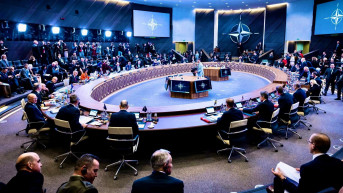
What caught Kissinger's particular attention was the assessment that NATO would never be the same after Kosovo.
"The Clinton administration skillfully kept the Alliance together during more than 10 weeks of bombing. However, the decision of the heads of European Union states in Cologne to accelerate a unique European defense and foreign policy reflects deep discomfort over Europe's relative impotence faced with powerful American tactics. Serious European efforts to build autonomous decision-making centers would be far from undesirable provided Europe supports its new organizations with appropriate resources. But it also requires new thinking on both sides of the Atlantic if we want to sustain the vital American interest in close transatlantic cooperation", Kissinger warned.
The ultimate outcome of the attack on Serbia and the American bombing is that America will have "a division and a half of soldiers almost on permanent guard duty on the edge of the Balkans".
Kissinger called for tempering triumphalism, urging some consideration of the need for "establishing geopolitical priorities".
"Before we take Kosovo as a model for a new era of humanitarian diplomacy, we should examine where diplomacy or strategy could be applied elsewhere. There are about 22 million refugees worldwide and a large number of ethnic conflicts. For whom among them would a comparable mix of force and diplomacy be relevant? Where else could we bomb for 10 weeks without military casualties for the US, too high a risk of escalation, or the creation of unsustainable precedents? A demonstration of what democracies can achieve when awakened will serve us well in the years ahead. But the final legacy of Kosovo will depend on whether our diplomatic finale corresponds to the display of our power", Kissinger concluded.
Kissinger's claims were the subject of significant challenges. They were labeled as "lies" by lobbyists involved in the Yugoslav conflict: Michael Sells, Andras Riedlmayer, Noel Malcolm, Norman Cigar, Rabia Ali, Christopher Hitchens, and Lawrence Lifschultz.
Continuation tomorrow: Kosovo was a centuries-old civil war



0 comments