
FEUILLETON Pogrom 2004 - first time on organizers and instigators (4): Obilic cleansed of the Serbs
The Security and Information Agency of Serbia has prepared a publication titled "March Pogrom of the Serbs in Kosovo and Metohija in 2004" on the occasion of the 20th anniversary of the pogrom against the Serbs in Kosovo. As stated in it, the data contained therein for the first time point to the real organizers and perpetrators of the pogrom. Kosovo Online is publishing integral parts of this publication.
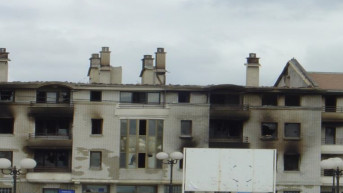
All Serbs in Obilic were expelled by 2:00 p.m. on March 18, 2004. In this municipality, 3,600 Serbs were living after 1999.
Terrorists, in groups, simultaneously entered several parts of the city and began burning houses where there were still Serbs. Those who attempted to escape were beaten by Albanians.
The organizers of the March pogrom in Obilic were: Kadri Sulejmani, known as Mish, Mirsad Kurteshi, known as Dubula, and Bekim Beratovci, all members of the KPS (Kosovo Police Service). During the unrest, a larger group of Albanians was led by Ramadan Krasniqi and Gani Kastrati, who organized and directed the destruction and burning of Serbian houses.
More extremist organizers and participants of the riots included: Enver Beratovci, known as Enko, Elhan Gashi, the Cerkezi brothers, Muhamet, Naser, and Abdurahman, Fejzulah Krasniqi with his five sons, Fikret Sulejmani, Abedin Sogojeva, and others.
In Kosovo Polje, the organizers of the pogrom were: Sami Azemi, Muharem Ademi, Isa Berjani, Gani Kastrati, Arben and Albert Elshani, Isa Hiseni, Emir Halimi, Hajdar Berisha, Indira Berisha, Nehat Thaci, Fadil Gashi, Nuhi Slamniku, and others.
On a single day, March 17, all remaining Serbs and other non-Albanian residents were expelled from Kosovo Polje. Albanian extremists set fire to the Municipality building and organized an attack on the hospital, the "Saint Sava" school, and about twenty Serbian houses. Both Orthodox churches of St. Nicholas and St. Catherine in the village of Bresje were burned down. In front of the school, Albanian terrorists killed Zlatibor Trajkovic and seriously wounded Trifun Stoilovic.
These crimes are associated with the sons of Adem Zogiani, a member of the PDK, who later, in 2017, ran for mayor of Kosovo Polje.
Adem Zogiani's uncle is Azem Sula, the founder of the former KLA and the illegal Albanian security service - SHIK, as well as one of the prominent organizers of the March Pogrom against the Serbs in 2004.
In Stimlje, the March Pogrom was organized by Fehmi Mujota and Ruzhdi Jashari, with very active roles played by Nazmi Igbali, Suqeri Igbali, Raif Isufi, and Ruzhdi Jakupi.
In Kacanik, the March Pogrom was organized by Zharki Xhabir, Nexhat Koxha, Muamet Krasniqi, Rufki Suma, Hajrush Ljuma, Enver Daloshi and Zija Murseli. To encourage Albanians to participate in violent protests in the villages of Doganovic, Eleza, Sopotnica, and Slatina, Xhabir Elezi, Nexhmendin Elezi, Xhevat Belja, Gjelal Gashi, Afrim Elezi, Bekim Kozha, Naser Xhoklhaji and Bashkim Braha were responsible, while in the area of Stari Kacanik, these activities were carried out by Fadil Krasniqi, Bexhet Krasniqi, and Bekim Vishi.
In Vucitrn, the organizers of the unrest were Salih Salihu, president of the Association of KLA War Veterans in Vucitrn, and Bali Dervish.
Some of the more extreme participants in the violent protests include Nazmi Shala, Sami Shala, Faton Hasani, Arsim Bregaj (all four participated in looting and burning Roma houses), as well as members of the Latif and Bexhet Veseli families from Slatina and the Barlen Zeke family.
In Strpce, during the March Pogrom, Stolic Dobri and his son Borko were fatally injured, and there are reasonable suspicions that this criminal act was committed by members of the Kosovo Police Service (KPS) Besnik Asani, Nexhmendin Islami, and Xhevat Murtezi, and that Heset Salihaj was also involved in these murders. There is a UNMIK report confirming that Besnik Asani is the owner of the automatic rifle used in the murder.
In Klina, the March Pogrom was organized by Ilaz Selimi, brother of Rexhep Selimi, a high-ranking former KLA member who is being tried for war crimes before the Specialized Court in The Hague, Ramadan Krasniqi, and Nuo Shabanaj, both teachers at the time, while very active roles were also played by Ibish Raci, Prenk Gjetaj, and Aslan Krasniqi.
The individuals who led the attacks on the Serbs in the villages of Grabac and Bica in this municipality were: Uka Berisha, Xhevat Berisha, Qazim Dalaveraj, Imeri Afrim, Asim Halitaj Refki Tafilaj, Muamet Halitaj, Azir Hoti, Ali Kameraj, Gasper Lajci, Sokol Krasniqi, Haki Raci and Tahir Deskaj.
In Orahovac, the Pogrom was organized by Ismet Tara, Sabajdin Cena, and Smajl Latifi, all former members of the KLA (Kosovo Liberation Army).
In Djakovica, the Pogrom was organized by Skender Avdia, and Besim Vokshi, who organized the burning of religious buildings, Ali and Remzi Thaci, who initiated and organized the desecration of Orthodox cemeteries, Mark Kecani and Hil Koni, who participated in the destruction of religious buildings, Zef Hasani and Hil Koni, who owned the excavators used to demolish religious buildings, Mazlum Kumnova, Muhamet Ukshini, Halit Gashi, Gjon Prenqi, and others.
In Pec, the pogrom was organized by Ibrahim Kelmendi, Qerim Kelmendi, Ali Haskaj, Nexhmendin Lajći, Nedžmendin Maliqi, Sul Muriqi, Qamil Barbati, Xhevdet Dreshaj, and Lulzim Kulashi.
Some of the more extreme participants in the violent and destructive protests were: Fadilj Ahmeti, Gjon Berisha, Ismet Dreshaj, Xhevdet Dreshaj, Burim Kastrati, Rafet Nikqi, Deli Nikqi, Rexhep Gashi, Ismet Zekaj, Azem Kurbogaj, Haki Dreshaj and Haki Nikici.
Nexhmendin Lajci set fire to the Serbian village of Belo Polje with his group, which included: Nela Aska, Hasan Dreshaj, Sul Muriqi, and Xhevat Nikqi.
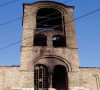
In Pec, on March 17th, all Serbian houses were set on fire, and Serbs were evacuated to the Italian KFOR base in the village of Zagrmlje. During the three days of unrest, the Church of Saint John the Baptist, the Old Metropolis with the parish house, and the Church of the Presentation of the Blessed Virgin Mary in Belo Polje were burned down. Additionally, all tombstones in the cemetery in Belo Polje were demolished.
The violence in Vucitrn on March 17th began when a group of 400 to 500 Albanians, including former KLA members and individuals from criminal backgrounds, first set fire to and desecrated the church, followed by burning Serbian and Roma houses in the area. Members of the Moroccan KFOR contingent withdrew when the church in Vucitrn was set on fire. A high-ranking KPS official in Vucitrn, Habib Behrami, provided support to the extremists.
In Decani, the March Pogrom was organized by Avdil Mushkolaj, and in Gora, it was organized by Demir Rashiti and Izet Aliu.
Legal Qualification
In the preparatory actions of Albanian extremists for inciting rebellion and ethnic cleansing of the Serbs, there is an evident presence of direct intent, as they planned and mobilized perpetrators of serious criminal offenses in a deliberate and planned manner.
Additionally, there is evident intent to endanger the constitutional order and security of the former State Union of Serbia and Montenegro by burning private houses and properties owned by the Serbian Orthodox Church, i.e., by causing fires, explosions, or other acts of general danger and violence that created insecurity among citizens of Serbian and other non-Albanian nationalities, thus fulfilling all elements of the criminal offense - terrorism, as stipulated in Article 125 of the then-applicable Basic Criminal Law.
Furthermore, the commission of this criminal offense resulted in the deaths of several individuals and posed a danger to people's lives, accompanied by severe violence and extensive destruction, leading to a threat to the country's security.
In the March Pogrom of 2004, in the presence of 20,000 KFOR members, 3,000 UNMIK personnel, and 6,000 KPS members, more than 4,000 Serbs were expelled from their homes across the Province. 28 people (9 Serbs) were killed, over 900 were wounded, beaten, or seriously injured.
Nineteen monasteries - monuments of cultural heritage of the first category, and 16 Orthodox churches that were not categorized, were destroyed. Eleven churches and monasteries were damaged, along with over 100 church buildings. Over 10,000 valuable frescoes, icons, and other church relics were destroyed. Church registers of baptisms, marriages, and deaths, which testify to the centuries-long existence of Serbs in Kosovo and Metohija, were also destroyed.
Over 930 houses were burned and destroyed, and nine villages and six towns were cleansed of Serbs.
Ethnic cleansing occurred in Pristina, and Caglavica, previously the most stable Serbian enclave near Pristina, soon became a large Albanian suburban settlement. By expelling Serbs, the ethnic composition of the population in certain areas was completely changed. Serbs were expelled from Prizren, Djakovica, Pec, Urosevac, Stimlje, Podujevo, Gnjilane (where the population was Serbian majority until 1999), Lipljan, Obilic, Kosovo Polje, Bresje, Svinjare, as well as the returning Metohija villages of Belo Polje, Bica, and Grabovac.
UN police estimates indicated that over 51,000 Albanians participated in violence at 33 locations, while according to OSCE and Human Rights Watch, up to 60,000 Albanians were involved.
One hundred and sixty-three individuals suspected of arson, looting, murder, and other crimes were arrested. Only 140 individuals were detained after this crime, and by March 2010, a total of only 400 were prosecuted. The majority were acquitted in criminal proceedings, and those convicted received only symbolic sentences.
Trials were plagued by numerous problems and difficulties, such as witnesses withdrawing their testimonies, witness testimonies changing, delays in submitting police reports, adjournments of hearings, disregard for ethnic motives, imposition of minimal sentences, and even sentences below the legally prescribed minimum, as well as frequent annulments of judgments.
None of those arrested and convicted belonged to the category of instigators or organizers of the March Pogrom of Serbs.
International military and civilian UN missions in Kosovo and Metohija, although they had full executive mandates during that period, did not foresee and prevent the Pogrom of Serbs, the destruction of their property, and especially the property of the Serbian Orthodox Church.
The end.
0 comments