
Heading towards Trump's world
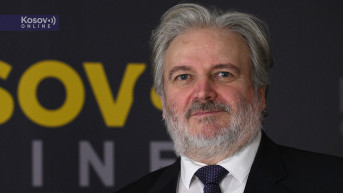
Writing for Kosovo Online: Dragan Bisenic
This year's gathering of the global business elite concluded with a party featuring a performance by Sting and his band, but the collective mood of all those thousands of participants was anything but cheerful as they stayed in this small alpine town immortalized by Thomas Mann in his novel 'The Magic Mountain'. During the 54th gathering, more than 600 discussions took place, with 3,000 participants and experts from around the world, including almost 500 ministers, 60 heads of state or government, and 100 CEOs of multinational companies and banks.
This is because there were four "Cs" that dominated this year's event program: conflict; a new Cold War; climate; and chaos—or the potential for it, arising from the misuse of artificial intelligence by hostile states and criminals. As usual, there were many receptions and parties, along with business deals made behind closed doors, although the Forum's dream of a peaceful, prosperous, globalized world has been shattered by recent events.
The longstanding President of the Forum, Klaus Schwab, explained that this year's topic, "Rebuilding Trust", had emerged from the realization that "our world is geopolitically more interdependent, yet paradoxically more divided than ever". Schwab colored his opening speech with gloomy observations: slow growth, inequalities, challenges of climate change, and innovations creating unprecedented risks, leading to "uncertainty, general fear, and pessimism".
He labeled this as a "reactive approach undermining our collective belief in the future and eroding the trust we place in our ability to shape a better world". Schwab indirectly dismissed widely circulated theories that the World Economic Forum controlled the world but had not denied its significant influence, acknowledging that its participants "occupy privileged positions".
"The Annual Meeting of the World Economic Forum is not a collective decision-making body, but its influence stems from new insights gained through dialogue and interaction, and, more importantly, from the commitment of each participant to make a meaningful contribution in their respective fields and take responsibility for addressing our most urgent global issues".
US Secretary of State Antony Blinken noted that "almost every country wants the United States at the table and leading, because without the US leadership, you risk being in a vacuum, and vacuums are usually filled by bad actors".
Chinese Premier Li Keqiang, leading a delegation of 140 members, responded to this. Although he did not mention the US once, he repeatedly referred to unnamed "capricious", unreliable, and overbearing nations – which is the Chinese code for America.
The priorities of the discussions were defined more by themselves than by what the program offered.
"The New York Times" claims that "leaders and executives gathered at the World Economic Forum are obsessed with the US elections and artificial intelligence, not Ukraine or Gaza". Trump's victory in the Iowa caucuses that happened during the conference naturally imposed the topic of preparing for the possibility of dealing with the "new Trump world". Everyone remembered that in Davos in 2020, Trump told Ursula von der Leyen, the newly elected President of the European Commission, that the US had no intention of defending Europe, and that NATO was "dead" if Europe did not meet its defense obligations. That confrontation in Davos set the tone for what was supposed to be the fragile relationship between Washington and Brussels for the remaining years of Trump's presidency.
As many of the world's most influential leaders— from politicians like French President Emmanuel Macron and China's Li Keqiang to central bankers and major corporations like Jamie Dimon of JPMorgan Chase and Larry Fink of BlackRock— gather to make deals and discuss strategy throughout the week, the November elections in the US are looming large in international relations. In Davos, it became clear that the American business world has already come to terms with the idea of Trump being at the helm of the US again.
A former official in Trump's Treasury said that Trump was obviously not the preferred choice of people who visit Davos, but the American corporate community "is becoming more comfortable with the idea that Trump could come back – which may not be as bad as imagined". Many corporate figures are "not thrilled with how the policies of the Biden administration are going". Although they remember the tweets and gaffes of the Trump administration and parts of the political agenda that are atypical for a Republican administration, they like the results of that policy.
In a major survey by the consulting firm PricewaterCoopers (PWC), the number of CEOs who are optimistic about the prospects for global economic growth has increased from 18 to 38 percent due to less concern about inflation and macroeconomic volatility. However, half of the CEOs of companies with turnover of less than $100 million believe that their business will not exist in the next 10 years if they continue to operate in this way.
The Trump circle at the Forum was well represented and led by his son-in-law, Jared Kushner. During the forum, Michael Flynn, Trump's first National Security Advisor, posted a message on Elon Musk's X network, "An international lawyer confirms that Bill Gates, Klaus Schwab, and many other politicians from the WEF are using climate change, pandemics, and wars to establish complete world control through the United Nations and the World Economic Forum. He states that they must be stopped and should have been stopped long ago. Now is the time for humanity to unite and defend life and freedom".
Some participants explicitly ranked Gaza and Ukraine lower than the US elections on their list of geopolitical interests. Many present complained that there was no more energy behind discussions on war, nor recognition of the risks that wars pose to the economy and global security. Last year, concern about Ukraine was at the center of the conference, along with the rise of artificial intelligence.
This year, "everyone is focusing on other issues", Pascal Cagni, the French Ambassador for International Investment, said in an interview. Economically and politically, he added, Ukraine was a "significant issue".
"I'm disappointed that there isn't more talk about anti-Semitism here", Leon Kalvaria, Vice President for Clients and Banking at Citibank and a longtime Davos participant said.
"I hope to hear it more often as the week progresses because leaders in the private and public sectors have a real responsibility not only to make it clear that this kind of intolerance is unacceptable but also to talk about the very real impact it has on the world".
In such an atmosphere, it is encouraging that Serbia, the Balkans, and Southeast Europe have managed to find their place. In some matters, it is even very prestigious. At the World Economic Forum's Artificial Intelligence Governance Summit in San Francisco, hosted by the Centre for the Fourth Industrial Revolution (C4IR), Serbia joined the AI Governance Alliance as the 33rd country.
However, wars have not lost all attention. Polish President Andrzej Duda announced, "We are now witnessing the rebirth of Russian imperialism in its bloodthirsty version. Without a doubt, Putin has decided to set the world on fire", Duda dramatically warned.
He was accompanied by the British Foreign Secretary, Lord David Cameron, who says that the war in Ukraine is the "fight of our generation". He stated, "This is like being the foreign minister or prime minister in the 1930s". He announced £2.5 billion in aid to Ukraine and said that in this fight, Britain stood right behind Ukraine. He is very pleased with the results so far in the fight against Russia.
Cameron's message to his American colleagues was that they "spent 10% of their defense budget and achieved 50% destruction of Russia's pre-war military equipment without the loss of a single American life". This is an incredible investment, Cameron adds. He also claims that the "war has been a strategic disaster for Putin, who has lost half of the territory he occupied in the invasion two years ago".
Cameron says, "He lost half of his military equipment. He had 300,000 casualties and saw NATO growing bigger and stronger with the addition of two very capable countries, Finland and Sweden. He lost 20% of his Black Sea Fleet because of a country with only a relatively limited navy".
Ukrainian President Zelenskyy commented on Trump's claim about restraining Vladimir Putin with a curse. Zelenskyy dismissed the idea that Trump could prevent the Russian President from attacking other parts of Europe. Putin, he added, "won't stop – but the question is what the United States and Trump will do after this moment because in this case, it means that Europe has lost the most useful and strongest army in Europe because we lost Ukraine".
Zelenskyy initially sought to ease concerns about Trump and whether his potential re-election would lead to a decline in support for Ukraine. However, he also seemed somewhat apprehensive about that possibility.
"One man cannot change an entire nation", Zelenskyy said, adding that the decision about the next president was "a choice for the American nation and only for the American nation".
The Ukrainian leader acknowledged that Trump's victory, who had opposed US aid to Ukraine, could impact military operations or negotiations for a settlement in his country. "Radical voices from the Republican Party" have created tension and pain for the Ukrainian people, he said.
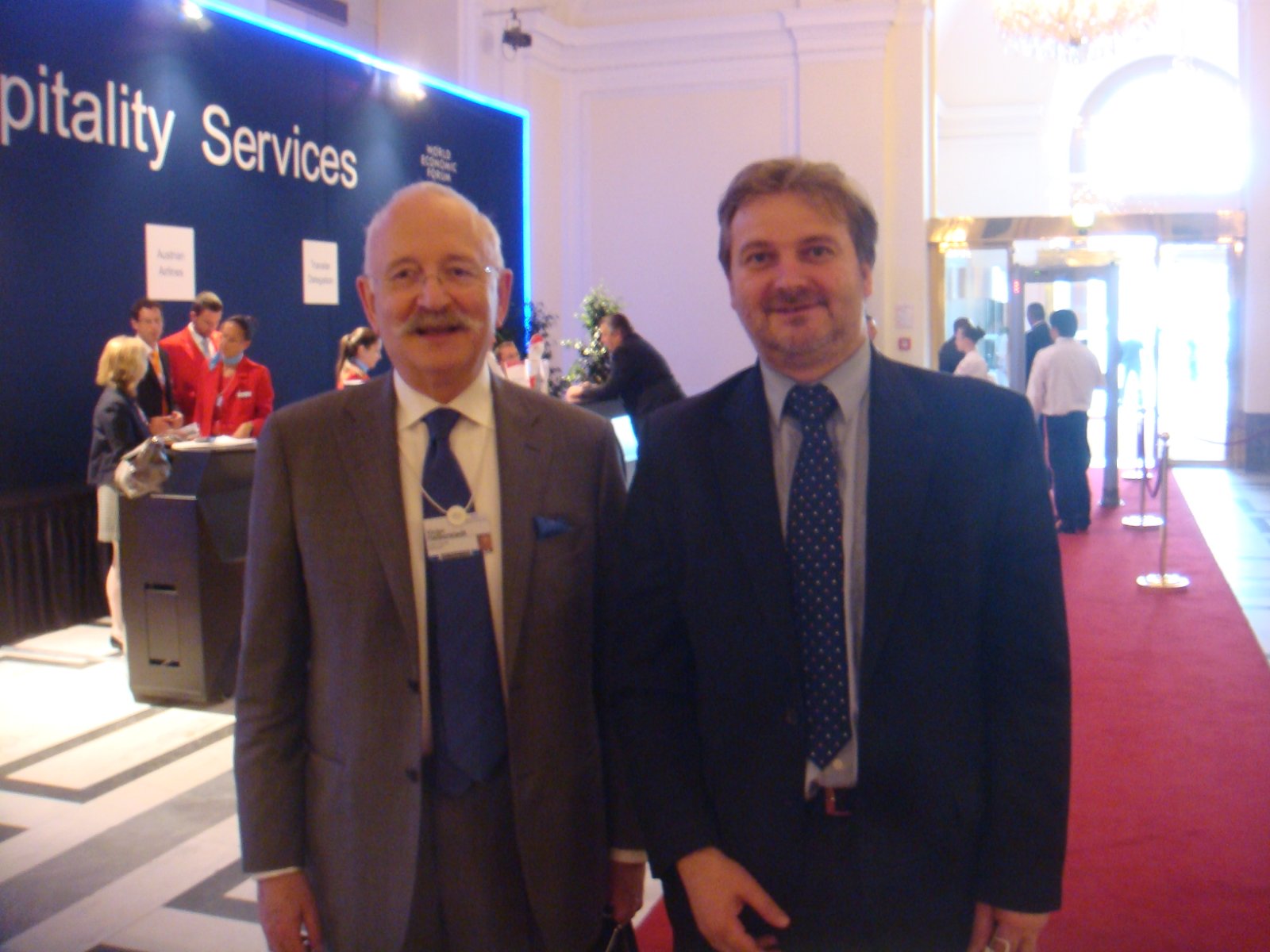
If someone wonders how such a massive event is organized, it must be said that its preparation is lengthy and complex in both programmatic and technical aspects. One of the important figures influencing the strategy of the World Economic Forum is a professor of economics at Leiden University, a long-time director of the Bilderberg Group, and now the President of the Bilderberg Foundation, Victor Halberstadt. The dinners he and his wife Olga organize are one of the most prestigious events during the Forum. Having survived the Holocaust as a child, Halberstadt spoke on a panel dedicated to the situation in the Middle East.
He is also the "informant" of the Dutch King in the process of forming the government. This is a role that many political systems do not recognize, but it boils down to mediating and creating an atmosphere of trust among parties that until yesterday publicly fought in elections.
"I try to find consensus on issues that need to be addressed. The role of such informants, whoever they may be, is to ensure that everyone privately or publicly states their minimum conditions to be a part of a political coalition, what the essence of the program is, and what the distribution of roles and responsibilities is", Halberstadt explained to me in an interview.
He assesses that fragmentation is a "central" trend in the political life of Europe. Major parties are splitting into smaller ones, and small and marginal parties from the "edges of political life" are growing.
"Citizens no longer see political parties as representatives of specific ideologies, as it was in the past. Now their credibility really depends on personalities and success, so there is no reason for a very close connection between voters and political parties. Voters, in general, are becoming much more mobile, changing their minds, less bound and committed, and feel less obliged to vote than before. Everyone has liberalized, just like the global economy", Halberstadt points out.
In a fragmented world, building trust is much more challenging, but the intention to reintegrate and connect the world is encouraging, which can certainly have consequences for the course of the current most dramatic conflicts, in Ukraine and the Middle East.

0 comments