
The impact and significance of the word "besa" among Albanians - then and now
"Violating agreements, disregarding laws, breaching signed commitments and given words, failing to implement even court decisions, such as the return of seized land... All of this, and even worse, has become a part of the common practice today in Kosovo, despite officially living in a time of the rule of law, democracy, and institutions. What would the medieval canon Leke Dukagjini say about this?"
Edited by: Milos Garic
The most known Albanian word - besa, roughly translated into Serbian as an oath, honorable word, or promise that must not be broken, has been of primary importance for life within Albanian society for centuries. Older generations in Kosovo still know very well what it means, but the contemporary way of life and some new "rules" are pushing besa more and more into oblivion.
A recently produced television series reminded some viewers in our region of the role of besa among Albanians and partially intrigued the younger ones about its significance. What is besa, and does it exist today?
As a fundamental principle of the unwritten code of rules by Leke Dukagjini from the 15th century, besa was considered its most crucial provision. Albanians say that besa best encapsulates human qualities, making it not only an integral part of collective morality in a closed tribal community but also an inseparable component of an individual's ethics, a concept of honor, and integrity.
The establishment of besa coincides with the life of Gjergj Kastrioti - Skanderbeg, the most significant figure in Albanian history, but it is associated with the name of Leke Dukagjini, a mysterious member of the Dukagjini family about whom there is little precise information. His origin and legacy, much like Skanderbeg's, connect Albanians and Serbs in a specific way.
The strength of rules attributed to a figure for whom it is not entirely certain whether he even existed can perhaps be best described by the frequently uttered phrase among members of Albanian tribes: "So said Leke!" In a time when there were no states and laws, Leke's code provided solutions for many dilemmas, disagreements, conflicts, and disputes.
Breaking a given word is the greatest shame.
"The Canon of Leke Dukagjini was compiled in 1450. It has not been preserved in written form, but it was used throughout the entire Middle Ages and feudalism in Albanian society. The Canon foresaw the resolution of legal issues in the public sphere, including civil and criminal aspects. The laws were adapted to the circumstances of the time, and the legal content for resolving problems in society was modified according to the circumstances. The canonical rules of Leke Dukagjini were summarized and written by Stefan Djekovic, and the book was published in 1933", Professor Bedri Muhadri from the Institute of History "Ali Hadri" in Pristina explains for Kosovo Online.
Muhadri emphasizes that besa is one of the ways in which the law of Leke Dukagjini was enforced, and from that time, some of the Albanian sayings related to besa have survived: "The honor of an Albanian cannot be bought", "An Albanian would rather die than break his word", and "The honor of an Albanian is worth more than gold".
"Besa is discussed in the seventh chapter of the canon. In cases of legal disputes, whether of a property nature or other delicate matters in Albanian society, the elders were summoned. These were people with authority, and a solution was given based on the norms of Leke Dukagjini. In the end, both parties, the perpetrator and the injured party, were required to give besa. When the oath was taken, a breach of the given word was considered a serious criminal offense. Besa is one of the oldest virtues of the Albanians, a solemn obligation to act together for a common goal. Faith is given for personal, family, social, and national issues", Muhadri emphasizes.
Besa is a word given for something important, adds Muhadri, a promise given willingly and with certainty that it will be kept, an honorable word to fulfill the obligation undertaken.
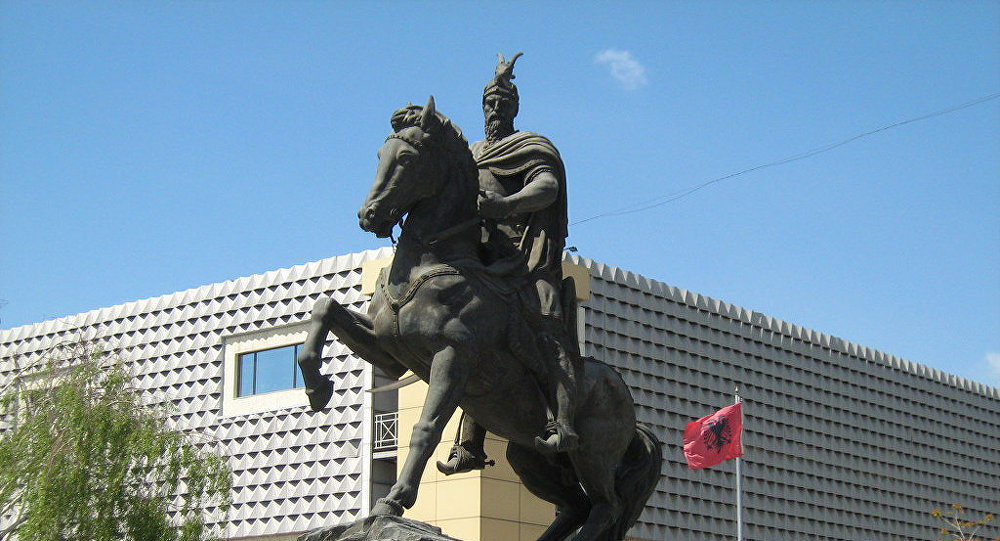
"According to Albanian tradition, at the moment this vow is given, a person should be ready to sacrifice their life to fulfill it. A person who keeps faith is called a faithful person. We use words like besa-besa, which are solemn words at the moment of giving an honorable word. The promise is given orally, swearing on the given word. Besa has been widely used among Albanians in significant social events. For example, Albanian princes gathered in the assembly of Lezhe in 1444 to join the fight for the freedom of the country. All unanimously promised to abide by the agreement reached. By forming the League of Prizren in 1878, besa was given to fight for the independence of Albania against Ottoman rule. In other times when the unity of the Albanian masses was sought to achieve their legal and political rights, they gave their word and thus, through faith, created lasting trust and cohesion. Any violation of the given word is considered a serious offense", Muhadri says.
However, besa is primarily associated with a "blood feud", which has long been present among Albanians and has made life difficult for many families. In northern Albania, Kosovo and Metohija, and parts of Montenegro and Macedonia, customs related to blood feuds, of which besa is an integral part, are still retained today.
"Through besa, good solutions were found to alleviate difficult situations. Conflicts and murders were resolved with the help of besa. It was given by the injured party, and, for example, during the wheat harvest season, one member of the killer's family would be allowed to avoid the danger of being killed", Muhadri emphasized.
Azem Bejta and Kosta Pecanac
Interestingly, besa has often played a significant role in Serbian-Albanian relations, especially considering the complexity of the issues affecting not only the two nations but also the political scene of the Balkans, Europe, and the world, from the last decades of the 19th century to the present day.
There is a famous story about the brotherhood between the renowned Drenica kachak Azem Bejta Galica and the Chetnik commander Kosta Pecanac, who arrived in the Peja region with about ten of his fighters in October 1918. Albanian sources reluctantly discuss this and express reservations, which is understandable from the perspective of the current situation in Kosovo. In any case, Bejta, with "a few hundred Arnauts", forced the Austrian regiment to surrender between Kosovska Mitrovica and Peja, and together with Serbian Chetniks, entered Peja. There are testimonies about this, as well as the complexities of Serbian-Albanian relations, such as in the book "Serbs and Albanians through the Centuries" by Petrit Imami, a long-time distinguished Professor at the Faculty of Dramatic Arts in Belgrade.
It is interesting to mention a detail: before their joint battle against the Austrians, monks from the Visoki Decani Monastery handed two large golden crosses to Albanian leaders from Rugova, one from the Decani altar, and the other belonging to Dusan.
"They put them under their vests and disappeared into the mountains, and when the war ended, they brought them back and silently placed them on the altar. Besa was still the holiest word back then", academician Aleksandar Deroko, a renowned architect and one of the legendary 1,300 Serbian cadets in World War I recorded.
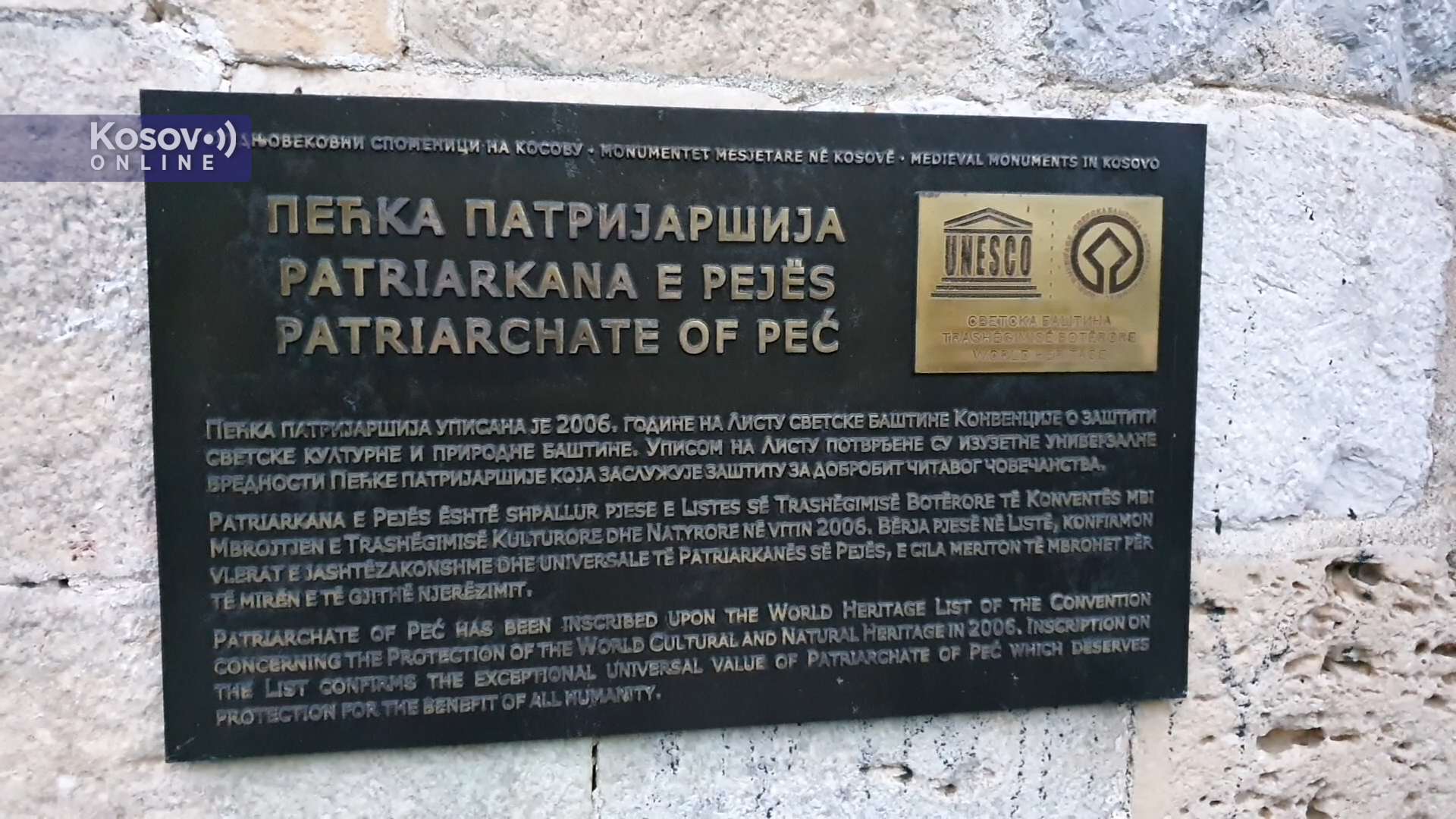
The Patriarchate of Peja and Visoki Decani, along with several other Serbian monasteries, were protected by Albanian tribes such as Gashi, Klimenti, and Krasniqi during the most challenging times for the Serbs in Kosovo under Ottoman rule, starting from the late 17th century. The protection of the monasteries was hereditary. The Zij Rugova family (from the Klimenti tribe) guarded the Patriarchate in Peja, the Salih Ruste family (from the Gashi tribe) protected Decani, the Behram Vojvoda family (also from the Gasi tribe) guarded Devic in Drenica, and Albanians from the Lausa village protected the Monastery of Saint Mark of Korisa near Prizren, the Gorioc Monastery near Istok, the church in Bijelo Polje near Peja, churches around Prizren, and others. The monastery ruler who guarded the Patriarchate of Peja during World War I received a pension from the state.
The besa given by members of these Albanian families was a guarantee for the monks in the most difficult times. Some of them suffered during the defense of monastery properties from attacks by their fellow Albanians.
The monastery rulers and the influence of communism
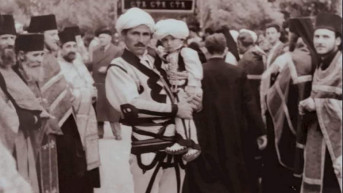
With the arrival of the communists after 1945, the role of monastery rulers became symbolic. However, from preserved monastery archives, it can be seen that they sometimes participated in resolving legal disputes related to property rights, acting as witnesses or intermediaries. During the enthronement of the German Patriarch in the Patriarchate of Peja in 1960, a monastery ruler can be seen in a photograph. On that occasion, and several subsequent occasions, the Serbian Patriarchate and the Eparchy of Rasko Prizren materially assisted Albanian families that aided Decani during the German occupation, especially the affected members of the Azemi family.
Communist laws and a negative attitude towards the church also brought about looting and attacks by local Albanians on monastery property, especially on forests, along with provocations and assaults on monastery brotherhoods. The communist authorities rarely sanctioned these actions. The attacks became increasingly intense, especially after the removal of communist official Aleksandar Rankovic in 1966. Incidents, mostly unpunished, multiplied almost weekly. By 1970, Abbot Makarije had registered around 50 cases of attacks.
According to church sources, 1986 was a better year in this regard. When the old ruler Ali Lan passed away, the Demukaj family, respecting the abbot of Decani, invited him to the funeral and included him in the list of mourners. Then, after a "family meeting" of this brotherhood, a new ruler was elected, Ali's son Husein Demukaj, convincing the abbot that they wanted to remain "true friends of the monastery". Bishop Pavle and Abbot Justin joyfully received such news, confirming the title of a ruler of Decani. However, this did not last long. On Christmas 1991, Bishop Pavle was informed that two days earlier, male representatives of the Demukaj family had visited the monastery and seemed quite agitated.
"They told me that they could no longer protect the monastery because, as they said, the villagers of the Decani village threatened them that if they continued to guard the monastery, they would be erased as an entire household from the Muslim world and that they could no longer be either Albanians or Muslims. The young ruler himself returned the book 'Treasury of the Decani Monastery', which had a dedication to him as a young ruler, saying, 'If my family friends find me, they will no longer consider me to be an Albanian but a Serb".
So is the suspended tradition of the Demukaj family, spanning over a century, and an institution that may have existed for nearly 500 years, extinguished. Today in Kosovo, former rulers are long gone, and attacks on the Serbs and Serbian churches are an almost daily occurrence.
Faded remnants of the besa phenomenon
The President of the Albanian Community in Serbia, Demo Berisha, emphasized to Kosovo Online that besa was a traditional norm of a nation that had gone through a difficult history.
"As a legal norm of a people who have never submitted or humiliated themselves to the norms of occupiers in various stages, besa has become a component of the everyday ethno-psychological phenomenon of the Albanians. However, when it comes to besa among the Albanians in modern times, two aspects must be considered. The first is the one that emerged when the Albanian community was closed. From there, positive agreements were reached on the protection of the Patriarchate of Peja, the Visoki Decani Monastery, Gracanica, and others. When Albanian rulers took responsibility for protecting the sanctuaries and the Serbs, such as ruler Ramo from Rugova Gorge and other well-known families - Kelmendi, Berisha, Gashi, Krasniqi, and the same tribes are still the most prominent in Kosovo. Also, such an example is the besa given by Essad Pasha Toptani to Serbian commanders for passage through Albania in World War I and securing the flanks of the Serbian army, which was of particular importance", Berisha notes.
However, according to him, recent times indicate that modern contemporary life has a significant influence on the importance and role of besa among Albanians. Modern times have brought disrespect for former customs and moral norms that were once passed down through generations.
"The opening of Albanian clans and families, emigration abroad, and influence on culture, religion, and all social aspects among Albanians have contributed to the once-famous word besa, which was stronger than any law, fading and losing its moral meaning. Therefore, today we can speak of the weakening of this phenomenon among Albanians. The crucial question is how much the faded remnants of the besa phenomenon, which was once stronger than stone, can be considered as that besa from the time of Leke Dukagjini", Berisha concludes.



0 comments