
Pre-COVID world and the banality of the good
Written for Kosovo Online by Srdjan Garcevic, founder of The Nutshell Times
On one of the first days of January 2020, I was walking with friends around the idyllic pastures above Gstaad, and we were discussing what we expected to happen in the next decade. A brilliant and well-read friend mentioned an article she read in the Economist, mentioning a pandemic, and told us that she thinks there will be a major crisis. As a recovered Economist reader, my knee-jerk reaction was that it was scaremongering nonsense to fill the pages, but mentioned that there's probably going to be a world war due to the ever-greater friction between the great powers. I said this flippantly. I was expecting it to land as a "smart" and "grim "analysis rather than thinking it would happen, nor did I want it to. Although I never asked her, I don't think my friend was also really worried about the pandemic. These things were just words and concepts.
Five years later, it is the eve of the fifth anniversary of the first COVID-19 lockdowns in Serbia, and we seem to be on yet another precipice of escalation of the war in Ukraine.
The past five years have been pivotal for almost all of us, and I remember those pre-2020 days very fondly as an age of innocence, when you could espouse all sorts of beliefs and run your mouth without thinking that anything would come true, especially that you would have to risk anything or pay the price.
This bargain was the "unique selling point" of globalist liberalism. For many of us, definitely for me, it was a belief whose main appeal was that it promised to deliver us from the cost of previous ideologies and much thinking. You believed, in an almost religious sense, in "institutions," "experts," and "science." Whatever seemed to fail (e.g., the global economic system, democracy promotion campaigns) was because real globalist realism has never been tried. Being a liberal was a way of just saying that we can all get along, that things will be fine, and that somebody else is going to do the heavy lifting for us. It was to be a good person.
This was preferable to my experience growing up: in Serbia, the decision not to accept the global liberal world order came at a price. Hundreds of thousands of lives were lost in the wars of the dissolution of Yugoslavia, and the whole region was impoverished. Even in 2020, the persecution of Serbs was something that was tolerated in this system of "the good." The government of Milo Đukanović in Montenegro was launching its insane plan to de facto nationalize the property of the Serbian Orthodox Church, while the calls to increase repression of Serbs under Priština and Sarajevo authorities were already normalized.
Yet if one believed that these were bugs, not features of the system, one could think that it could all be easily changed if we just spoke at yet another conference or wrote yet another article, and as "good people," it would all be sorted out.
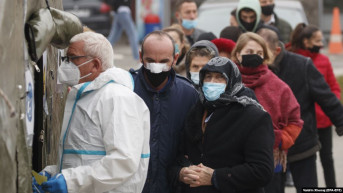
In March 2020, that changed rapidly. The pandemic and the serious infringements on our freedoms that it expected were the first time we realized the costs of this global system, or rather, how it has failed miserably.
First of all, even if you disregard the speculations about the origins of the virus, the response of our "experts" was shockingly bad. There were epic failures in understanding treatment as well as its true danger (which seemed overblown), while people were supposed to be silent as their social and work lives were expected to be put on hold.
The only ones worse than the medical experts were "the good" politicians, media, and social pundits. While you were expected to be fine with allowing your ailing relatives to die alone and not attend their funeral, some political mass gatherings were not only good but your participation was celebrated. In Serbia, the highly politicized media who would warn you about killing your elderly neighbors when you went out during the more lax lockdowns, would then switch to criticizing stringent rules and their effects on the economy if the rules were tightened. While the whole drama around the vaccines, or rather the conflict between the vaccinated and the unvaccinated, did show which states could secure scant resources for their population, it also showed how quickly "the good" asked you for conformity even if it infringed your bodily autonomy.
Just as the Russian attack on Ukraine was starting, we were to realize we lived in a lie: the system was neither functional, nor good, nor costless. The past three years have shown that even the relative global stability, especially in Europe, was a deferred cost that somebody else had to pay (mostly the American taxpayer). Now, "the good" in Europe has abruptly decided that we all need to pay up, with welfare systems or maybe even our lives.
Set on using this title for this article, I saw a 2009 research paper by Geoffrey Scarre, a Durham philosophy professor, about the "banality of good. " In it, he talks about how, in a good enough system, people can just go about their lives and make the world better.
While I do hope that some new systems we might build will allow us to be banally good, the idea seemed quaint. As one realizes in life, things that come to you for free are things you end up not valuing enough, and which always come at an unexpectedly high cost.

0 comments