
Why are there no traces of Albanian culture and spirituality in Kosovo older than 150 years?
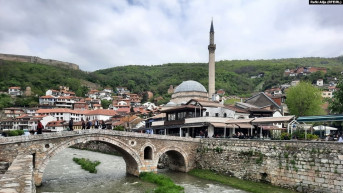
"In Kosovo, there is Serbian, Ottoman, and Albanian cultural and spiritual heritage. Numerous Serbian monasteries and churches date back to the period from the 13th to the 17th century, some of which are listed as UNESCO World Heritage jewels. Meanwhile, traces of Albanian and Ottoman culture often intertwine, and the oldest Albanian cultural legacy in Kosovo is considered to be the preserved traditional residential towers from the second half of the 19th century".
Written by: Milos Garic
"The facts indicate that there is no 'Kosovan' heritage in Kosovo, and the traces of Albanian culture are not older than 150 years. This represents a very 'sensitive' socio-political topic, especially in recent times after the unilaterally declared independence, particularly among those circles vigorously advocating the thesis of the Albanians as the indigenous and oldest people in this area.
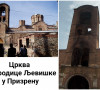
In an attempt to compensate for the lack of tangible material evidence of their autochthonous status and significance on Kosovo's soil, even the most liberal Albanians from intellectual circles today unabashedly claim Serbian spiritual heritage in Kosovo. They argue that it is, in fact, 'Albanian' or at least 'Kosovan'. Thus, more and more frequently, articles in Albanian media can be found where monasteries such as Decani, the Patriarchate of Peja, Gracanica, and Our Lady of Ljevis are being claimed.
The local association of historians 'Ali Hadri' has repeatedly put forth the scientifically unfounded claim that the Visoki Decani Monastery is actually a place of worship for Orthodox Albanians, which was 'usurped by Serbian occupiers in the medieval period'.
At the same time, representatives of certain Western states are increasingly and very irresponsibly promoting the idea of the existence of 'Kosovan' cultural heritage. In an apparent effort to confirm the reasons for the Kosovo statehood project, they seem to care little for the truth.
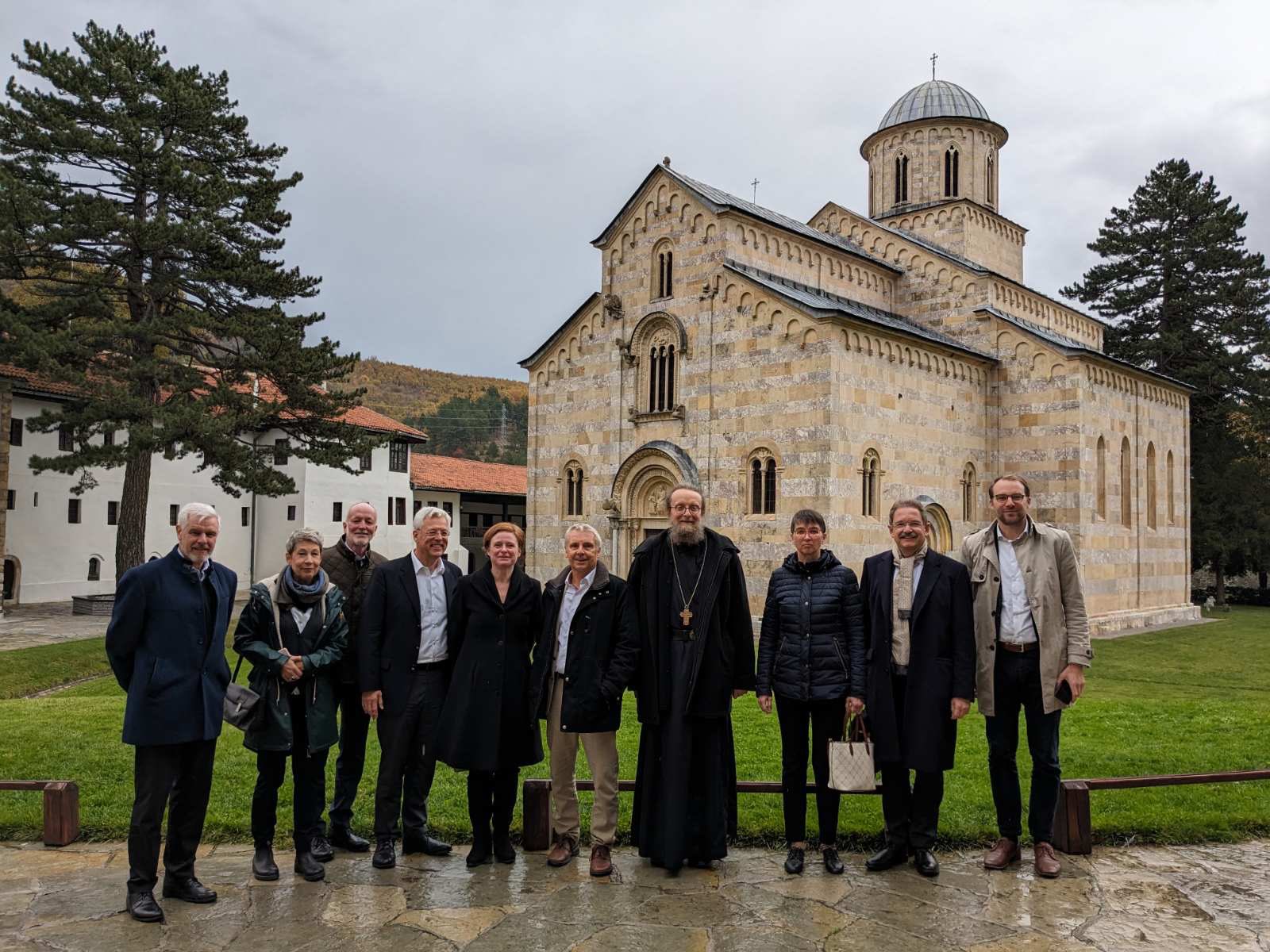
The "Kosovanization" of Serbian Orthodox Church monasteries was also undertaken by Ambassador Jorn Rohde, at the head of a delegation of German officials during a visit to Decani two days ago. They met with the monastery's abbot, Sava Janjic, and Rohde later wrote on Facebook, "Today we concluded the conference of German Ambassadors in the region with an unforgettable visit to the Kosovan monastery on the UNESCO list".
Construction of the past for political purposes
The visit of German representatives to Visoki Decani came just a few days after a serious diplomatic blunder when a monument to Serbian soldiers who perished in World War I was relocated at the Serbian Orthodox cemetery in Pristina, initiated by the French and German Embassies in Kosovo.
Regarding the absence of traces of Albanian culture older than 150 years in Kosovo and the attempt to falsify historical facts, academician Slavenko Terzic, a historian, and a diplomat specializing in Serbian cultural heritage in southern Serbia throughout his scientific career, explains for Kosovo Online.
"The theses about the past of Kosovo and Metohija (as the central part of Old Serbia) that can be read or heard in the Albanian environment in Kosovo and Metohija have, at the very least, nothing to do with science and resemble more of a political fairy tale. The past of this area is fabricated and constructed to support contemporary political projects. The effort to present the rich and globally known Serbian cultural heritage as 'Kosovan' resembles what Jean Baudrillard called the 'integrity of emptiness'", Terzic states.
He emphasizes that in European scientific historiography, it is widely known that the Serbs in Kosovo and Metohija have continuously lived for at least 14 centuries.

"Until the Ottoman conquests, the Albanians are mentioned in sources in a very small percentage, mainly on the outskirts of Metohija, toward Albania. German historian Peter Bartl, in his book Albanians – From the Middle Ages to Today (in German), published in 1995 in Regensburg and Munich, states, 'The image that Albanian science creates of its own history is simplified, uncritical, and constructed. There are almost no linguistic proofs of Illyrian-Albanian affinity' (in German, p. 21). The older-generation German historian Georg Stadtmuller claims that the area around the Mat River, due to its natural isolation, is a 'relict area' of the Albanians. It is undisputed that the historical boundary between the Serbs and the Albanians is formed by the Drin River (Great Drin) in today's Northern Albania, as evidenced by many sources, including the map by Giacomo Cantelli da Vignola published in Rome in 1689", academician Terzic points out.
Even more convincing in this regard, Terzic continues, are the testimonies of the Archbishop of Bar, Vincent Zmajevic, whom Pope Clement XI appointed in 1704 as the apostolic commissioner for Serbia and Albania based on the proposal of the Congregation for the Propagation of the Faith.
Albanians Conquering the "New World"
"Archbishop Zmajevic, in his report from 1707, where he fundamentally refers to Serbia as a schismatic land, writes that Serbia extends to the south to the Drin, which is the border between Serbia and Albania, the dioceses of Durres, Lezhe, and Sape. According to Zmajevic, the main places in Serbia are Belgrade, Smederevo, Nis, Skopje, Prokuplje, Novo Brdo, Pristina, Trepca, Prizren, and Peja, along with the fortresses of Kacanik, Tetovo, Janjevo, Vucitrn, Mitrovica, Djakovica, and Novi Pazar. If the Albanians had been more massively settled in these areas, they would have left some traces, but there are none. As some researchers emphasize, there is not a single original place name in Albanian throughout Kosovo. The names are simply translated from Serbian", Terzic explains for Kosovo Online.
Terzic also emphasizes that many foreign sources confirm a certain systematicity and undeniable violence in the Albanian colonization of this part of Serbia.
"Austrian Dr. Malte Olschewski writes the following in the book 'War for Kosovo', 'Wide and rich plains in the east lured them. The Albanians felt like conquistadors. They set out to conquer the New World. Kosovo was their America'. After all, almost all monuments of Islamic culture in Kosovo and Metohija are a part of the cultural heritage of the Ottoman Empire. Only Albanian monuments can be considered as such, including towers and fortresses with gun ports", academician Terzic states.
The "issue" of Kosovo's cultural heritage, however, traces its roots back to the time of communist Yugoslavia, as testified by one of the most prominent Albanian intellectuals, Shkelzen Maliqi, in the book "Kosovo and the Breakup of Yugoslavia". Maliqi lived and worked in Belgrade from 1967 to 1982, and in his reminiscence of that time, he criticized Serbian communists, even though Kosovo was never high on their list of national priorities.
"Serbian nationalists from the League of Communists, i.e., from the then government, demanded to seal evidence that the Albanians are not indigenous to the regions where they live today but are newcomers, specifically from the eastern parts of the Balkans, from Thrace. Moreover, implicitly and without verified historiographic arguments, it was suggested that the migration of proto-Albanian tribes from Thrace occurred after the arrival of the Slavs and the Serbs in the Balkans, making it seem that the Serbs are the oldest and most indigenous people in Kosovo. When combined with the insistence that the Serbs from the Middle Ages preserved more historical documents, cultural and religious monuments, it led to the conclusion that the title to Kosovo belongs only to Serbs, that Kosovo was and should forever remain Serbian property", Maliqi writes, among other things.
Dramatic changes after the Berlin Congress
In the same book, however, Maliqi also talks about how, at one point in his youth, he worked on maintaining frescoes 'in Serbian monasteries', mentioning Studenica and a few others where he earned a living.
What Maliqi, as a knowledgeable figure in Serbian-Albanian relations, like other prominent Albanian intellectuals of liberal views, does not take into account when discussing Serbian and Albanian traces in Kosovo are the Turkish population censuses during Ottoman rule. For instance, the one from 1455 indicates that there were only around 30 Albanian households in all of Kosovo.
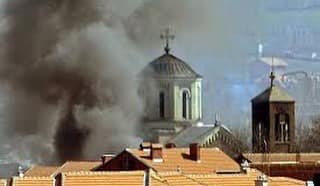
It's worth reminding that the crucial and decisive moment in the ethnic dominance of the Albanians in Kosovo occurred only in the second half of the 19th century, especially after the recognition of Serbia and Montenegro at the Berlin Congress in 1878 when the Ottoman and Austro-Hungarian Empires realized that the two Serbian states would return to Kosovo as their sacred land and cultural model. Until recently, even the website of the US CIA included data stating that until the last decades of the 19th century, the Serbs were the ethnic majority in Kosovo. During that period, under pressure and violence from extremist representatives of Albanian tribes, the most dramatic migration of the Serbian population occurred. Something similar happened to the Serbs after 1999, with the entry of international forces and Albanian paramilitary forces into Kosovo.
"The events in the 20th century brought a lot of bad blood to Serbian-Albanian relations in Kosovo. The culmination was the NATO pact's attack on Serbia in 1999 and the support of the major Western powers for the violent separation of Kosovo from Serbia. However, according to current international norms and documents, Kosovo remains the southern Serbian province, and the legal and diplomatic battle is yet to unfold.
The parallel struggle for cultural heritage in Kosovo continues. Serbia's recent re-election to the Executive Board of UNESCO, besides confirming its reputation in this organization, will provide additional support for Serbia in the ongoing fight against Kosovo's attempts to become a member of the United Nations Educational, Scientific and Cultural Organization. Furthermore, presence in this UNESCO body is significant due to Pristina's undisguised intentions to transform Serbian cultural heritage in Kosovo into 'Kosovan'.
In any case, all serious experts on this topic emphasize that, although numerically a convincing minority today, the Serbs in the Kosovo region are the absolute majority in the cultural aspect and are preserving their cultural treasures for the benefit of all humanity.

0 comments