
What new did the debate on Kosovo in the European Parliament bring?
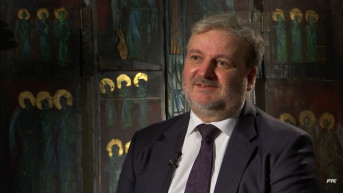
Writes for Kosovo Online: Dragan Bisenic, journalist
The discussion at the European Parliament session on October 3rd did not bring a new passion to the debate on the events of September 24th in Banjska, nor did it seem to intrigue too many European parliamentarians to participate in it.
Participants were mainly from Croatia, Slovenia, and Germany, with two from Bulgaria, while the participation of others was sporadic.
The leading presentation was given by Slovenian Commissioner Janez Lenarcic. This performance represented a kind of departure from the initial reactions that came from the European Commission. He did not mention the word "terrorism" at all, nor did he talk about sanctions against Serbia.
Instead, his speech was dominated by a call for dialogue to continue. He called for the rapid holding of fair elections in northern Kosovo and Metohija, which he saw as a key step in reducing tensions. He also did not mention the Community of Serb-majority Municipalities as a solution or a part of the solution for the position of the Serbs in Kosovo and Metohija but, on behalf of the EU, called on "all political actors at all levels of government, both in Kosovo and Serbia, to engage constructively in the process leading to early local elections in northern Kosovo to avoid further escalation steps and to support progress in the dialogue with the help of the EU".
Interestingly, almost none of the European MEPs who participated in the debate, except for the rapporteur for the group of European People's Parties, Vladimir Bilcik, and the German MEP Michael Gahler, mentioned the CSM at all. Bilcik was also an exception in other assessments.
Bilcik considered the rise of Albin Kurti to power as an obstacle to negotiations and progress in the dialogue.
"If I look at the broader picture of the dialogue, allow me to say very clearly that with the arrival of Albin Kurti to power, unfortunately, there has been a deadlock in the dialogue, and the dialogue is no longer moving towards finding solutions to practical issues such as the Community of Serb-majority Municipalities or new credible elections in northern Kosovo," Bilcik said.
He requested that, before evaluating what happened in Banjska, it was necessary to discover what had actually occurred.
"We need to find out what really happened on September 24th, and the ball is largely in the hands of Belgrade. We need facts, solid facts, full facts, not exaggerated emotional statements by the media and political leaders. When it comes to a proper and credible investigation, we need this for meaningful future dialogue. We don't need an intensified race for who is to blame or a superficial game of gaining foreign sympathy," Bilcik requested.
An example of such an approach could be the presentation of the rapporteur for the Western Balkans, Viola von Cramon, who, according to the transcript on the EP website, refrained from premature judgments and strong words, not succumbing to the magic word "terrorism". She called for Serbia to cooperate unconditionally in the investigation and to prosecute all those responsible.
She demanded that Serbia immediately withdraw all its troops from the Kosovo border and focus on the peace process. She called on the EU, along with NATO, to devise a plan for calming the situation in northern Kosovo. In her opinion, the reinforcement of KFOR troops led by NATO is crucial, so she urged Germany and other EU member states to follow the example of Great Britain and immediately send additional combat troops to KFOR and EUFOR because it would be the "key to our importance and success in preserving peace, not only in Kosovo but throughout the Western Balkans".
It would logically follow that fact-finding should precede their assessment. In support of this, Commissioner Lenarcic's assessment emphasized that we were now at a "crucial crossroads in the EU-led dialogue".
Reminding that earlier this year, Kosovo and Serbia reached an agreement on the path to normalization, he concluded that "the commitments arising from this agreement remain valid and binding" and that the "negotiation phase was completed in March", and now the "focus must be on implementation and progress in the normalization process". Lenarcic also modified his assessment of the outcome of the latest round of talks on September 14th in Brussels. He shared responsibility on both sides, saying that "neither side has shown a true commitment to advancing the normalization process, despite the continuous intensive efforts of the European Union" and that "both sides are violating their obligations in the dialogue”.
The High Representative for Foreign Affairs, Borrell, had a completely different assessment of the outcome of the dialogue on September 14th. After a meeting of European representatives with the leaders of Serbia and Kosovo, he stated that the Kosovar Prime Minister had not accepted the EU's compromise proposal.
"Prime Minister of Kosovo Albin Kurti, unfortunately, was not ready to take a step forward," Borrell noted.
With a keen instinct, the High Representative also warned that the situation in northern Kosovo had not yet calmed down and asked both sides to take steps to de-escalate it.
Today, we call on both sides to take immediate action in northern Kosovo to de-escalate the situation, avoid any future destabilization, and immediately enable local elections. We cannot sit and wait for the next crisis," Borrell stated.
It is possible that Commissioner Lenarcic simply did not take into account the assessments of his colleague or decided to adapt his assessments in a different direction using September 24th. However, this certainly does not contribute to the European position or unity concerning the dialogue between Belgrade and Pristina. Furthermore, the Kosovo Prime Minister openly criticized Borrell and Lajcak, accusing them of representing Serbia's position. He even wrote a letter on this matter, sent to several international addresses. Perhaps Janez Lenarcic was not one of the recipients, but it seems that this argumentation was more convincing to him than the arguments of his colleague Borrell, whose assessments he undermined in his presentation. In any case, it's not a good sign for the unity and effectiveness of the European Commission, which is now approaching the end of its mandate.
The other European representative in the dialogue, Miroslav Lajcak, did not fare well either. German MEP Thomas Waitz called on Lajcak to leave his position due to the lack of positive results in the dialogue between Serbia and Kosovo. This wish of the German MEP will likely come true since Lajcak, as it can currently be heard, is the most serious candidate for a return to the position of Slovak Foreign Minister.
Croatian MEPs who participated in the debate dominated the discussion, but it does not seem that they were too concerned with the relations between Belgrade Kosovo and Metohija. Instead, they wanted to draw attention to the position and role of Croatia. One of them stated that Serbia was the main cause of instability in Kosovo, and the "attack by Serbian militants on the Kosovo Police is a classic act of terrorism, and Mr. Borrell made a big mistake by not clearly stating that“.
He adds that "in the same way, 30 years ago, the Serbian militants' attack on the Croatian police marked the beginning of the Serbian aggression against Croatia," a point reiterated by some other participants in the debate.
In the European Parliament, two reports were adopted in May, where members "called on Serbia and Kosovo to engage in a dialogue under the auspices of the EU and to ensure without delay the achievement of a comprehensive, legally binding agreement on the normalization of relations, based on the principle of mutual recognition". The adoption of a new resolution on Kosovo is announced for the second half of October. It will, of course, be an opportunity to verify all these assessments, but also for a more balanced and in-depth approach to understanding what is actually happening in Kosovo and Metohija, what are the main causes of the lack of progress in the dialogue, and what its further prospects are.
0 comments