
Petritsch: Kurti "softened" his position on the CSM; elections without the Serbs have no legitimacy
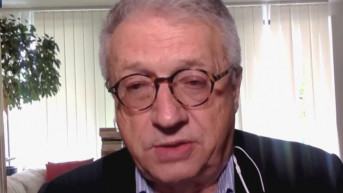
The agreement in Ohrid accelerated the negotiation process in order to achieve the normalization of relations between Serbia and Kosovo, former EU Envoy for Kosovo Wolfgang Petritsch assesses and expects that on Monday, at the meeting of the main negotiators, the discussion on the implementation of the agreement will continue.
"It seems to me that there is a continuous dialogue in which both sides and now especially Pristina, that is, Albin Kurti, are showing a shift from their positions, primarily on the establishment of the long-agreed Community of Serb-majority Municipalities," Petritsch told Kosovo Online.
He notes that now the Pristina side is more flexible, which he considers very positive.
He also indicates that the dialogue process has now been re-established, by the European Union, with the support of the US.
"The goal is, first of all, to ensure the implementation of the agreement. Now the emphasis will be on implementation, which is correct. It is necessary to advance step by step towards the normalization of relations," Petritsch explained.
Regarding the announced meeting of the chief negotiators on Monday, he said it was important not to "miss the current moment".
"It is important to talk, to really lead the negotiations in order to achieve something good, and for the Serbian community," Petritsch added.
According to him, more frequent meetings were a reflection of the impatience of Brussels and Washington, who wanted faster progress, and to that end, more frequent meetings.
In this sense, he reminds that the EU also pointed out that only if there was progress in the implementation of the agreement, there could be progress in the accession process.
When it comes to the announced elections in the north of Kosovo, Petritsch said that there would be problems if they were held without the participation of the Serbs.
"If the Serbs do not participate, the elections will have no meaning. The Serbian side must think about what the advantages are and what the disadvantages are if they do not participate, and vice versa. The Serbian community in Kosovo has proven that participation, that is, entering the Kosovo institutions, has brought something. But participation in the elections must be decided by the leadership of the Serbs in the north," he explained.
He emphasized that the elected bodies would certainly have only limited legitimacy if they would have it at all if the elections were held without the participation of the Serbs.
"I believe that the example of Milorad Pupovac, who leads an intelligent policy for his community in Croatia by participating in institutions, should be followed. However, this of course also depends on the willingness of the authorities to compromise, in this case Pristina," Petritsch said.
He added that Kurti, by accepting the establishment of the Community of Serb-majority Municipalities, had shown a certain "willingness to give up his unwillingness to compromise".
When it comes to the CSM, Petritsch is convinced that by participating in the institutions, the Serbs would be able to improve them "from the inside", because this is not possible from the outside.


0 comments