
Baraliu: The European proposal contains more than what the two previous agreements provided for the CSM
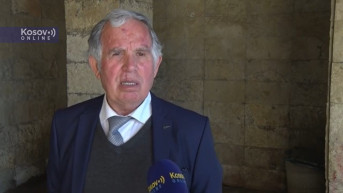
Professor of constitutional law, Mazllum Baraliu pointed out that the opposition in Kosovo as well as public opinion opposed the formation of the CSM, and added that the European proposal gave the Serbs in Kosovo autonomy, which, according to him, was much more than what had been foreseen in the agreements in Brussels from 2013 and 2015.
Baraliu told Kosovo Online that Kosovo's Prime Minister Albin Kurti was being blamed for the omission because he accepted the CSM.
"What the opposition says is mostly the public opinion. Now the atmosphere is such that the Prime Minister is being blamed for an omission because he allowed the implementation of the Community of Serb-majority Municipalities to be the central issue of the Annex. It is obvious that such a mood existed before, for the last 10 years it was a large percentage of the opposition that is now in power, as well as other parties, are against the Community," Baraliu said.
Baraliu pointed out that there was a constant mood against the CSM in Kosovo, and that at the session of the Assembly, the opposition parties had criticized Kurti and had opposed the position that he should accept not only the CSM but, according to them, more than that.
He also believes that the European proposal contains more than what was agreed for the CSM in earlier agreements.
"Unfortunately, the text of the European plan is ambiguous; it is a purely diplomatic drafting of a document that cannot be interpreted in all the details. But it is obvious that there is more to it than the Community, because in two articles of the agreement and the additional implementation plan there are provisions where self-determination is emphasized, so it is clear that there is something more in the text than what was foreseen for the Community in the two earlier agreements from 2013 and 2015," Baraliu pointed out.
According to him, although Kurti said he had had no choice in accepting the European plan, the opposition in Kosovo was very firm not to accept that plan.
As he stated, the opposition was also dissatisfied with the statute that the Serbian Orthodox Church had received through the European proposal.
"The center of the plan is the Community, but not only that. It contains one aspect related to the status of the Serbian Orthodox Church, which is why there is dissatisfaction in Kosovo, not only among the opposition but also among public opinion," Baraliu said.
Baraliu believes that in the European plan, there is no recognition of Kosovo's independence by Serbia.
"According to this text, it turns out that we are going back to the beginning, that's how it was interpreted by the opposition. There is no progress whatsoever. In its Constitution, Serbia has Kosovo as an integral part of the country, and it can use that, even if the proposal says territorial independence, sovereignty, and integrity, then Serbia can attribute that to itself with Kosovo as an integral part, and on the other hand, at the beginning of the European proposal, it was said that they renounced the status, so there are many different interpretations, but both sides are dissatisfied," Baraliu said.
He added that the negotiations were going round and round and that he did not see a serious attitude of any side to go further, and he emphasized that the international community was trying to make a move due to geostrategic situations.
"The international community is moving towards organizing a dialogue in terms of solving certain issues that are in the main agreement and the additional Annex. Kosovo has been given the task of forming a joint Commission within 30 days, and there is a lot of intertwining and a lot of debatable wording because the whole plan is made up of parts that are quite mechanical. There are demands from both sides, there are a lot of demands from Serbia that were accepted, and of course, Kosovo also had its own demands. Now neither side has the possibility to stop and refuse what they accepted," Baraliu said.
As Baraliu stated, Kurti and Vucic would not have accepted the proposal if they had had the option to refuse.
"I don't see serious engagement, because each side has its own reasons for not accepting something, and the international community, with this approach, has made a mistake this time too, especially the EU, which is constantly making mistakes in the Balkans. In this way, it cannot force or persuade the parties to achieve something," Baraliu said.
However, he believes that the relations between Serbia and Kosovo will be taken a step further only if the international community succeeds in coercion, and if that does not happen, as he states, it will be the status quo, although the international community is interested in calming tensions in the Balkans.
Baraliu added that the issues of license plates, returning the Serbs to institutions, and elections in the north of Kosovo were not included in the agreement on the normalization of relations, assessing that they were very important for the functioning of the institutions in the north.
"And this is one item that is not included in the agreement. The issue of license plates is not mentioned, nor is the elections, nor the return of the Serbs to the institutions. We see that even after the meeting in Brussels and Ohrid, the Serb List will not participate in the elections. This is an important issue of democracy. If Kosovo prides itself on democracy, then those elections should be held, and the representatives of the Serbs should also take part in drafting the Community's statute, because the Community is there, in addition to autonomy, because the European plan states that all agreements from Brussels must be valid and mandatory happen," Baraliu said.
Baraliu added that the functioning of the institutions was an important issue and emphasized that Serbia also had to stand up for democracy, because it was necessary for Kosovo Serbs to be active participants in the processes.



0 comments