
Cipa: The President of the European Commission will ask Belgrade and Pristina to give up conditions that lead to deadlock in the dialogue
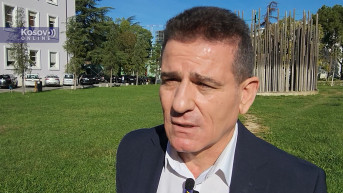
The main demand from Ursula von der Leyen is to avoid a deadlock in the negotiations between Belgrade and Pristina and to refrain from setting conditions that cannot be negotiated between the parties, says Aleksandar Cipa, president of the Journalists' Association from Tirana, for Kosovo Online.
Regarding von der Leyen's visit to Belgrade, he believes there will be two specific demands, which diplomats have previously mentioned.
"First, to avoid a deadlock in the negotiations on the normalization process between Kosovo and Serbia. Second, to avoid setting conditions that cannot be negotiated between the parties, as such conditions often lead to deadlock in their talks and benefit other powers with different interests in the region," Cipa explains.
He points out that this is one of the longest dialogue processes we have known and that Europe has perhaps experienced in its history over the last 10-15 years.
"Thus, the parties must give up such conditions. We see that there is increased pressure on Serbia to recognize Kosovo as an independent state that functions institutionally. Serbia will be asked to intensify efforts to improve bilateral relations," our interlocutor notes.
In his opinion, the main demand from High Representative von der Leyen will be that these countries prepare projects with great responsibility, not just as application projects, but ones that can be implemented.
"The European Union is being asked and urged to ensure that the allocation of funds does not encourage corruption in the management of resources, but rather that the funds are used for the most pressing and urgent needs of the Western Balkan countries. On the other hand, there will be incentives for the countries in the region to raise standards in every sector. This demand has been made multiple times and remains on the negotiating table with high representatives from Albania, Serbia, and the rest of the region. The problem lies in the inequality in the EU membership negotiation process. Specifically, I am referring to the separation of North Macedonia from Albania, which creates obstacles and has negative effects stemming from current geopolitical circumstances and certain interests aimed at maintaining 'conflict hotspots' in our region, causing problems that can be described as ill-intended actions. By this, I mean the interests of China, which seeks to exert economic influence, as well as Russia," Cipa emphasizes.


comments