
Zecevic: The question is how von der Leyen will solve the problem Pristina is causing with the flow of goods
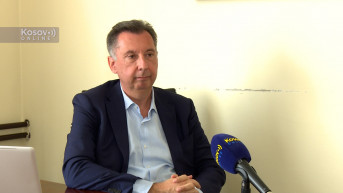
The Director of the Institute for European Studies, Slobodan Zecevic, points out that the visit of European Commission President Ursula von der Leyen to the region aims to send a political message that the Western Balkans belongs in the EU and to prevent the potential influence of China and Russia in the area. However, he also highlights the importance of the message that the EC President will send to Kosovo, as Pristina has violated and continues to violate the principle of the free movement of goods from Serbia, which, as he emphasizes, is punishable under all European principles and laws.
Zecevic stresses that the discussions between von der Leyen and regional leaders will certainly include the funds from the Growth Plan for the Western Balkans, which are intended to accelerate economic growth in the countries of the former Yugoslavia, plus Albania.
"I think von der Leyen's visit comes in the context of the election of a new European Commission and the re-election of its president, meaning she is starting her second term as head of the European Commission. She is coming to demonstrate that the new European Commission considers the region important, and that one of its priorities is the accession of Western Balkan countries to the EU, showing that the enlargement process is not dead," Zecevic told Kosovo Online.
He emphasizes that von der Leyen wants to demonstrate the EU's presence in the region and potentially counter the influence of Russia and China, specifically the BRICS countries, which are trying to become more attractive in the area and possibly even draw Serbia into their membership.
The main goal of von der Leyen's visit to the region, Zecevic concludes, is to send the message that the Western Balkan countries will join the EU, and that it is only a matter of time before this is realized.
Zecevic assesses that Serbia has met all the EU's requirements for receiving funds from the Growth Plan.
Serbia’s reform agenda has been accepted, he notes.
"We have already developed a reform agenda, and the conditions are well known. The conditions are more or less the same everywhere, for us, they include enabling the rule of law, meaning better functioning of the judiciary, making the electoral process more transparent and clearer, without any ambiguities—in short, reforms in the electoral system, judicial reforms, aligning legislation with EU laws, and cooperating with them," Zecevic explains.
However, regarding Kosovo, the director of the Institute believes that this side is violating the basic principles of the free movement of goods.
The funds from the Growth Plan are intended to create a single market and foster economic growth, yet Pristina has still not opened all the crossings for goods from Serbia, while at Merdare it is blocking the flow with lengthy inspections and administrative procedures.
"When it comes to Kosovo, I really don’t know how she plans to solve that problem. One of the key conditions for the economic growth of the Western Balkans is not just receiving funds—which is very important—but also creating a unified market in this region. When you look at Pristina's behavior over the past few years, and even now, as it continues to hinder the free flow of goods between central Serbia and Kosovo, I don't know what Ursula von der Leyen plans to tell them on that issue," Zecevic emphasizes.
According to European norms, Pristina should, he adds, pay compensation to Serbia for the period during which the ban on Serbian goods was in effect.
Primarily because they completely blocked the import of Serbian goods, and now they are partially obstructing it, which, as Zecevic points out, is punishable under certain European standards and requires compensation to Serbian companies.
"The worst part is that these Serbian companies are not just Serbian—they are companies established by EU enterprises and are mostly branches of European businesses. The most concrete example is Henkel, which has so-called exports to Kosovo that should not face any obstacles. Their goods should cross without delays, yet now the goods wait at one crossing instead of three, and for hours. This is also an obstruction of the free movement of goods and is punishable according to EU laws and regulations," he explains.
When asked whether EU sanctions against Kosovo are an obstacle to disbursing funds from the Growth Plan, Zecevic clarifies that Kosovo’s reform agenda has been "approved" by the European Commission, and Pristina has no restrictions regarding the use of funds from the Growth Plan.
"Sanctions against Kosovo are not an obstacle to using funds from the Growth Plan. They are not even discussing sanctions as a barrier. These sanctions were meant to exclude representatives of the so-called Kosovo and Albanian institutions in Pristina from certain events organized by the EU. As for the reform agenda and the six billion euros on the table, Albanians in Kosovo are receiving their share, which is even slightly larger than what North Macedonia is set to receive. Therefore, they are fully included in the program, and sanctions do not affect them in that sense," concludes the Director of the Institute for European Studies.



comments