
Dacic about Kosovo and the Council of Europe: They can make whatever decisions they want, but we do not accept that
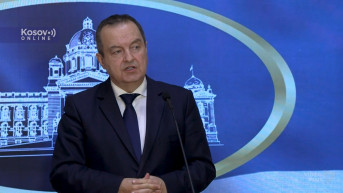
Serbian Minister of Foreign Affairs Ivica Dacic stated today, commenting on the decision of the Political Committee of the Parliamentary Assembly of the Council of Europe, that it raises the question of why someone is urgently admitted to the Council of Europe when everyone knows and acknowledges that it has been impossible for Kosovo to fulfill its international obligation for 11 years, which is the formation of the Community of Serb-majority Municipalities.
"It raises the question of why now, at this moment when they are banning the dinar and causing a humanitarian catastrophe. Is this a reward when they deserve punishment?" Dacic told reporters in Belgrade after consultations of parliamentary groups in the Serbian Parliament with the Speaker of the Parliament, Ana Brnabic.
He explained that the Political Committee of the Parliamentary Assembly was composed of members of parliament and that this decision would now be presented to the members of the Parliamentary Assembly of the Council of Europe on April 18th.
"They are also parliamentarians, and these are all recommendations. The final decision is made by the Committee of Ministers, where the session is expected to be in May. They have a two-thirds majority because, in Europe, our situation regarding Kosovo is the worst since most countries have recognized Kosovo's independence under the influence of the West," said the Serbian Foreign Minister.
He stated that he didn't know which words he could use to explain this situation without being impolite.
"In essence, they can make whatever decisions they want. They can do as they please, but we do not accept it. What they decide has no significance for us. Our National Assembly declared Kosovo's act of declaring independence null and void," he emphasized.
As he says, Serbia and Montenegro were admitted to the Council of Europe 21 years ago, and he was a member of the Parliamentary Assembly at that time.
"How do you now recommend that a part of our territory also be admitted? Did you previously say that it doesn't apply anymore, that you are no longer members of the Council of Europe with that territory? That is shameful, it has never happened before. This is the end of international law and the collapse of international law," he said.
Speaking about the UN Security Council session scheduled for Monday to mark 25 years since the beginning of NATO bombing of the Federal Republic of Yugoslavia, which was requested by Russia but did not take place due to opposition from other Security Council members, Dacic says it is another example and indicator of how everything operates on the basis of double standards and precedents.
He points out that the aggression against the Federal Republic of Yugoslavia, primarily Serbia, was illegal and mentions that no one has the right to use force without a decision of the Security Council, which NATO did, justifying it as a humanitarian intervention.
"That does not exist anywhere in international law, the essence of the problem was separatism, secessionism, the desire of Albanians to have their independent state and to unite it with Albania, and they did this through the terrorist KLA. Today, 25 years after the killing of civilians, the destruction of our economy, after 22,000 tons of bombs were dropped, 15 tons of bombs with depleted uranium, we cannot even talk about it in the Security Council," he notes.
As he mentions, when a permanent member of the Security Council requests a session, the president must convene it, put it on the agenda, start it, and hold it.
Based on that, he adds, Japan scheduled a session for Monday, March 25th, which is why he went to New York.
"Never before has it happened since the agreement of the great powers that they would challenge each other's agenda. Now France has emerged, I don't know why France, with whom we have good bilateral relations, now finds itself in a situation to be someone's exponent without any need, and now France insists the most on not holding that session. Then the debate started about whether nine votes were needed for holding the session or for not holding it. Neither side had a majority, so the session was not held," Dacic recounted.



comments