
Djukanovic: EU does not have a strong enough credibility to influence calming the tensions
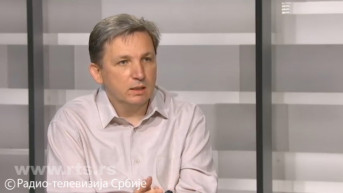
Prof. Dr. Dragan Djukanovic, president of the Center for Foreign Policy and professor of the Faculty of Political Sciences in Belgrade, said in a guest appearance on RTS's morning program that it seemed that the international community did not have a relevant response to the crisis in Kosovo at the moment.
"The EU has focused on the continuation of the dialogue while the issues of life are being neglected. It seems to me that, in some way, we are witnessing accelerated diplomatic activity with the aim of some kind of de-escalation these days. We will see how long all this will last," Djukanovic said.
He notes that the European Union always appeals to both sides.
"This is not an exception. I think the EU does not have a strong enough credibility to influence tensions to calm down," Djukanovic believes.
According to him, the US Special Envoy for the Western Balkans, Gabriel Escobar, also met with representatives of the Serb List, which was a signal that they wanted to influence de-escalation.
"It seems to me that it is an attempt to speed up diplomatic activities, and Miroslav Lajcak's visit to Belgrade and Pristina by the end of the week has also been announced," Djukanovic adds.
He points out that in September, it was two years since the Washington Agreement was reached. "It was not unilaterally implemented by Pristina. Neither was the first agreement on normalization from 2013. I think the focus of both the EU and the US will be not only on a potential step forward in the dialogue but to implement what has been agreed so far," Djukanovic emphasized.
The authorities in Pristina, he says, are trying to influence their electorate and preserve the current balance of power among the political parties of Kosovo Albanians.
When asked what the modified Franco-German plan brought, Djukanovic stated that he did not know to what extent it had been modified compared to the original version but that it was a document that had appeared with different varieties in the previous months.
"If you look at the essence of the document itself, it is possible to see great similarities with the agreement that existed between the two Germanys from November 1972. Even certain wordings are almost identical. We saw that the US openly supported that initiative. Everything depends on the future diplomatic activities, i.e. in which direction the activities of Miroslav Lajcak will go, and also from the visit of Gabriel Escobar, the special envoy of the US for the Western Balkans," Djukanovic pointed out.


comments