
Djuric: I expect even greater pressure on the Serb List, the decision on certification will not stand
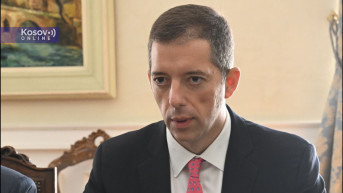
Serbia’s Minister of Foreign Affairs, Marko Djuric, stated today, in response to the decision of the Central Election Commission in Pristina not to certify the Serb List’s participation in the upcoming local elections, that he expects even greater pressure on the party, since it is clear that Albin Kurti’s authorities do not want Serb participation in institutions, but rather seek to continue their removal both from institutions and physically from Kosovo. Djuric emphasized that Serbia has already launched a diplomatic initiative to mobilize the international community, which has the ability to influence Pristina, and underlined that the negative CEC decision on the Serb List’s certification “will not stand.”
“I expected such a decision, and I expect even greater pressure on the Serb List, because it is clear that Albin Kurti’s regime does not want Serb participation in institutions, does not want elections to take place in a democratic atmosphere, but rather wants to continue pushing Serbs out of institutions and physically from Kosovo. This is evident through the initiative for North Mitrovica to be ‘de facto’ politically and physically seized by Kurti’s regime through the construction of bridges,” Djuric told Euronews Serbia.
Djuric stressed that this was also evidenced by the fact that Kosovo’s Minister Xhelal Sveçla, “notorious for human rights violations and the oppression of Serbs,” attended a basketball tournament at the Milic Brothers Square in North Mitrovica over the weekend, describing it as “a pure provocation and an attempt to humiliate Serbs.”
The Minister underlined that what has been done with the certification of the Serb List “will not stand.”
“The Serb List will appeal, and Serbia’s major diplomatic campaign is already underway to mobilize the international community, which has the capacity to exert influence on Pristina,” Djuric said.
He expressed confidence that everything witnessed in recent years from Kurti’s regime merits not only serious sanctioning of his actions but also a change in the international community’s strategy toward Pristina.
“It is evident that the policy of supporting Pristina’s institutions has not borne fruit, and the time has come to support the Serbs in Kosovo and Metohija, and thereby indirectly Serbia in the dialogue. The balance of power must be restored in order to reach a rational, lasting, and sustainable solution,” the Minister stressed.
Djuric assured Kosovo Serbs that Serbia will continue to stand by them, as it always has, as this is the surest foundation for their survival in the area.
“Serbia will continue to provide political and diplomatic support. This decision to ban the Serb List’s participation is anti-democratic, unlawful, and contrary to the very principles of civilization, and it will not prevail,” Djuric said.
He added that he was shocked that Albulena Haxhiu, “who calls herself a minister of justice in Kurti’s government,” celebrated the CEC decision as a triumph of democracy.
“This best illustrates the character and nature of the regime in Pristina,” Djuric underlined.
He recalled that even the U.S. Embassy Chargé d’Affaires in Pristina, Anu Pratipati, had clearly stated the necessity of ensuring Serb participation in the elections.
“I am convinced that the reaction of the OSCE Head of Mission will be followed by reactions from other international institutions and that, through the process underway, this situation will have to be resolved,” said Serbia’s Foreign Minister.
He announced the upcoming arrival of Special Envoy for Dialogue Peter Sørensen, with whom he will also discuss the CEC decision on the Serb List.
Djuric stressed that it is pointless to expect the dialogue to retain credibility if the most basic elements of that dialogue, those relating to the rights of Serbs, cannot be guaranteed.
He added that this is also a civilizational issue, since Serbs in Kosovo are not demanding anything more than what belongs to all other peoples worldwide.
Asked how important Serb participation in the local elections is, Djuric responded that Serbs in Kosovo are eager to regain control over their fate and over institutions that were taken from them.
“Kurti’s regime, by flagrantly violating all principles, with only one to three percent of the vote in local elections, usurped control in the north—and, to the shame of much of the international community, this was accepted as legitimate. Elections in four northern municipalities, held without Serb participation, were recognized as legal and legitimate. If such a thing had happened anywhere else, I am convinced it would not have been accepted. But it is clear that part of the international community decided to turn a blind eye for Kurti, at the expense of stability, prioritizing their stance on Kosovo’s status and their support for independence over human rights, agreements, and everything else,” Djuric said.
He added that the situation in Europe and the world has changed, circumstances are different, and Serbia has been active on the international stage, expressing once again his confidence that “Kurti will not succeed in this.”
Situation in the Republic of Srpska: A Mockery of Democracy and a Witch Hunt Against Dodik
On the situation in the Republic of Srpska, Djuric observed that democracy is being turned into a mockery there.
“You have a leader elected by the people, and a Central Election Commission trying to overturn the electoral will of RS citizens, because a court in which RS representatives are not fully included, acting on laws imposed by an unelected international representative, convicted the democratically elected President of RS for something he said—something the unelected representative disliked. This is a blatant example of institutional abuse, both by international representatives and by part of Sarajevo’s political establishment,” Djuric said.
He added that, in his conversations as Foreign Minister, the greatest understanding for the situation in RS often comes from countries that were once under colonial rule.
“When I explain the situation in Bosnia and Herzegovina to them, they say it sounds like something happening in Africa in the 1960s, not in a European country. This is a mockery of democracy, a witch hunt against Milorad Dodik for his political positions, and it has not contributed to interethnic relations or stability in Bosnia and Herzegovina,” Djuric stated.
He emphasized that Serbia wants all problems in Bosnia and Herzegovina to be resolved within the system, in the interests of citizens, and in accordance with the Dayton Agreement, underlining that Serbia has not, in 30 years, done anything—nor will it ever do anything—to jeopardize Bosnia and Herzegovina’s territorial integrity.
Asked about the expected outcome of the referendum, Djuric expressed confidence that all forms of citizens’ expression in RS clearly demonstrate opposition to impositions and to violations of basic democratic principles.


0 comments