
Djuric: Kurti is trying to portray Serbia as a "pariah state" from the 1990s
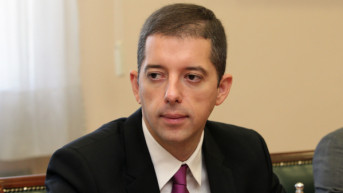
The Ambassador of Serbia to the US, Marko Djuric, said today that Albin Kurti's regime was trying to portray Serbia as a "pariah state" from the 1990s.
Kurti wanted to paint Serbia as it was "in his head", which disqualified him as a potential interlocutor in the dialogue, Djuric told TV Happy.
He appealed to the citizens of Serbia to understand that "our story will not tell itself" and that we were in a kind of cyber conflict in which Kurti's regime in Pristina had been continuously trying to portray Serbia as a pariah from the 1990s which was an extended arm of the conflict in Ukraine.
"It is not a naive story. Kurti appeals to the audience who heard about Serbia for the last time in the nineties. Let's not underestimate the importance of the fact that 90 percent of the world's population does not follow Serbia daily. If we cannot personally go to Kosovo and help people, let's use our creativity and intelligence", Djuric said.
As he stated, every citizen could be an ambassador and representative of Serbia, by addressing various international officials with facts, culturally and politely, and reacting to events.
"Let's not wait for an army of Kurti's bots to run over us, showing that these boys who were shot on Christmas Eve are actually aggressors who provoked this 'innocent' young man from the Kosovo Security Forces. Kurti and his clique, people who emphasize at every step that they are not Kosovars but Albanians, who hang Albanian flags everywhere in Pristina, cannot and will not call the two Serb victims - Serbs. Kurti used the name Kosovar citizens", Djuric said.
He pointed out that the vast majority of Albanians were not proud of Kurti's behavior and did not support the attack on children or anything else, but that there was a non-negligible percentage of people who were filled with hatred and people who maintained their political careers on the narrative of the conflict between Serbia and Kosovo.
"Let's make it difficult for them by continuing to develop Serbia at the pace and in the way it started to do in previous years," the Serbian ambassador to the US said.
That is why he says, each of us must present the facts, and the facts are that in February of last year, Kurti started the construction of illegal paramilitary bases in the north of Kosovo, which represent the source of permanent instability; that he forbade Serbs to vote in the referendum, as well as in the general elections, and even banned national minorities from participating in the elections for the Councils of National Minorities, directly undermining the Brussels order.
"In front of the government headquarters of one of the largest European countries, Kurti stated, dead cold, that he never intended to establish a Community of Serb-majority Municipalities", Djuric recalled.
He reiterated that the visit of the American delegation, which would be led by the State Counselor at the State Department, Derek Chollet, and would also include representatives of the State Department, the Pentagon, and Gabriel Escobar, was extremely important, and he added that this very composition of the delegation was a very important signal that the US was paying attention to the events in the region.
Djuric stated that this was an opportunity for Serbia to point out the need to work in partnership to stabilize the situation in Kosovo, where, he recalls, Kurti's regime in previous days showed its intolerance towards the Serbian community in another unprecedented way.
"It is also a great opportunity to work on bilateral relations, directly with the US. Serbia and America are walking the paths of restoration of the old glory in our mutual relations and as Pupin and Tesla imagined, to make huge strides when it comes to economic exchange, the double taxation agreement is one of the topics of the future strategic dialogue between the US and Serbia and issues such as are visa liberalization, cooperation in culture", Djuric said.


0 comments