
Djuric: Serbia a hostage to Kurti’s regime, stalemate in Dialogue with Pristina slowing down EU integration
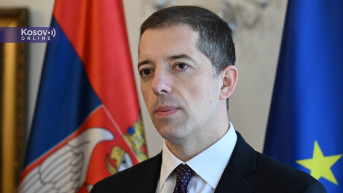
Serbian Foreign Minister Marko Djuric stated that the main reason Serbia is not at the top of the list of EU candidate countries is its independent foreign policy, but also the deadlock in the dialogue with Pristina, where “Serbia is a hostage to the behavior of Kurti’s regime.”
When asked about Serbia’s EU integration path, reforms, and the possibility of accelerating them, Djuric told Blic TV that the reasons Serbia is not already in the EU and not the leading candidate country are not related to the quality or nature of reforms, nor the strength of the Serbian economy, which has doubled in the last ten years and already matches some EU countries.
“The reasons we’re not being patted on the back as the best student are geopolitical. It’s because we have an independent foreign policy, because we maintain relations with both East and West, and importantly, because of the situation in the Belgrade–Pristina dialogue, where Serbia is a hostage to Kurti’s regime and everything they are doing to sabotage the dialogue. I believe Serbia deserves a significant seat at the EU table. Strategically, we are located in the heart of Eastern Europe, we have eight neighbors, and are naturally positioned to have great influence. As a member, Serbia can contribute to orienting EU policy toward countries with which we have excellent relations, particularly numerous African nations,” the Serbian foreign minister said.
Stalemate in the Dialogue
When asked whether Chapter 35 (Kosovo-related issues) could be closed, Djuric said that the government is committed to protecting and improving the position of Serbs in Kosovo.
“I believe it’s our obligation, and it’s good that the EU, through the efforts of the previous government, enabled Serbs from Kosovo and Metohija to travel with Serbian passports a few months ago. Of course, the Belgrade–Pristina dialogue has been regressing for two and a half years. The Ohrid meetings were an attempt to stop the destructive trend of Kurti’s measures and his efforts to eradicate Serbia’s influence in Kosovo and suppress political organizing there. In addition to dismantling Serbian institutions, dozens of facilities were shut down—centers for social work, civil registries... People can’t get married, register births, or even receive salaries and pensions. The talks also involved extrajudicial arrests—dozens of Serbs are detained and imprisoned under highly questionable circumstances. Serbian judges are not present in the judiciary, even though this is an obligation under the Brussels Agreement. Many people are behind bars simply for protesting against Kurti’s regime. The international community has condemned this only verbally—no one has done anything to stop it,” Djuric said.
Asked whether the international community will act, he said that over the past ten years, Serbia has fought hard and that President Vucic has led the Serbian delegation in talks dozens of times.
“We wanted to reduce tensions to ensure our people’s survival there, but at the same time, we were often accused by part of the opposition of planning to accept Kosovo’s independence. Not only has that not happened, but President Vucic recently reiterated in Nis that Kosovo is an inalienable part of Serbia. As a government, we seek innovative ways to provide material and organizational support to the Serbs there. Thanks to constant cooperation between the Serbian Armed Forces and KFOR, plans to expel Serbs from Kosovo were thwarted when Kurti wanted to open the bridge on the Ibar. Just like last week, when Kosovo’s entry into the Council of Europe failed—though that wasn’t even reported as news here. Had Kosovo been admitted, everyone would’ve been blamed for it,” Djuric added.
On the Military Alliance Between Kosovo, Croatia, and Albania
Commenting on the recently signed declaration on military cooperation between Kosovo, Croatia, and Albania, Djuric said he strongly opposes such non-transparent agreements made without coordination with immediate neighbors.
“We are a region that has gone through a major tragedy, and basic diplomatic etiquette dictates informing your neighbors about any intent to form military alliances. I must say that even some NATO leaders were unaware of this agreement. We obtained information through our intelligence channels. We are firmly against non-inclusive actions. The aim here is to include Pristina and form a defensive horseshoe. There’s no need to boast about the fact that the Serbian Army is by far the best trained, best armed, and largest in the region—it poses no threat to anyone and can instead be a stabilizing force. Serbia is militarily neutral and committed to peace and stability, as demonstrated by arms control agreements, whereas this agreement violates the regional arms control framework established by the Dayton Agreement. Serbia acts responsibly; we are building bridges of cooperation and working on good neighborly relations,” Djuric emphasized.
He said that this topic was not discussed at the recent European Political Community Summit in Tirana but was mentioned during President Vucic’s meeting with NATO Secretary General, who was also surprised by the agreement.
“I don’t believe it was a complete surprise to them, but of course, you must express dissatisfaction when you’re not consulted on matters within your jurisdiction,” he said.
Regarding the Tirana Summit, Djuric said it was significant for Serbia to be an active participant and for President Vucic to have the opportunity to meet with key EU leaders.
“This was the fifth meeting between President Vucic and António Costa since Costa became President of the European Council. We’re building our relationship with the EU through frequent meetings since the new Commission and Council took office, and through official visits—Marta Kos has been here, Kaja Kallas is coming, Costa has already been. This draws attention from member states to the EU and the Western Balkans’ integration,” Djuric said.
He noted that the global situation, especially due to the war in Ukraine, also affects Serbia and makes maintaining stability—both internally and regionally—a key advantage for Serbia’s societal development.
“Our economy has also taken a hit; we’ve welcomed hundreds of thousands of people from war-torn areas, and I’m proud we’ve done so. I’m glad we’ve upheld our dignity by respecting the UN Charter and our traditional friendships. Initially, this wasn’t well received, but time has shown that our policy has stood the test. We advocate for an end to the war in Ukraine, and this will remain a challenge for all of Europe,” Djuric said.
Serbia’s Territorial Integrity Is as Important as That of Any Other Country
Asked about Crimea and the potential domino effect involving Kosovo, Djuric replied that Serbia has consistently warned that its territorial integrity and sovereignty cannot be treated as less important than that of any other country.
“Both Russia and Ukraine support our territorial integrity. We are among the few countries that strictly uphold the UN Charter. The case of Kosovo must not be treated as a right to self-determination, because Albanians exercised that right when they formed the Republic of Albania in 1912. One nation cannot exercise the same right multiple times. Kosovo is a classic case of separatism. Serbia has repeatedly expressed its position in the UN and OSCE to protect its interests and avoid being dragged into conflicts where our involvement wouldn’t change the outcome but would only harm us. After a 20th century in which we rushed into every global war, let’s now wisely navigate these turbulent times and focus on the truly important things—building institutions, the economy, and social mobility here,” he explained.
On President Vucic’s Visit to the Moscow Parade
Regarding the Serbian president’s attendance at the military parade in Moscow, the foreign minister said there have been no disruptions in Serbia’s energy market and no negative consequences.
“We enjoy a favorable energy situation. We are continuing our existing arrangements, and the political conditions have been created to ensure Serbia’s secure energy supply in the coming period. Vucic went there to accomplish two extremely important tasks: to show that Serbia stands against historical revisionism and to finalize energy agreements, since 85 percent of our gas comes from that direction,” Djuric emphasized.
He noted that he had attended the EU Foreign Ministers’ Summit in Warsaw the day before the parade in Moscow.
“I explained our position as best I could. They understood us more than they did before the meeting. The malicious claims that Serbia would be sanctioned fell through, largely thanks to our efforts to clearly communicate our position,” he stressed.
Fidan – Erdoğan’s Right Hand
Regarding today’s visit by Turkish Foreign Minister Hakan Fidan, Djuric emphasized that Turkey is a major power and that Fidan is a highly influential figure in Turkey.
“He led Turkey’s intelligence services and is Erdoğan’s right-hand man. Both Vucic and I will meet with him. We will discuss economic relations, but also sensitive issues such as Kosovo and Metohija, where our positions differ. We must work on bridging those differences. We hold at least one annual meeting at the level of foreign ministers, and now we need to work on better understanding one another,” the Serbian foreign minister concluded.

comments