
Drecun: Wesley Clark is proud of killing civilians, not honorable military service

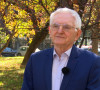
President of the Parliamentary Committee for Defense and Internal Affairs, Milovan Drecun, stated today that retired American General Wesley Clark, by declaring that he is proud of NATO's bombing of Serbia in 1999, has admitted to being proud of killing civilians, TV Una reports.
Speaking to Tanjug, Drecun said that in September 1999, The Washington Post published an article stating that “civilians were unequivocally NATO's targets.”
"Thus, it was a war against civilians, as evident from the number of casualties. They deliberately targeted civilians. And that is what Wesley Clark is proud of. He isn’t proud of anything that should reflect an honorable military profession,” Drecun noted.
He emphasized that NATO attacked Serbia without declaring war and without UN Security Council approval.
“Did they defeat us militarily, even though the balance of power was 600 to one in NATO’s favor? If they had defeated us militarily, then perhaps he could take pride in that,” Drecun said.
He reminded that during the 1999 bombing, 85 children, 2,500 civilians, and slightly more than 1,000 members of Serbian security forces were killed.
Drecun also revealed that he spoke with U.S. Ambassador to Serbia Christopher Hill about the so-called Operation Horseshoe, noting that Hill claimed he had never heard of the operation—even though he should have been aware of it.
“This Operation Horseshoe was supposedly a plan by our military, police, and state leadership for the ethnic cleansing of Albanians. The operation was fabricated, and the Bulgarian intelligence service exploited it and propagated it through Joschka Fischer. Fischer admitted last year during a book promotion, saying, ‘That was fed to me by a Bulgarian minister who received it from their intelligence service,’” Drecun explained.
He added that Hill, who was part of the U.S. delegation in peace negotiations between Serbia and the KLA in the late 1990s, must have known about the existence of this fabricated narrative.
Drecun also pointed out that the U.S. attempted to amend the UN Charter to include a provision allowing groups of countries to intervene without UN Security Council approval in cases of humanitarian catastrophes.
“Although they failed to amend the charter due to opposition from China and Russia, they implemented this concept in practice, claiming there was a humanitarian catastrophe,” Drecun stated, emphasizing that there was no humanitarian catastrophe in Serbia before the NATO bombing, but that NATO created one.
President of Serbia Aleksandar Vucic also weighed in, stating on Thursday that he does not see what retired U.S. General Wesley Clark finds so pride-worthy about NATO’s bombing of Serbia in 1999.
In Budapest, responding to reporters’ questions about Clark’s statement that he is proud of the operation against Serbia and that Serbia must move forward without Kosovo, Vucic said that people in Serbia are outraged by Clark’s actions. He added that he cannot understand Clark’s pride, given that 19 countries attacked a small country in violation of UN rules, the UN Charter, and Security Council decisions.
Clark, who led NATO forces during the 1999 bombing of Yugoslavia, recently told ABC News that Serbia should recognize Kosovo and that he is “proud of the bombing of the former FRY.”

0 comments