
Escobar, Lajcak, Plotner, and Bonne in Belgrade after Christmas
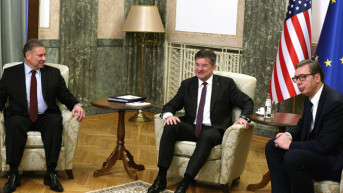
Representatives of the EU, the US, France, and Germany should visit Belgrade after the Christmas holidays to speed up the Kosovo issue resolution, Novosti writes.
Belgrade should first be visited by the EU special envoy for the Belgrade-Pristina dialogue, Miroslav Lajcak, and the US special envoy for the Western Balkans, Gabriel Escobar, together with the envoys of the French and German presidents, Emmanuel Bonne and Jens Plotner. Other officials may also visit after that, Novosti reports.
Referring to its sources, Novosti states that these visits' aim is to convince the Serbian state leadership to initiate political negotiations with Pristina, which would be based on the Franco-German proposal, that is, the European Union proposal for the Kosovo issue.
"This document, even refined, is unacceptable for Belgrade because according to the information that appeared in public, it has the recognition of Kosovo at its base, in other words, Belgrade is asked not to block Pristina's admission to the United Nations," Novosti said.
In the meantime, both Belgrade and Pristina sent their objections to that document, but according to Serbian President Aleksandar Vucic, the revised text is still unacceptable for Serbia.
In addition to the four envoys from the US and Europe, as stated in the text, it is not excluded that another envoy from Quint will come to Belgrade in the coming period, which until now has been leading the pressure on Serbia.
The news reminds us that Great Britain also has its own "specialist" for the Western Balkans, Stuart Peach. Slovenia (Anzej Franges) and Greece (Sofia Grammata) also have representatives for the region. In addition to Plotner, Manuel Sarrazin, appointed by the German government, deals with the region on Berlin's behalf.
Dejan Miletic from the Center for the Study of Globalization says he expects "multidimensional pressures, but also various offers from the US and the EU."
"This year is perhaps the last chance for the success of the project of an independent Kosovo because the potential and pressure and quasi-unity of the West on this issue are slowly being exhausted. As of 2024, there will be elections in the US, as well as European elections, and then the focus will be aimed at internal politics. That is why there is a hurry to synchronize the European-American pressure in order to "pack" a solution that Serbia would agree to and that would break the resistance of the five EU states that do not recognize Kosovo," Miletic said.
Docent at the Faculty of Political Sciences Milan Krstic stated that Washington would try not to be excessively in the foreground in the negotiation process regarding Kosovo, which was conducted with the EU mediation.
"But they can do a lot backstage, among other things, by pressuring Pristina to form the Community of Serb-majority Municipalities. That would lead to the possibility of the Serbs returning to the institutions and unblocking the situation we are currently in, where there is not much progress potential. If they were to succeed in doing so, in the context of a possible final agreement between Belgrade and Pristina that would be based on a Franco-German proposal or some other, it would be necessary for the coming period for the Americans to make an effort to ensure that it is accompanied by financially adequate instruments, in the form of investments, and economic aid", Krstic noted.

comments