
Filipovic: We hope for a lawful Court of Appeals judgment in Banjska case
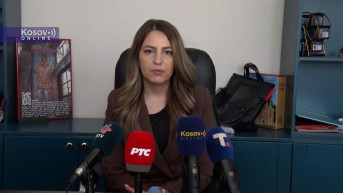
The Basic Court in Pristina only last week provided the defense teams of the three Serbs convicted over the Banjska attack with the full judgment. Jovana Filipovic, attorney for Dusan Maksimovic, says she will soon file an appeal and hopes that the Court of Appeals will deliver “a lawful judgment, rather than one influenced by public opinion,” Radio Kim reports.
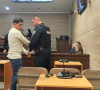
On April 24, the Basic Court in Pristina delivered a judgment sentencing Blagoje Spasojevic and Vladimir Tolic to life imprisonment for their participation in the attack in Banjska on September 24, 2023. The third defendant, Dusan Maksimovic, was sentenced to 30 years in prison. Unlike Spasojevic and Tolic, he was not arrested at the scene.
Several months after the judgment was handed down, on the anniversary of the Banjska attack, Dusan Maksimovic’s attorney Jovana Filipovic reiterated what she had maintained throughout the trial—that there was no material evidence linking her client to the incident in which Kosovo Police officer Afrim Bunjaku was killed and two other police officers were wounded.
“Everything we argued was corroborated by material evidence. The Prosecution’s claims, on the other hand, remained entirely unsupported by evidence and amounted to nothing more than hearsay. For example, the Court itself acknowledges in the judgment that there is no forensic evidence whatsoever linking Dusan to the incident. However, when providing the reasoning for the judgment convicting him, the same simple formulation is repeatedly used—that he was connected to the context of the events and had some knowledge concerning the attack that took place in the village of Banjska,” Filipovic told Radio Kim.
She reiterated that Dusan Maksimovic had been in the village of Suvi Do with friends at the time the criminal offense was committed, but that his “sin,” as she put it, was that he returned to Banjska that evening. He was arrested the following day after it was established that he had been a member of a Viber group in which messages concerning the events in Banjska had been exchanged.
“The messages mentioned in connection with Dusan Maksimovic, as we demonstrated to the Trial Panel, were not sent by him; they were merely posted in a Viber group of which he was a member. Therefore, Dusan’s only fault was that he returned to his village, to his home, that evening, and was arrested the following day without any evidence whatsoever.”
Filipovic said that an appeal against the judgment had not yet been filed because the Court had only recently served the judgment on the defense.
“We have not yet filed the appeal because we are only now beginning to draft it. The judgment was served on us last week, so we now have 30 days to file an appeal against it. After that, the case will be forwarded to the Court of Appeals for consideration.”
Maksimovic’s attorney said she hoped that the Court of Appeals would approach the case differently from the first-instance court.
“Unlike the judgment delivered at first instance, we genuinely hope that the Court of Appeals will simply read the evidence we submitted to the Court. This is not evidence of our own making, nor is it something we are discussing arbitrarily; it is evidence provided in its entirety by the Prosecution itself, and it fully corroborates Dusan’s assertion that he was not at the scene at the relevant time when the attack actually took place. What we can do at this stage is draw the Court’s attention to all the alibi evidence that was proposed from the very first day of Dusan’s arrest but which, unfortunately, was not heard. We hope that the Court of Appeals will have greater courage to deliver a lawful judgment based on the law itself rather than one influenced by public opinion,” Filipovic stressed.
The attorney agreed with some of her colleagues and politicians who have described the sentences imposed on the Serbs in the Banjska case as “draconian” compared with the sentences handed down by the Specialist Chambers to the former KLA leaders.
“Any lawyer, taking into account the manner in which the sentence was determined and all the mitigating and aggravating circumstances, would say precisely that the sentences in the Banjska case were extremely severe and that the judgment against the three Serbs in detention was, in effect, a punishment imposed for the entire group of people who are beyond the reach of the Kosovo judiciary.”


comments