
Four thousand days without the Community of Serb Municipalities
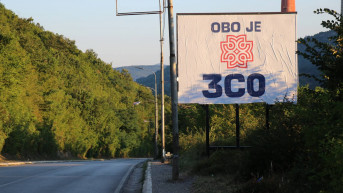
The Community of Serb Municipalities, agreed upon in the first Brussels Agreement signed by Belgrade and Pristina in 2013, has not been established by the Kosovo authorities for a full 4,000 days.
As specified in the general principles for the formation of the CSM from 2015, also agreed upon in Brussels, the Community is supposed to have broad powers, its president, decision-making authority in health, education, urban and rural planning, economic development, the right to own movable and immovable property, and the ability to be financed from Serbia.
Two months after these principles were endorsed in the presence of the then EU High Representative Federica Mogherini, in October 2015, Kosovo President Atifete Jahjaga requested the Constitutional Court to assess the constitutionality of the agreement on the formation of the Community of Serb Municipalities. Until the court's decision, she sought the agreement on the CSM reached in Brussels to be suspended.
Regarding this matter, the Constitutional Court issued a ruling on December 23, 2015, stating that the principles related to the CSM, agreed upon in Brussels, "are not fully aligned with the spirit of the Constitution," citing provisions related to equality before the law and the rights of communities and their members.
However, the ruling also states "that the Community of Serb-majority Municipalities will be established as envisaged by the First Agreement, ratified by the Assembly of the Republic of Kosovo, and declared by the President of the Republic of Kosovo."
This decision of the Constitutional Court is binding for the current government in Kosovo, yet the CSM has not been formed even during the past three years under the leadership of Prime Minister Albin Kurti.
Although the Agreement on the Normalization of Relations between Kosovo and Serbia from February 27 last year does not mention the CSM by name but rather speaks of "ensuring an appropriate level of self-governance for the Serbian community in Kosovo," Kurti has an excuse for not implementing that document: it needs to be signed. Another "argument" he raises is that the Community "is not the main priority of normalization and cannot be singled out from the package as an individual issue."
A management team composed of representatives of Serbs from Kosovo presented a draft statute of the CSM in Brussels on May 2 last year, but Kurti immediately rejected that document, stating that it was "incompatible with the Kosovo Constitution" and reminiscent of Republika Srpska. A day after the draft was presented, Minister of Local Government Elbert Krasniqi dismissed the Serbian team, and Kurti announced his "vision" for the draft based, as he stated, on the Croatian model for national minorities.
Shortly after (in early June), Albanian Prime Minister Edi Rama also "joined" the drafters of the CSM statute, sending his proposal to French President Emmanuel Macron and German Chancellor Olaf Scholz. In October, the "big five" presented the draft Statute of the Community at meetings in Pristina and Belgrade, characterized in Brussels as a "modern European proposal."
Although Kurti stated then that the proposal represented a "framework" for further discussions, no further progress had been made.
The new promise from Pristina to form the CSM was included in a protocol letter sent to the Council of Europe's rapporteur for Kosovo, Dora Bakoyannis. In it, the President, Prime Minister, and Chairman of the Kosovo Assembly committed to respecting all provisions of the agreements from Brussels and Ohrid, including the formation of the Community of Serb Municipalities.
Whether it will take another 4,000 days for this, they did not specify.


0 comments