
Garic: Kurti leads politics of conflict; Serbia will reach a solution only through difficult talks with the West representatives
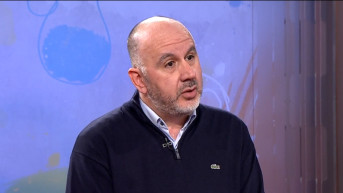
The arrival of five special representatives of the most important Western countries to Belgrade speaks of the importance they currently attach to our region. It is a new strong pressure on Serbia because of their goals, of course, but at the same time, it is a way for President Vucic to present our arguments and opinions in direct contact with the main actors, the editor of the Kosovo Online portal Milos Garic said in an interview for RTS.
Garic points out that at such meetings, even though they are very difficult, Serbia gets the opportunity to present arguments based on international law principles.
"There are no talks with Pristina and the Albanians at this moment. You cannot agree on something with Kurti and assume that it will be respected. Serbia wants a conversation, and rejects any other possibility other than dialogue, even though Pristina insists on hostility, tries to involve Serbia into conflicts from which Kurti would like to profit and gain a key argument in achieving his goals," Garic pointed out.
Garic emphasized that foreign representatives came to Belgrade with serious pressure but that Serbia defended the universal principles of international law.
"Under the leadership of Aleksandar Vucic, Serbia has built an image and is recognized as a reliable, stable state that keeps its word and fulfills what was agreed and signed. It is the only possible path that opens the possibility for positive solutions. We live in a world of injustice, but there is a crack through which we can go if we persist with such politics," Garic pointed out.
He added that Pristina was still carrying out new provocations in the previous days, trying to deprive Serbs of the right to drive their vehicles with KM license plates, despite the agreement in Brussels from last November.
"That's why it's good how the senior advisor of the State Department, Derek Chollet, reacted, who immediately clearly warned Pristina and underlined that it was a deviation from the agreement and that it could not be a way to reach any solution," Garic points out.
He indicates that, on the other hand, full support for Albin Kurti and his extremism comes from Germany.
"This can be seen through the statements of the Western Balkans Special Representative Manuel Sarrazin, as well as MP Adis Ahmetovic from the ruling Social Democratic Party of Germany (SDP), who attacks Belgrade with falsehoods, talks about a great Serbia, that Belgrade causes conflicts, and at the same time defends everything that Pristina does, but doesn't remember to say that Kurti's Self-Determination party program aims to create a Greater Albania," Garic pointed out.
He emphasized that, as long as such a situation existed, the EU would be further and further away from Serbia, and that was not Belgrade's fault.
Garlic added that it was clear that there was an immense crisis in the whole world, as well as that the EU was surviving an internal crisis.
"They gave up their principles. They lead a policy that does not include the possibility of expansion, and this problem is especially in the Western Balkans. It is so pronounced that we cannot expect to enter the EU in the coming years. The moves that Brussels is making regarding Kosovo, in relation to Serbia, but also to Bosnia and Herzegovina, distance us from the Union", Garic pointed out.
In response to President Vucic's statement that single-mindedness was shown at the Davos summit, Garic agreed and said that single-mindedness was the hallmark of totalitarian systems, fascism and communism, and that it could not have been expected that the West would slip into it.
"Serbia, with its independent approach, insisting that it makes its own decisions, and defending the universal principles of international law, does not fit into such Western politics, and that brings risks and consequences with it. That's why the pressures are so big," Garic underlined.


0 comments