
Gogic: PDK and LDK must get used to the new political reality
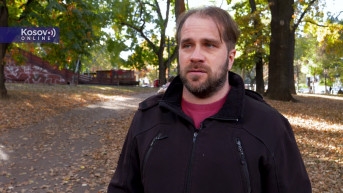
Political analyst Ognjen Gogic told Kosovo Online that the Democratic Party of Kosovo (PDK) and the Democratic League of Kosovo (LDK) must get used to the new political reality in Kosovo, as Kosovo Prime Minister Albin Kurti has consolidated his power. Gogic believes that the fact that neither parliamentary nor local elections are on the horizon in Kosovo presents an opportunity for the two parties to redefine their roles.
Regarding the PDK, Gogic said it had been clear that something was happening, given that Kosovo President Vjosa Osmani-Sadriu did not immediately sign the amendments to the Law on Specialist Chambers. He said the timing was therefore significant, as Bedri Hamza resigned one day before she returned the law to the Assembly.
He believes this suggests that Hamza anticipated such an outcome and wanted to resign before it happened.
“In a way, this represents his political defeat, because he was the one who strongly advocated the adoption of that law. It was his political project, and he was the political sponsor of those amendments. When the PDK had to retreat and reconsider its position, he did not want to be the first to bear the consequences. In other words, he assumed part of the political responsibility for that outcome,” Gogic said.
According to him, another factor is that Hamza never intended to remain at the helm of the PDK for very long.
“From the outset, he positioned himself as a leader who would bridge a certain period, until the expected return of Hashim Thaci from The Hague. He took over the party while the proceedings in The Hague were still under way, expecting that Thaci would eventually return and that he would then be able to step aside,” Gogic said.
Gogic believes that Hamza never had any ambition to remain in the position for too long.
“Above all, he is a technocrat in politics, without the charisma needed to lead a party, but also without such long-term ambitions. That is why this may be the right moment for him to bring his political chapter to a close. When the proceedings in The Hague ended, not in the way they had expected, and it became clear that these legal amendments could not stand in the way they had planned, Hamza no longer wanted to engage in political battles that were not his own. Quite simply, the time had come for him to step aside,” Gogic explained.
Our interviewee added that, on the one hand, this could be interpreted as a defeat, since Hamza resigned precisely when the initiative to amend the law had failed. On the other hand, for him, it represents a natural conclusion to a political cycle.
“He bridged a certain period at the helm of the PDK and is not necessarily stepping down out of disappointment or as someone who sees himself as a loser. Of course, this raises a major question for the party: who will take over its leadership? For now, Vlora Citaku will serve as acting party leader. In public, she has positioned herself as a possible candidate to take over the party leadership on a permanent basis.
“For the time being, however, it seems that no one is particularly eager to fight for the position, as though it is no longer a political prize or a particularly desirable post, but rather a hot potato. The question now is who will take responsibility for leading a party that clearly had no strategy for the period during which its leaders found themselves in The Hague. It is now becoming clear that they will remain there longer, at least until the appeals proceedings are completed,” Gogic said.
Gogic therefore believes that the PDK must completely redefine its political course, but that, for now, there are no visible forces within the party willing to take on that responsibility.
“That is why the leadership position may be more of an unwanted burden than a post over which there will be a major struggle,” he said.
As for the Democratic League of Kosovo (LDK), Gogic believes that both this party and the PDK must get used to the new political reality.
“Kurti has consolidated his power and, unless circumstances change, he should remain prime minister for the next four years. Neither parliamentary nor local elections are currently on the horizon.
“These parties therefore do not need to rush, as there are no indications of new elections that would force them to reorganise urgently. Both the PDK and the LDK spent a long time weighing their options over a period of a year and a half, during which Kosovo went through successive election cycles. That period was marked by anticipation of the outcome of the proceedings in The Hague. It seemed that everyone wanted to put political processes on hold, buy time and postpone decisions until the outcome of the proceedings in The Hague became clearer. Now that it is clear Thaci will not return to Kosovo in the foreseeable future, both parties face the task of redefining their roles. This applies to both the PDK and the LDK,” Gogic concluded.
He also points out that Abdixhiku has survived two no-confidence initiatives this year, while the party is due to hold new internal elections next year.
“So Abdixhiku’s opponents within the party now have time to position themselves. Rama has already stated that he wants to become not only the party leader but also the prime minister of Kosovo in the future. He therefore now has the opportunity and time to build his position within the party. However, no extraordinary developments or extraordinary party assemblies should be expected. Instead, the next regular internal party elections are due to take place next year,” Gogic said.


0 comments