
Gogic: A territorial solution for Ukraine would affect the entire Western Balkans
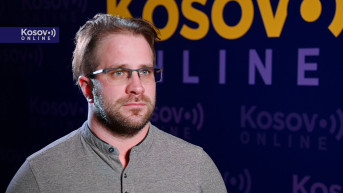
Political scientist Ognjen Gogic believes that a change in Ukraine's borders would set a global precedent, impacting Russia's future stance on Kosovo in the UN Security Council, as well as relations between Western Balkan states due to unresolved border disputes.
"Since the outbreak of the war in Ukraine and the unresolved status of its regions, both Belgrade and Pristina have rejected any similarities with the situation in Kosovo. Neither side has referred to it as a precedent, albeit for different reasons. However, if a territorial solution were to be reached, it could lend credibility to the idea that a land swap or territorial delineation between Serbia and Kosovo could be a way to resolve Kosovo's status. While this wouldn't necessarily benefit Belgrade or Pristina directly, certain actors on both sides might use it as a precedent to support their claims," Gogic told Kosovo Online.
He warned that the application of such a principle would not be limited to Kosovo alone.
"This could be used as a precedent in Bosnia and Herzegovina and Republika Srpska, but it could also open the issue of Albanians in North Macedonia, potentially leading to territorial compensations for the Albanian side. If the territorial principle becomes a standard for conflict resolution, it would open doors for many in the Balkans, where border disputes between states are common. Numerous actors in the region could invoke this precedent," Gogic emphasized.
According to him, a territorial solution to end the war in Ukraine would set a precedent with broad implications for global affairs, including Kosovo.
"But not in the way some assume, that the Americans would push for border changes as a solution. Rather, the real question is whether Russia would alter its stance on Kosovo," Gogic argued.
He supported his thesis by pointing to the possibility of Russia recognizing Donbas as an independent republic or annexing part of Ukraine.
"This could lead Russia to change its position on Kosovo, which would then shift the strategic landscape for Belgrade and Pristina. Belgrade would likely no longer be able to rely on Russia's veto in the UN Security Council. This is less about American influence and more about Russian decisions," he specified.
Commenting on increasing claims that Kosovo could become part of a broader package of swift US solutions for the wars in Ukraine and Gaza, Gogic dismissed them as speculation, noting at least two key differences that set these conflicts apart from the Kosovo issue.
"In both Gaza and Ukraine, there are ongoing armed conflicts with massive human casualties. In Kosovo, there is no armed conflict – it is an unresolved issue. There is no agreement on Kosovo's status, but it is not a war zone," he stressed.
The second key difference, he said, is the economic aspect, as the wars in Gaza and Ukraine require substantial US financial support, whereas Kosovo does not.
According to him, this raises the question of why the US would have any interest in rushing to resolve the Kosovo issue.
"During his campaign and presidency, Trump never mentioned Kosovo. Nothing suggests that Kosovo would be a priority for him, as he wants to resolve the other two crises before focusing on relations with China, which is his main concern. However, it is worth noting that Trump didn't address Kosovo in the first year of his previous term either. The issue only came up later. Perhaps, under different circumstances in a few years, Kosovo could reappear on the agenda," Gogic said.
He sees potential US involvement in resolving the Kosovo issue primarily through the reaffirmation of the Washington Agreement.
"What we might expect is that a Trump administration could, at some point, reactivate parts of the agreement that included US financial support for infrastructure and economic projects. That may be the most significant level of US engagement we should anticipate in addressing this issue," the analyst concluded.


0 comments