
Igrutinovic: Kosovo topic lost in the global crisis forest, Serbia's position legitimate

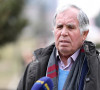
Milan Igrutinovic, a research associate at the Institute for European Studies, tells Kosovo Online that the issue of Kosovo, which unilaterally declared independence 17 years ago but is still not a member of the United Nations, has been lost in the myriad of crises that have shaken America first, and then Europe since 2008. At this moment, it is hard to see if anything serious can change, as everyone has remained with their own expectations and at the same positions.
"It started with their excessive self-confidence, believing that their decision was strong enough that Serbia would simply come to terms with it in the relatively near future and somehow agree to it through certain negotiations," Igrutinovic explains.
He recalls that the historical moment when Kosovo declared independence was before the global economic crisis, at the peak of American power, when the Iraq War was not yet near its end, but when the US still believed it could reshape regional arrangements in the Middle East at will.
"In the end, it turned out not to be the case. With the collapse of the Bush administration, which ended with the onset of the global economic crisis and during Obama's two terms, America turned more inward. On the other hand, the global public was not really interested in something that it saw as American adventurism, with the bombing of the FRY in 1999 and aggression that was outside the mandate of the Security Council and which did not have broad support from the wider global community. Although in Europe, most countries supported it at some point," our interlocutor says.
Serbia, he emphasizes, found a global platform through the United Nations to show that the unilateral declaration of Kosovo's independence could not pass so quickly and established bilateral partnerships with Russia and China, which have all validated this stance.
For pushing Kosovo through diplomatic force in the coming years, circumstances have not been favorable for the US, and things have, as Igrutinovic points out, become quite complicated. Russia used the act of Kosovo's independence, he reminds, to justify its annexation of Crimea, where a referendum was held, showing that at least they conducted a referendum in Crimea unlike in Kosovo.
"The European Union hoped that through its mediation starting in 2010 it could persuade Serbia even though the EU maintained some formal status of neutrality, but in essence, the European Commission treats Kosovo as an independent state in practice and on the ground. With the dragging of EU enlargement to the Western Balkans, with economic crises and the migrant crisis that occupied attention, with the crisis in Ukraine which eventually escalated into open war when Russia attacked Ukraine in 2021, the Kosovo issue and the Balkan topic somehow got lost in all that. And the positions remained, as they were about 15 years ago, not much changed in relation to that," Igrutinovic states.
Serbia's position, he indicates, is completely legitimate both in terms of international law and its Constitution.
"This position also has wide democratic support, and it is hard to imagine now any party or group of parties that would publicly say: 'we are for a significant change in this policy'. With this social consensus, foreign interested partners, and ultimately even Pristina itself, must reckon. There are various modalities of normalization of relations and dialogue which in recent years have fallen into crisis. I would say that it is clear to international actors that this is due to the actions of the government in Pristina and Albin Kurti.
But essentially, the topic of Kosovo has been lost in the forest of numerous crises that have shaken America first since 2007 and 2008, then Europe, and in some ways have overshadowed this region," our interlocutor says.
Positioning Kosovo on the international scene, as Igrutinovic assesses, will continue to proceed slowly because relations on the ground have deteriorated over the last 15 years, primarily due to the specific policies of Albin Kurti and his, as he says, impulse to be a completely dominant political leader in Kosovo who attempts to solidify his power internally with a "policy of defending the sovereignty and integrity of Kosovo."
"It is then difficult to see how, with such a political structure, a relaxation of relations on the ground and easing the positions of the Serbian community could be negotiated, primarily so that, for instance, conditions could be created in Serbia to say: 'these relations are not so bad, we can live with them, let’s see if in some neighborly, friendly relations we could at some point perform some form of recognition in order to settle things on those grounds.' And as long as it is so, I think it is very illusory to expect any change in positions in Belgrade," evaluates Igrutinovic.
Kosovo, not so much as a political entity, but Albin Kurti, he adds, is under open pressure from those factors in Washington who are interested in the Balkans.
"Grenell is, after all, Trump’s personal envoy for pressing issues, not only for Kosovo and not only for the Balkans. We are well aware of their public relationship. A degree of pressure on him personally exists, although I do not think that this pressure is something that negates the statehood of Kosovo or will be able to reverse American decisions from 2007 in any way. That is illusory to expect in this political era," says Igrutinovic.
0 comments