
KLI: European Commission report confirms concerning state of the rule of law in Kosovo
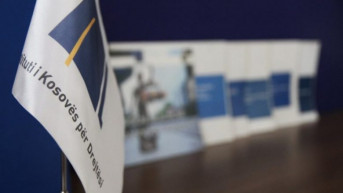
The Kosovo Law Institute (KLI) has assessed that the European Commission (EC) Report paints a concerning picture of the state of the rule of law, the functioning of democratic institutions and the implementation of reforms. The findings show that Kosovo continues to face serious problems that were also highlighted in previous reports and which the institutions have still not resolved. The Institute therefore says that the document should serve as a serious call for a change in approach.
According to the statement, the Commission’s assessment that Kosovo made no progress in the functioning of the judiciary during the reporting period is particularly concerning.
“This assessment represents a deterioration compared with the previous three years, when progress was assessed as limited. Moreover, the Commission pointed to concerning trends regarding respect for fundamental rights and the functioning of the judicial system. We believe these findings should not be viewed as isolated problems relating to a single year, but rather as a continuation of structural shortcomings, delays in reforms and a lack of institutional accountability,” the Institute said in a statement on Facebook.
It added that for years the Commission’s reports had been highlighting largely the same challenges, while the measures taken had been insufficient to bring about substantive change.
The political and institutional crisis that has persisted in Kosovo since the elections in February last year has further aggravated the situation, the Institute said, adding that institutional paralysis, repeated elections and delays in decision-making had prevented the implementation of key reforms, negatively affecting the European integration agenda.
“Instead of consolidating reforms, the judicial system continues to face challenges related to independence, accountability, efficiency and institutional functioning. Particularly concerning are the findings pointing to undue political and economic influence within the judicial system. The independence of the judiciary and prosecution service is a prerequisite for the rule of law,” the Institute said.
The statement also assesses that delays in adopting and implementing reforms, including legislation stemming from the reform process set out in the Joint Declaration of Commitment, have contributed to the persistence of problems previously identified by the Commission.
The Institute also notes that although the Commission assessed the appointment of the Chief State Prosecutor, following four years under an acting arrangement, as well as changes to the composition of the Kosovo Prosecutorial Council (KPC), as positive developments, it nevertheless pointed to serious challenges in implementing the KPC reform, concerns regarding the effectiveness of its leadership and accountability, and the need for further legislative amendments in line with the recommendations of the Venice Commission.
Regarding the fight against corruption, the report continues to record only limited progress, the Institute noted, assessing that this indicates that institutional efforts have yet to produce sustainable results, particularly in tackling high-level corruption.
“An effective fight against corruption requires not only an adequate legal framework, but also independent institutions, professional investigations, effective prosecution and final court decisions,” the statement said.
Regarding public administration reform, the Institute notes that the Report points to some progress but that structural problems persist. It stresses that a professional and depoliticized public administration is a prerequisite for effective governance and the consistent implementation of laws and public policies.
“Without stable institutional capacities and respect for the principle of meritocracy, even adopted reforms risk remaining merely formal,” the statement said.
The Institute also notes that the European Commission Report reflects criticism from civil society concerning a lack of transparency and irregularities in the selection of members of the Independent Media Commission (IMC) and the public broadcaster RTK, as well as concerns regarding the legality of decisions and fines imposed by the IMC on media outlets.
The Institute therefore called for institutional accountability and a change in the approach to reforms.
For the Institute, the key message of the report is that Kosovo cannot continue pursuing reforms in the same way and expect different results. It therefore called on the Assembly, the Government, the Judicial Council, the Prosecutorial Council and other competent institutions to take concrete measures to implement the Commission’s recommendations by establishing clear institutional responsibilities, measurable timelines and transparent reporting mechanisms.
“Priority must be given to reforms that strengthen the independence and accountability of the judiciary and prosecution service, improve results in the fight against corruption, ensure the effective functioning of the Assembly and the Government, and advance the professionalization of the public administration,” the Institute said, adding that the Report should serve as a serious call for a change in the institutional approach.

0 comments