
Milivojevic on Brussels talks: CSM the key issue, pressure directed at Pristina
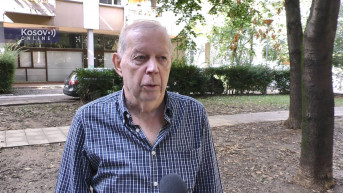
Following yesterday's discussions in Brussels, diplomat Zoran Milivojevic asserts that it is now entirely clear that the impediment to de-escalation in northern Kosovo and the continuation of substantive dialogue is Pristina's stance against the Community of Serb Municipalities, and as a result, he notes, the atmosphere is now completely different, with the central pressure directed at Kosovo's authorities, RTS reports.
Milivojevic says that we are closer to realpolitik and what the political process offers, with the possibility of finding a compromise solution.
"The Community of Serb Municipalities ensures that the situation in northern Kosovo and Metohija de-escalates in a substantive sense. To create conditions for new elections, to guarantee Serbs a normal life, and to suppress all the things that led to escalation," Milivojevic said.
According to him, the impediment to de-escalation and the continuation of dialogue is Pristina's stance against the Community of Serb Municipalities, and it is entirely clear.
"Now we have two things, the first is the EU's proposal, and the second is that Pristina does not want to talk about the CSM at all. The problem is that the CSM was negotiated, signed, and accepted in 2013, and Serbia believes it should be implemented," Milivojevic points out.
He explains that the Community of Serb Municipalities was on the table in Brussels, and the other issue was the European plan, namely the Ohrid Agreement. He stresses that, as far as the Serbian side is concerned, there are issues that can be discussed.
"There are missing persons, property rights, freedom of movement... But you have points 2 and 4. Point 2 states that both sides recognize each other's territorial integrity in accordance with the United Nations Charter. There's no talk of that because it is de facto recognition. Point 4 states that Serbia enables or does not prevent Kosovo's access to international organizations. This is access to the United Nations. Serbia is ready to discuss the Ohrid plan, but without the obligation to accept it in its entirety and with no chance that it would be signed the way it was presented. Points 2 and 4 are simply out of the question," Milivojevic emphasized.
Commenting on the statement of the European envoy for dialogue, Miroslav Lajcak, that there will be no more talks or negotiations on a take-it-or-leave-it basis, Milivojevic says that this is a new moment.
"This shows that the European Union is still interested in returning to dialogue and that the situation here should be repaired as much as possible. So, through de-escalation and through the political process. Everything else is a failure, both for the European Union and for the intermediaries. This structure now has no interest in completing its mandate without success and without some guarantees that the dialogue can continue even after this and that a political solution can be sought," he explained.
He emphasizes that it is clear that there was no discussion of sanctions against Serbia in Brussels yesterday, as speculated in the media in recent days.
"This has now become completely clear, not only because there is no consensus in the European Union on sanctions but because sanctions are counterproductive. They would antagonize the Serbian side, and the dialogue would be pushed into the background. There would be no conditions for dialogue and the political process, and that is not in the interest of the European Union, that is entirely clear," Milivojevic says.
He believes that there is no other plan or solution for de-escalation or the continuation of the political process and political dialogue except for the acceptance of the Community of Serb Municipalities and the beginning of its formation.



0 comments