
Mitic: Endangerment of rights of Serbs in Kosovo is pressure on Belgrade to make concessions
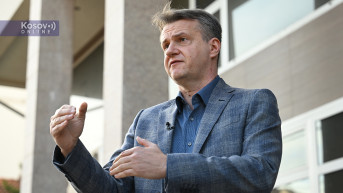
Aleksandar Mitic, a research associate at the Institute for International Politics and Economics, tells Kosovo Online that this year is very dangerous for Serbs in Kosovo in political terms because they are viewed as an instrument of pressure from Pristina and the Quint on Belgrade, as they force Belgrade, in defense of the basic rights of Serbs, to make concessions that would move towards accepting the Franco-German proposal.
"The ultimate goal of Pristina may not be to completely eliminate Serbs from the political scene and to completely diminish their rights, but to push Belgrade towards political concessions. The ultimate goal of coordination between Albin Kurti and the Quint is primarily political pressure on Belgrade, exerted through the infringement of the rights of Serbs in Kosovo. Ethnic cleansing is something that suits Kurti, but his primary concern is to pressure the West to secure political concessions by accepting the implementation of the Franco-German plan and the Ohrid Agreement, especially those points to which Belgrade still objects, related to the United Nations," Mitic says.
He points out that the past year "was catastrophic," as it started with an ultimatum from the Quint and ended with concessions from Belgrade regarding the acceptance of parts of the Ohrid Agreement that, he believes, are detrimental to Serbs in Kosovo. At the same time, he says, it is necessary to consider the broader context, starting with the "poor Brussels Agreement of 2013," which is followed by the absence of the CSM and additional pressure from the Quint for the implementation of the Franco-German proposal and the Ohrid Agreement, under which Belgrade should gradually relinquish Kosovo.
"This is a process behind which stands the coordination of Pristina, namely Kurti and the Quint, primarily Germany, the main sponsor of Albin Kurti, who is waging a general hybrid attack on the Serbian people from Banja Luka to Mitrovica, and this will not stop this year either. It is clear that Serbs in Kosovo cannot decide alone how they will appear as a political factor in these circumstances. They depend on factors from Belgrade – how much Belgrade will diplomatically fight for their rights, whether it is a session of the Security Council, other UN bodies, dialogue led by Lajcak or bilateral talks with the US and other actors, it remains for Serbian diplomacy to see. On the other hand, we have this crucial Western factor that must see to what extent it wants to participate in ethnic cleansing and political discrimination against Serbs," Mitic says.
The political constellation in Pristina, he adds, is the third factor crucial in the sense that this process suits Kurti, where he gains on the ground what he wants, and on the other hand, he receives the support of his voters.
At the same time, he emphasizes, Serbs have been "pushed" for several months to return to participating in elections, a process in which they lose political energy.
"This process is designed to be humiliating by Pristina, and there is so much legal vacuum in it that it is questionable what sense there is in losing political energy in such a process. They will always come up with something new to deny Serbs their basic rights," Mitic says.
Regarding next year, our interlocutor assesses that the international scene may be different then.
"During the summer, there are elections for the European Parliament that will bring changes that will, I believe, be favorable for Serbs. We will also have elections in the US, which may lead to changes that would somewhat favor Serbs in Kosovo, and elections in Germany, where there will certainly be a change of government, and it is possible that there, too, some more favorable winds may blow," Mitic says.



0 comments