
Nikolic meets Krois: Lack of reaction by the international community encourages unilateral moves by Pristina
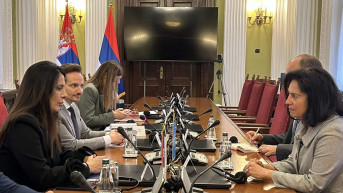
President of the Committee on Kosovo and Metohija Danijela Nikolic, together with Committee members Goran Rakic and Stefan Krkobabic, met with the Head of the United Nations Office in Belgrade Dominika Krois to discuss the security and political situation, as well as the difficult position of the Serbian people in Kosovo.
Nikolic pointed to continuous pressure, institutional discrimination and ethnically motivated incidents, stressing that since Albin Kurti came to power, more than 700 attacks on Serbs have been recorded, which, as she emphasized, further deepens the atmosphere of fear and insecurity.
“The guests were particularly interested in the course of implementation of the so-called Law on Foreigners, as well as its concrete effects in practice. Nikolic highlighted the importance of the solution that was reached in the meantime, emphasizing that it prevented the administrative persecution of nearly 20,000 Serbs, who would have been directly endangered in terms of their right to work and remain in Kosovo and Metohija by the application of this act,” the statement reads.
During the discussion, it was also pointed out that Serbs face numerous daily difficulties—from restricted freedom of movement, property usurpation and unresolved property disputes, to frequent arrests without clear evidence, selective application of the law and politically motivated judicial proceedings. She particularly emphasized problems in the functioning of local institutions, the closure of Serbian institutions, as well as pressure on public sector employees.
Speaking about the dialogue between Belgrade and Pristina, Nikolic recalled that even 13 years after the signing of the Brussels Agreement, whose guarantor is the European Union, the Community of Serb Municipalities has not been established, which, as she said, represents a key obligation of Pristina.
Nikolic assessed that the absence of a reaction from the international community encourages unilateral moves by Pristina.
The President of the Committee also pointed out that the situation had been more stable in the period when the United Nations had full authority on the ground, while the transfer of competences to Kosovo institutions led to a further deterioration of the position of Serbs, who, according to her, today do not have an adequate mechanism for the protection of their rights.
Nikolic reiterated that Serbia consistently advocates respect for international law, UN Security Council Resolution 1244 and the UN Charter, as well as for resolving all open issues exclusively through dialogue and peaceful means.
“In that context, she requested clearer and stronger support from the international community in order to stop violence and ensure the basic human rights of the Serbian people in Kosovo and Metohija. The interlocutors agreed that the continuation of continuous cooperation and open communication with the United Nations Office in Belgrade is of exceptional importance, as well as that the presence of representatives of this office at the sessions of the Committee on Kosovo and Metohija is an important mechanism for objective information and monitoring of the situation on the ground,” the Committee for Kosovo and Metohija concluded.
0 comments