
Pavkovic: EU doesn't have mechanisms to solve the dinar problem
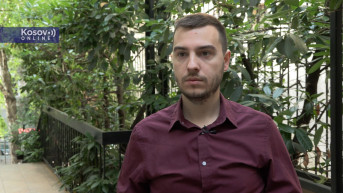
Milos Pavkovic, a researcher at the Center for European Policy, believes that both Belgrade and Pristina have shown unconstructiveness in the new round of dialogue in Brussels, while the European Union evidently lacks mechanisms to persuade the parties to solve the dinar problem in Kosovo.
"It is evident that Belgrade and Pristina have continued their old strategy of blaming each other for the lack of agreement. What's different now is that even in the previous round, Miroslav Lajcak, as the Special Representative for the Dialogue, stated that the European Union had a compromise proposal that he hoped both sides would accept. We've seen that the EU has intensified talks, specifically, there have been seven meetings solely on the dinar issue, yet there's still no agreement. This speaks to the parties' unconstructiveness," Pavkovic emphasized for Kosovo Online.
As he points out, the EU actually lacks mechanisms to compel the parties to accept an agreement.
"Even when the EU comes up with proposals, it is evident that they don't have ways to force the parties to accept them, so both Belgrade and Pristina are very unconstructive and show they don't want an agreement," Pavkovic stressed.
When asked about his thoughts on Lajcak's proposal for the parties to agree on forming a new financial entity, Pavkovic responded that it had indeed been a compromise proposal and a step forward.
"In previous rounds, the main stumbling block was the licensing of the Postal Savings Bank, which was the Serbian position, while the Kosovo side rejected that approach to resolving the issue. Now, the EU has put forward the proposal to create a new financial institution, or a bank that would have a license from the Kosovo Central Bank, and at the same time, would have the ability to accept dinars from Serbia and convert them into euros. This is indeed a compromise proposal and a step forward. However, it's concerning that the two sides have not managed to finalize an agreement on this. They have left it for another round of dialogue or for multiple rounds, and the transitional period granted by the CBK has ended, so now paying with dinars in Kosovo is prohibited. This opens the possibility for penalties, closure of businesses, and so on, which can escalate tensions and the situation on the ground. It's imperative for Belgrade and Pristina to urgently find a solution and common ground on this issue," he emphasizes.
Furthermore, he finds it difficult to assess whether both sides equally desire a solution.
"Both sides have shown unconstructiveness. Firstly, the Pristina side, because they made such a decision at a time when the overall political situation is unstable, and then insisted on banning the dinar and switching to the euro – that is one side of the story. On the other hand, Belgrade doesn't want to give up what it already has, which is the Postal Savings Bank that is already operating in northern Kosovo. The two sides clashed over this one issue, and neither wanted to make concessions. In that sense, we can talk about unconstructiveness on both sides. It is not possible to assess who is less or more constructive at this moment, but both sides show a kind of immaturity and irresponsibility, primarily towards the citizens of Serbia and Kosovo living in the north," the analyst emphasizes.
As Miroslav Lajcak is nearing the end of his term as the EU Special Representative for the Dialogue, Pavkovic assesses his entire mandate as turbulent.
"Lajcak was nominated in August 2020, and after nearly four years, his mandate can be characterized as very turbulent, with many rounds of dialogue that were unsuccessful, like yesterday's and the previous six, and there were others in previous years. If we were to extract one positive thing from his mandate, it would be the Agreement on Normalization, the so-called Ohrid Agreement. However, we see that even that is in crisis, and its implementation is questioned, so Lajcak's entire mandate is in doubt in terms of progress in the dialogue. We can speak more about regression over the past two, three, or even four years. So, the question of Lajcak's legacy is very questionable, or what will remain of the dialogue after he leaves," Pavkovic concluded.

0 comments