
Petkovic: It’s easier to cross from Gaza into Israel than over the Bistrica Bridge
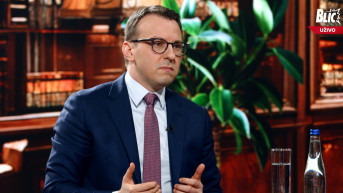
Since Albin Kurti came to power in Pristina, there have been 572 ethnic incidents recorded to date – physical attacks on Serbs, their property, churches, monasteries, and cemeteries, said Petar Petkovic, Director of the Office for Kosovo and Metohija, today. This, he pointed out, is a 60% increase compared to the period before Kurti's rise to power.
In an interview with Blic TV, Petkovic stated that on December 17 in Brussels, he would insist on a trilateral meeting, which the chief Kosovan negotiator Besnik Bislimi has been persistently avoiding, as he, according to Petkovic, evades dialogue and the obligation to establish the Association of Serb Municipalities (ASM).
He emphasized the importance of the Serbian List winning all 10 seats in the Kosovo parliament during the elections on February 9, as this would safeguard the Serbian community in Kosovo.
Seven days after the explosion incident on the Ibar-Lepenac canal, Petkovic noted that the identity of the perpetrators and those who ordered the attack remains unknown.
He once again criticized Kosovo Prime Minister Albin Kurti for organizing a press conference that Serbian journalists could not attend because they were not notified in time.
“Kurti scheduled the conference seven days earlier, inviting journalists, but informed Serbian journalists only 15 minutes before it began, knowing they wouldn’t make it in time,” Petkovic added.
He particularly stressed the motives behind the incidents, highlighting that the attack was not in Belgrade’s interest.
“This was not in Belgrade’s interest because such actions directly harm the Serbian people in Kosovo and Metohija,” said the Director of the Office for Kosovo.
He also recalled that nine minutes after the explosion, Kurti called the KFOR commander, requesting the presence of the Kosovo Security Force (KSF) in northern Kosovo to "protect critical infrastructure," which KFOR declined.
Petkovic mentioned that a month ago, Kurti expressed fears of an escalation in northern Kosovo.
“Kurti believes such escalation would benefit his party because he has nothing else to offer his citizens except continued anti-Serb policies and the occupation of the north,” Petkovic said.
He noted that considering everything Kurti has done – abolishing the use of the Serbian dinar, closing the Postanska Stedionica Bank, the Serbian Post, and Serbian institutions, and cutting off social welfare – it’s evident that the goal is to expel Serbs as part of the Self-Determination Movement’s political agenda.
“Self-Determination advocates for a ‘Greater Albania,’ where there’s no room for the Serbian people. That’s why Kurti attacks everything related to the ASM or anything positive for Serbs, as it directly opposes their principles in Kosovo,” Petkovic pointed out.
He added that international representatives feel uncomfortable when Belgrade highlights Kurti’s actions against Serbs and the violations of basic human rights in the heart of Europe.
He specifically mentioned an incident 13 days ago, when Kosovan police entered a house in Banjska where a deceased young man was being buried by his parents, a priest, and local villagers after a car accident. The police took the coffin with his body, claiming Kosovo law required an autopsy.
“They only wanted to create chaos in Banjska and torment the parents to assert that this so-called state of Kosovo decides when and how to bury their son... And there are many more examples. Who can endure this anymore?” Petkovic asked.
He added that Belgrade had warned about Kurti's terror even before Banjska, pointing to armed special forces patrolling schoolyards and the entire north of Kosovo being covered with police checkpoints, particularly the “notorious checkpoint” at the Bistrica Bridge, where Serbs have been shot at six times.
“I think it’s easier to cross from Gaza into Israel than it is to cross the Bistrica Bridge,” Petkovic warned.
However, he noted that despite this, every unilateral move by Albin Kurti is followed by statements from the international community, but no action is taken.
He emphasized the importance of returning to the status quo that existed before Kurti’s unilateral actions changed the situation on the ground.
“The international community condemns his actions, but the question remains – isn’t this encouragement for him to continue persecuting Serbs since there are no concrete sanctions?” Petkovic said, adding that the international community could act if it wanted to, citing CEFTA as an example.
He believes there is no will because Kurti is trying to accelerate the process of consolidating Kosovo's "independence," which, according to Petkovic, suits certain parties.
Regarding the continuation of dialogue, Petkovic said Serbia managed to shift the pressure over Kosovo to the negotiating table in Brussels, allowing the country to develop, implement reforms, and improve wages and pensions so citizens can have a better life.
“We have reached a point where Kurti refuses to fulfill his obligations from the dialogue. Dialogue is our obligation. If we abandon dialogue, what will we rely on in the fight for Kosovo? Since 1999, we’ve had no army or police, but we have our people and institutions. We must find a way for them to receive salaries, pensions, and for institutions to function. We use dialogue to pressure Pristina to fulfill agreements. Agreements must be respected; that’s sacred in the West,” said Petkovic.
He also stated that Pristina’s chief negotiator, Besnik Bislimi, has no interest in the ASM, even though it is an obligation Kosovo must fulfill, and that’s why he avoids trilateral meetings in Brussels.
On December 17, Petkovic said, he will insist on a trilateral meeting to address the issues directly.
“It’s important to sit down face-to-face and discuss the matters at hand. It’s easy to attack Belgrade without evidence. But Bislimi avoids dialogue,” Petkovic emphasized.
He concluded by stating that Serbia’s policy is always to participate in dialogue because problems can only be resolved through discussion.
“Without dialogue, there is violence and conflict on the ground. We fight for peace, stability, and the survival of the Serbian people,” Petkovic said.
Regarding the Serbian List’s decision to participate in Kosovo’s parliamentary elections on February 9, Petkovic said Belgrade supports this decision.
“It’s crucial for the Serbian List to win all 10 mandates in parliament, as this protects Serbs and prevents Kurti’s Serbs, like Nenad Rašic, from taking seats as mere figureheads while Kurti presents it as having a multiethnic government,” Petkovic explained.
He added that Rašic represents only himself and was “forced” into Kurti’s government without proper procedures to further “divide the Serbs.”
“Serbs are stronger than ever and will continue their struggle. They made this decision because they live in Kosovo. After our meetings, they are the ones who return to Kosovo, who must cross Jarinje and Brnjak...” Petkovic concluded.

0 comments