
Petkovic: The Serbian people demonstrated unity in the elections
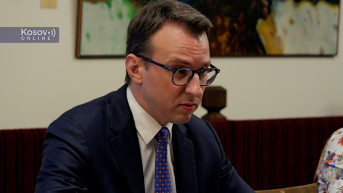
The Director of the Office for Kosovo and Metohija, Petar Petkovic, emphasized that the most important thing about the recent local elections in Kosovo is that the Serbian people demonstrated unity and that the Serb List achieved a convincing victory in Serbian municipalities and areas.
Speaking to Euronews Serbia, Petkovic recalled that the Serb List won in the first round in nine out of ten municipalities, and also won in Klokot, but with a result slightly below 50 percent, meaning a second round will be held on November 9.
“In all Serbian municipalities, the Serb List achieved a decisive victory in the first round, which shows the clear determination of the Serbs that it is the Serb List which should represent them. The turnout in Serbian areas was much higher than in Albanian ones, where it was around 39 percent — that is, 180,000 fewer votes compared to the so-called parliamentary elections in February. In Serbian areas, the turnout exceeded 60–65 percent,” he pointed out.
Petkovic stated that he was particularly pleased with the Serb List’s victory in Gracanica, where it was competing against Nenad Rasic and the united Albanian candidate.
“Albanians were at odds like cats in a bag when it came to forming the parliament and the government, but when it comes to striking at the Serbian people — they are united. That’s something we could learn when it comes to our national interests,” Petkovic stressed.
He also noted that many internally displaced persons responded to the call to come and vote, for which he expressed his gratitude.
“Now it is up to us to fight against terror with joint strength and unity. We have shown that no matter how great the power from Pristina may be in trying to erase our people, the strength of the Serbian people — with the State of Serbia, President Aleksandar Vucic, and the Government of Serbia — is even greater. We will continue to fight for the Serbian people in Kosovo and Metohija,” said Petkovic.
Asked whether the decision to withdraw from the institutions was wise, Petkovic replied that this was the wrong question — the same one asked by foreigners.
“It was a forced decision, one that the Serbs made not because they wanted to, but because they were compelled by Albin Kurti’s terror. No one mentions that. The Serb List could not continue to endure Kurti’s oppression — and even now, they still do. But at that time, it was necessary to tell the world that the Community of Serb Municipalities (CSM) must be formed. It has not been formed because Kurti refuses to do so. That shows how wise President Aleksandar Vucic’s decision was to fight for the CSM. Kurti’s behavior is the best litmus test. He attacks Vucic because Vucic works in the interest of the Serbian people; he wants to destroy the Serb List because it fights for the survival of Serbs, and he opposes the CSM because it is in the interest of the Serbian people,” Petkovic explained.
He underlined that the withdrawal from institutions was necessary to draw the attention of the international community and organizations in Kosovo to the need to put pressure on Kurti, otherwise there would soon be no Serbs left in Kosovo.
“It was necessary to point out all the human rights violations, because no one was listening to the Serbian people. In Brussels, we constantly speak about Kurti’s terror. It is obvious that foreigners are on Kurti’s side, giving him wind at his back. Occasionally, a statement appears when some Serbian institution is shut down or when the use of the dinar is banned, but there are no real or substantial measures or pressure against him,” he said critically.
Asked whether it would now be difficult for Serbian politicians in the municipalities after all the decisions made so far, Petkovic admitted it would be challenging.
He said he expects problems to continue, as Kurti will keep using central institutions to exert pressure on Serbian mayors.
“As a state, we will continue to assist our people in Kosovo and Metohija, primarily financially, while at the international level we will continue to highlight what is happening. More and more people in the West are realizing that Kurti is the one who represents the problem. The decision by the United States to suspend the strategic dialogue with Pristina, while continuing it with Belgrade, sends a message to Kurti. From the U.S. perspective, Kurti has crossed a red line — Washington wants peace and stability in the Balkans, not new conflicts. This is a message that such treatment of Serbs must stop, because Kurti has launched an all-out assault on everything Serbian in Kosovo and Metohija. He is doing everything possible to drive the Serbian people out,” he explained.
Petkovic noted that President Vucic, at all meetings, Foreign Minister Marko Djuric in his activities, and he himself in the dialogue, consistently draw attention to what is happening.
“We must continue to speak up about what is happening. What is underway is a serious hybrid war against the State of Serbia. You cannot imagine what kind of misinformation is being spread among Westerners. I had to convene the Quint to inform them of what happened in Brussels. Even though Bislimi refuses to negotiate or reach an agreement, completely different information emerges afterward, blaming us. We have to explain and open space for the truth,” Petkovic emphasized.
He said that Serbia will continue to provide financial support to the Serbian people in Kosovo.
“The fact that our mayors have been elected and that the Serb List is again leading the four northern municipalities guarantees the continuation of all projects of the Serbian state,” he underlined.
Petkovic reminded that 400 new jobs have been opened in the health sector, and that since the pandemic, over 2,000 new positions have been created in that field.
He also pointed out that many people have been employed in other institutions as well.
“Financially, we will continue to further motivate our citizens to remain in Kosovo and Metohija, no matter how difficult it may be,” said Petkovic.
Speaking about the dialogue, Petkovic recalled that every time he travels to Brussels for talks, he insists on the Community of Serb Municipalities, since it represents a framework for the institutional, collective, and individual rights of Serbs, which are currently being violated.
“If we want to preserve our people, the Community of Serb Municipalities must be established, regardless of Kurti’s and the opposition’s resistance in Pristina,” said Petkovic.
Asked why it must be established given Kurti’s long-term refusal, he replied that Pristina signed the Brussels Agreement, which provides for the creation of the CSM, and which was subsequently ratified in the parliament with a two-thirds majority.
“It is their obligation to implement what was agreed — not only a political obligation, but something that is part of their so-called legislative system,” said Petkovic.
He also pointed out that the problem lies in the fact that both Albin Kurti and Besnik Bislimi refuse to discuss issues concerning the everyday life of people at the technical level.
The dialogue, he reminded, is related to the normalization of relations, as a result of the UN General Assembly resolution of 2010, which moved the dialogue from the UN framework to that of the European Union.
“The situation is what it is: 22 out of 27 EU member states recognize Kosovo, which makes things very difficult for us. We speak the least with Bislimi or Pristina — most often we speak with the third party that stands on Pristina’s side,” noted the Director of the Office for Kosovo and Metohija.
He added that Pristina sees the dialogue as a platform for recognition of Kosovo by Belgrade, which, he stressed, will never happen. He reiterated that the dialogue concerns practical matters that improve the everyday life of citizens, as that is what normalization means — not status-related issues.
“For us, dialogue as a political tool — as a mechanism in the fight for our people — has been useful,” underlined Petkovic.
According to him, since the Brussels Agreement was signed in 2013, all pressure was directed to the negotiating table in Brussels — until Albin Kurti came to power in Pristina. In the meantime, he said, Belgrade focused on economic development and national recovery, which is why today the Office for Kosovo and Metohija has more resources to assist the Serbian people and the Serbian Orthodox Church in Kosovo.
“If we give up on dialogue — what is the alternative? The solution must be found through dialogue, and it must be political. Anything else leads to instability,” Petkovic warned.
Asked whether the EU might prefer a frozen conflict to maintain leverage over Serbia, Petkovic said that he is now in a more comfortable position to insist on what Pristina has failed to implement.
“I am now in a stronger position in the dialogue, because when we sit at the table, my first demand is the CSM. We have made many compromises for the sake of peace and cooperation — now it is Pristina’s turn to deliver the CSM. Out of the 15 points of the Brussels Agreement, all have been implemented except the first six, which are Pristina’s obligation, and I will not move an inch from that position,” Petkovic stressed.
Regarding the visit of European Commission President Ursula von der Leyen, where Kosovo was also discussed, Petkovic said that Kosovo is the most important national issue, and that it is clear that the EU has long linked Serbia’s EU accession path with progress in the dialogue with Pristina.
“We keep explaining to them that we cannot be hostages of Albin Kurti, who refuses to talk in Brussels and refuses any agreement,” Petkovic stated firmly.
He added that progress on the issue of missing persons has been made thanks to Belgrade, which does not see the matter as political but as a deeply humanitarian issue that must be resolved so that the families of the missing — and the public — can learn the truth.
“That is the path to reconciliation. But while Pristina exploits the topic, we are the ones opening sites,” noted the Director of the Office for Kosovo and Metohija.
Asked how interested the EU is in the arbitrary arrests of Serbs in Kosovo, Petkovic said that the Union is not interested, because its focus is on Ukraine, and therefore there is no serious pressure or engagement, even though, he underlined, the issue could easily be resolved if someone truly wanted to.
Asked whether he expects a new government or elections in Kosovo, he replied that he does not know, since Kurti is constantly trying to form a majority. He reminded that it took months to elect the Speaker of Parliament, and afterward, there was, as he put it, a “serious foul” with the appointment of Nenad Rasic as Deputy Speaker, thus directly violating their own rules.
“The post of Deputy Speaker of Parliament does not belong to Rasic, because the candidate for that position must be proposed by the Serb List — that is, by the majority of Serbian MPs,” Petkovic stressed.
He concluded that there is no rule of law in Kosovo, because “whatever Kurti decides, he enforces.”

0 comments