
Petronijevic: Pristina’s demands unreal; Radoicic’s extradition out of question
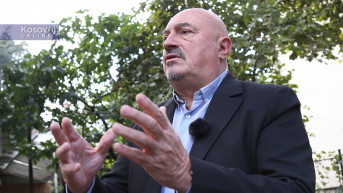
Attorney Goran Petronijevic stated that many of Pristina's demands were unrealistic, including the request for the extradition of Milan Radoicic. He added that Kosovo was constitutionally, legally, and internationally an integral part of Serbia, and from that perspective, "extradition is not an option".
Regarding the Resolution adopted by the European Parliament, Petronijevic says for Kosovo Online that the document seems "balanced".
"For the first time in a long time, the Resolution seems balanced. Pristina is not accustomed to balance; they are steeped in their victim mentality and expect everything that happens and is said to be distinctly anti-Serb. In this situation, that didn't happen, and, of course, Pristina is clearly displeased. However, many of their demands are unrealistic, including the request for the extradition of Radoicic. We know the status of the self-proclaimed Kosovo, that it is constitutionally and internationally an integral part of Serbia because it is not an internationally recognized state. Any extradition in that direction is not an option," Petronijevic stated.
He adds that Pristina is accustomed to "explicit and unambiguous favor from the international community or, in this case, the EU".
"Whenever they hear a balanced tone, such as their obligation to establish the CSM, in accordance with the decisions of the Brussels Agreements from 2013 and 2015, which is clear what it means, they are not happy about it and immediately raise a fuss. At this moment, I would say that balance is causing problems for Pristina," Petronijevic believes.
He emphasizes that it's essential to note that European Parliament resolutions are not binding but rather recommendatory.
"One should not disregard their content in any way; they are significant for many issues and are adopted on important matters that become relevant in the European Parliament at that time, such as the escalation or the announcement of escalation in Kosovo and Metohija at this moment. When you take a closer look at what is written in that Resolution, in my opinion, it aims to prepare the atmosphere for de-escalation and for Belgrade and Pristina, as they say, to return to dialogue, to the table, to return to talks, which has been Belgrade's stance from the very beginning. The content of the Resolution regarding a potential threat to Serbia or Belgrade from the announcement of sanctions is a very long and much more complex process than what can be seen at first glance," Petronijevic points out.
He adds that it's a fact that Belgrade has no connection to the events in Banjska.
"Such a fact does not support the claim that Belgrade is involved in what happened down there. We know exactly what happened there. Even if there were such recommendations or even the adoption of a decision on sanctions, it would be reviewed through the consensus of EU member states. We are almost certain that such a consensus could not be reached at this moment, and therefore, people should not interpret these sanctions in a way that they are a significant threat. It is a kind of, I would say, a threat from a second party," Petronijevic assesses.
He emphasizes that the Resolution calls on Belgrade and Pristina to return to negotiations, but it also imposes certain obligations on Pristina, not just Belgrade.
"It assigns the task of investigating everything that happened in Banjska, ensuring that the investigation goes to the end, which is also our position. Unfortunately, as far as we have seen so far, cooperation with Pristina's authorities in this direction is not good, and they obviously see it as their privilege. They do not share data, details, and everything else that they should with the investigative authorities of Serbia, and even with the international community. We understand why they do not do it because they will try in every way to manipulate wherever they can to the detriment of Serbia. We hope it will not be of that character that cannot be noticed and dismantled as such a lie," Petronijevic says.
He adds that Pristina is also bound to conduct a thorough investigation and bring to justice all those troublemakers who have committed many incidents and attacks against the Serbs, such as the attack on Christmas Eve.
"All these things are obviously something that the MEPs who voted had in mind as a kind of introduction to what happened in Banjska. I would say that the message being sent is balanced after a long time because they say - Belgrade and Pristina are called upon. They say, investigate what happened in Banjska, but also investigate all other incidents and attacks on the Serbs, which in other words should mean that these previous incidents precisely led to this kind of situation, or to this act that happened in Banjska," Petronijevic emphasized.
He adds that he believes the Resolution, for now, has a kind of conciliatory tone.
"Do not take the mention of any measures that could be applied against Serbia seriously because I am almost certain that they will not happen," Petronijevic concludes.


comments