
Radojevic: The Serbs will boycott the upcoming elections in Kosovo
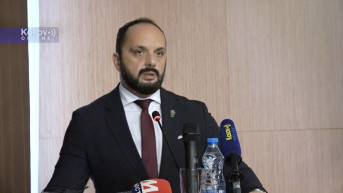
Milan Radojevic from the Serb List said today that for 10 years the Serbs from Kosovo had offered a chance for dialogue and had tried to solve all problems and open issues through Pristina institutions, but they had failed because there had been no will on the other side, RTV reports.
In an interview for Tanjug, he said that the citizens had demanded responsibility from political representatives, but also to leave those institutions that could not help them.
Speaking about leaving the institutions, Radojevic says that it was not just a political decision but a forced move.
"If the police officers decided to leave those institutions, they were aware that they could not help their citizens on the ground. If the judicial workers, judges, and prosecutors also left the institutions, they were also aware that there is no justice for the Serbs in Kosovo and Metohija. So that was a forced move, it was not some whim, but for 10 years we gave those institutions and dialogue, as well as the international community, a chance to exert much-needed pressure on Pristina and form the Community of Serb-majority Municipalities. Unfortunately, nothing of that happened," he said.
When asked what he thought about the upcoming elections in the four municipalities in the north of Kosovo, Radojevic says that the position of the Serb List is clear, we will not participate in them until the Community of Serb-majority Municipalities is formed and special units are withdrawn from the north of Kosovo.
"I am absolutely convinced that since the Serb List is followed by the voice of the people, this time we listened to the opinion of the people, who are absolutely against going to the elections, so I am absolutely convinced that the Serbs will boycott the upcoming elections," Radojevic said.
Asked if anyone could put pressure on the Prime Minister of Kosovo, Albin Kurti, to form the CSM and to remove the Special Forces from the north, he says that this is a question for the international community since the European Union was also the guarantor of the implementation of the Brussels Agreement.
"Unfortunately, in the past 10 years, except for some brief announcements, some statements to the media, and I'll be a little more direct to say, some tweeting and writing on social networks, we have not felt any concrete pressure that would have been exerted on Pristina and on Albin Kurti to implement the Brussels Agreement and to form the Community of Serb-majority Municipalities. The responsibility for the non-implementation of the CSM is not on the Serbs in Kosovo, as someone is trying to shift it now. The fact that the Serbs do not participate in elections and the Serb List does not participate in the elections, someone is trying to transfer the responsibility to the Serbs, and we will later be an obstacle to the formation of the CSM. That is not true," he said.
According to him, the Serbs waited for that to happen for 10 years, and for 10 years they gave a chance for the implementation of the Brussels Agreement, which did not happen, and the international community bears the greatest responsibility for that, because of its inertness in the moves that Pristina took, especially in the last two years when Albin Kurti was at the head of the government, it led to a situation where not only the Brussels Agreement is not implemented, but the institutions in the north of Kosovo have also collapsed.
He reminded that the most important part of the Brussels Agreement was the formation of the CSM and pointed out that the current Pristina government did not even want to discuss that topic.
"In fact, that was the biggest reason why the Serbs entered the Kosovo institutions and why they accepted the participation in the elections as well as the implementation of this agreement. After 10 years, we can say that it was the only success, but we must admit that it was also what the Serbs in Kosovo and Metohija needed most and that was peace. The Brussels Agreement bought 10 years of such peace for the Serbs in Kosovo and Metohija. Of course, it is not the peace that the Serbs in Kosovo and Metohija expect, but it gave some time," Radojevic said.
According to him, the Serbs in Kosovo gave a chance to the Brussels Agreement, they went to the elections even though it was not popular 10 years ago, they entered the institutions, and thus all parts of the Brussels Agreement that concerned Serbia were absolutely implemented.
When asked about the increasingly frequent attacks on the Serbs in Kosovo, Radojevic says that the reason for this is the inertness of the international community.
"In fact, it is necessary to do something more than ordinary announcements in the event of attacks on the property of the Serbs, on the property of the Serbian Orthodox Church, and attacks on the Serbs. You have noticed that the Serb List criticized the representatives of international communities in their announcements because, we must say, they have different arcs when it comes to attacks on the Serbs, armed attacks, wounding, and attempted murders, where these are called incidents. Be careful, if someone tries to kill a person and we are talking about members of the Special Units, it is not an incident, it is an attempted murder and that is how it is characterized by the judicial authorities who launched an investigation against those policemen. So, indeed, for us as a political party, but also for the Serbs living in Kosovo and Metohija, it is extremely shocking and unbelievable to hear from representatives of the international community that such things are called incidents, instead of calling a spade a spade," he said.
According to him, the international community needs to put much stronger, more concrete pressure on Albin Kurti and the Government in Pristina in order to prevent this.
When it comes to the visa liberalization that was approved yesterday for the citizens of Kosovo, Radojevic says that Pristina has been rewarded with it.
"And then, the citizens of Kosovska Mitrovica, but also all the Serbs in Kosovo and Metohija, ask the question of whether there is justice for the Serbs in Kosovo and Metohija, and that is probably the question that we will continue to ask in the future, but what is up to us is to continue fighting. Yes, we suffer injustice, but we believe that justice will be on our side," Radojevic concluded.



0 comments