
Radosavljevic: The Serbian community in Kosovo is the most disintegrated since 2013
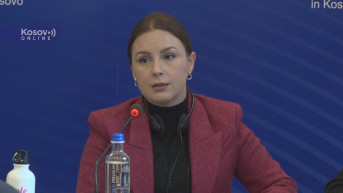
Jovana Radosavljevic, Director of the “New Social Initiative,” stated in Pristina during a discussion on minority rights as part of the presentation of the EU Report on Kosovo for 2024, that the Serbian community in Kosovo is the most disintegrated it has been since 2013, with no prospects of improvement. She also addressed the misuse of the Kosovo Police by the ruling party and cases of brutality against Serbs.
Aivo Orav, Head of the EU Office in Kosovo, opened the discussion, which focused on public administration reform, freedom of expression, fundamental rights, and more, emphasizing that the aim was to gather feedback on the report and recommendations.
He highlighted that 92% of Kosovo citizens support the country's EU accession:
“More than 50% believe this accession will happen before 2030. Over 50% think the reason Kosovo is not progressing toward the EU lies with the European Union itself—that it does not treat Kosovo fairly, imposes conditions, and delays progress. Only a minority believe Kosovo needs to do more to align its legislation with EU standards and implement those changes,” said Orav.
Jovana Radosavljevic pointed out that even before the withdrawal of Kosovo Serbs from institutions, there was a lack of representation of minority communities in both central and lower levels of government:
“This is a significant problem, and the question arises as to why minority communities are not adequately represented in these institutions. There are ministries and institutions where there isn’t a single representative of the Serbian community, for example,” she said.
Radosavljevic emphasized that many factors contribute to this issue, including some predating the withdrawal of Serbs from institutions. Among these is the criminalization of an entire community and the creation of a negative perception of this community by the ruling party, along with the lack of internal dialogue and meaningful efforts to include these people in institutions.
“The Office for Communities is mentioned in the Progress Report, and it is concerning, as noted, that for over three years, we have not had a director for this Office, which is vital for minority communities. Additionally, there has been a problem with allocating funds intended for minority communities, with most of this assistance being directed to organizations from the majority community,” Radosavljevic said.
One of the obstacles encountered regarding the representation of non-majority communities in institutions, Radosavljevic highlights, is the issue of the Law on the Use of Languages and the obligation of officials to be able to communicate in official languages with their citizens.
When asked what the Government of Kosovo could do to build trust between institutions and Kosovo Serbs, Radosavljevic stated that it should "stop doing what it has been doing so far," referring to policies that have had far-reaching consequences for the Serbian people in Kosovo.
She emphasized that in recent years, the Serbian community has felt as though it belongs nowhere, torn between Pristina, Belgrade, and the international community.
"Why are we in this situation now? The focus in recent years and months has been on northern Kosovo, but everything that has happened in northern Kosovo has had implications in the south. The problem is that, especially for the Serbian community in Kosovo, the process of integration is a very painful process, one in which they unwillingly participate and are not part of the negotiations nor involved in decision-making processes regarding how this integration will occur," Radosavljevic said.
The Serbian community in Kosovo has been the most disintegrated since 2013, she added, with no prospects for this situation to change.
"On top of that, we have the bypassing of dialogue frameworks and addressing issues that are part of the dialogue process, which the Kosovo government treats as internal issues of Kosovo. This is done without consultations or considering the needs of citizens. Certain services provided by Serbian institutions to their citizens are being terminated, while no alternatives are offered to these people. Ultimately, it is the citizens who suffer the most from the consequences of these discontinued services or adapting their lives to the new reality," Radosavljevic stated.
A positive aspect mentioned in the report, she pointed out, is progress regarding Kosovo's membership in CEFTA. However, on the other hand, she highlighted a concession made by Kosovo authorities concerning the lifting of the ban on the import of goods from Serbia. She reminded that this was a security measure, and no cases of weapons or ammunition being found in those same trucks have been recorded, resulting in unsatisfactory outcomes.
"This measure is now implemented only at one border crossing—Merdare—bypassing two northern crossings, Jarinje and Brnjak. These crossings should have collected revenues and taxes from imports, which would have gone directly into the Northern Development Fund, one of the very effective and important mechanisms that resulted from the Brussels dialogue. The problem remains unresolved; imports are slow, and Serbian goods in the north are almost non-existent," Radosavljevic stated.
Another important issue that must be addressed in building trust between Kosovo Serbs and institutions, she said, is the misuse of the Kosovo Police by the ruling party.
"Cases of police brutality against citizens further complicate the idea of achieving upward progress in building trust," Radosavljevic said.
She also stressed the need to change the narratives coming from authorities in Pristina.
"The narrative must change, and we need to redefine what a multiethnic Kosovo means. Over time, this term and its perception have become completely distorted. A multiethnic Kosovo should be a civic society that includes different ethnic groups enjoying equal rights, not a society dominated by one majority community and 'other' minorities," Radosavljevic said.
Rexha: Ruling Party Must Stop Attacks on Journalists
Xhemajl Rexha from the Association of Journalists of Kosovo spoke about freedom of speech in Kosovo and highlighted the major problem of journalists' safety.
"The report states that 2023 was the most difficult year in terms of journalists' safety in recent years due to attacks on journalists in the north. In five weeks, there were 30 physical assaults. We are interested in monitoring these cases, and some of them have gone to court," Rexha said.
He noted that there were various attacks during 2024 as well, not all of them physical, but in other forms, many of which came from senior public officials.
The Association of Journalists of Kosovo calls on the ruling party to stop attacks on journalists and the encouragement of attacks on media workers, he emphasized.
"As elections approach, we are concerned that the situation will worsen, as the last two weeks will see the media play a crucial role in monitoring campaigns and ensuring equal space for all candidates," Rexha said.
He also pointed out that the Law on the Independent Media Commission poses significant problems for the Association, as civil society was not involved in public discussions during the law's drafting.
"We presented our remarks and concerns, but the Government of Kosovo did not consider the expert reports from the Council of Europe, which found that some points were not in accordance with Kosovo's Constitution," he said.
Rexha emphasized that Serbian-language media in Kosovo mostly do their jobs professionally, but studies show that the majority of the Serbian population in Kosovo rely primarily on media based in Belgrade.
"Unfortunately, there is a stark contrast between the portrayal of Kosovo in these outlets and reality. Many media outlets controlled by ruling parties in Belgrade engage in hate speech against Albanians and Kosovo, and they use inappropriate language even towards people within Serbia who oppose the government and its policies," Rexha said.
Additionally, Nikol Farnsworth from the Kosovo Women's Network spoke during the discussion about women's participation in public administration, while Arberesha Loxha from the Group for Legal and Political Studies addressed public administration reform.

0 comments