
Sljuka: The focus of the Brussels Dialogue must be on the closure of Serbian institutions – This is the burning issue for Serbs in Kosovo
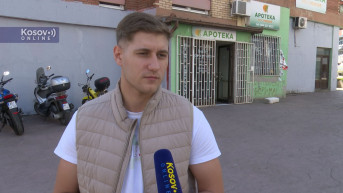
Aleksandar Sljuka, associate of the non-governmental organization New Social Initiative, stated that the closure of Serbian institutions – such as today’s raid on the RFZO (Health Insurance Fund) and the Pension and Disability Insurance Fund in North Mitrovica – should be the main focus of the Brussels dialogue between Belgrade and Pristina, because this is currently the “burning issue” for Serbs in Kosovo, and it is the citizens who suffer the most from the consequences.
“Dialogue certainly needs to be conducted, but under these circumstances, it should focus on such issues. When we have closures of institutions – and this is just one of a series of numerous closures in the past year and a half – I believe the dialogue should primarily be directed toward resolving this crisis, because that is where the citizens suffer the most,” Sljuka told Kosovo Online.
He stressed that while all other issues within the Brussels dialogue are indeed important, this is the “burning issue” that the EU and others are “ignoring and tolerating.”
“This is silence in a fundamental sense regarding the closure of institutions that are of essential importance for the citizens of Kosovo – not only for the Serbian community, but also for others, including Albanians. If such silence leads to worsening conditions in the community, then all those other issues will, if not now, then in the future, seem irrelevant or less important,” Sljuka underlined.
He added that the Brussels dialogue should also address the “neglected issues.”
“As we face new crises, we neglect previous issues. What happened to the issue of the dinar? We had seven or eight rounds of talks that were broken off, no solution was reached, and we have seen no outcome. People are still forced to leave Kosovo to withdraw their money from the budget of the Republic of Serbia. That is just one of the many unresolved crises,” Sljuka explained.
He therefore believes that the essence of the dialogue should be what “primarily burdens citizens at this moment.”
“And once that is resolved, once a degree of normalization and de-escalation is established, then the ground will be more fertile for addressing larger issues,” he stressed.
Commenting on yesterday’s meeting in Brussels between representatives of Pristina and Belgrade, Sljuka said that judging by their statements, “it seems as if they were not even at the same meeting.”
“In addition to the lack of results, we again have contradictory statements from both sides. From what Petković and Bislimi said, it sounds as if they were not actually at the same meeting. I think this is a problem that has been going on for some time, and in my opinion, it is precisely the EU, and now Sørensen as facilitator, who should resolve it,” Sljuka stated.
He expressed confidence that either the facilitator himself or the EU should, after each meeting, issue a statement clarifying what was on the agenda, what was actually discussed, and what both sides presented.
He noted that the best example is the issue of forming the Commission on Missing Persons, which was previously thought to have been resolved.
“In December last year, it was said that the commission had de facto been established and was expected to begin work. We all expected that to be a breakthrough – a humanitarian issue in the interest of both sides to be resolved as soon as possible – with progress perhaps by January or February this year. But now, from these statements, at least from Bislimi’s side, the Serbian side understands that there are still some reservations about the work and functioning of the commission, and that supposedly only now have these been removed. But the fact remains that the commission has not yet begun work, nor has it held its first meeting,” Sljuka said.
He assessed that the Kosovo government, currently in a caretaker mandate, does not have the legitimacy to conduct politically charged dialogue.
“It should not be making any major decisions – that is why it is called a caretaker government, limited to technical decisions only. And while the Brussels dialogue is formally at a technical level, it is deeply politically charged. There are many sensitive issues for the citizens on both sides, and having someone with questionable legitimacy negotiating on behalf of the citizens of Kosovo can be highly problematic,” Sljuka warned.
He added that the current Kosovo government, despite lacking citizens’ trust, seeks to maintain the appearance of political strength and to continue asserting itself on key issues.
0 comments