
Stojanovic: The primary interest of the US is to stop the war in Ukraine, Belgrade-Pristina talks pushed to the background
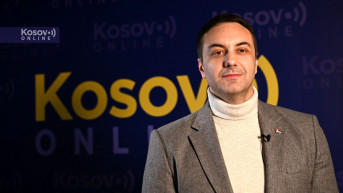
Bogdan Stojanovic, an associate of the Institute of International Politics and Economics in Belgrade, says that based on the new US National Security Strategy it can be concluded that America’s primary interest is to stop the war in Ukraine as soon as possible, and that the issue of resolving the war in Ukraine carries consequences for Serbia. He believes that talks between Belgrade and Pristina will be pushed to the background until the issue of the Ukrainian conflict is resolved.
“Serbia, and Kosovo as part of Serbia’s territory, is not explicitly mentioned anywhere in the strategy, but we are a small country and any global shock affects circumstances here as well, so we feel the issue of the war in Ukraine on our own skin. We see what is happening with the problem of energy supply. For Russian interests it is not even two percent of total global energy flows, but for us it is everything, both for the functioning of industry and for everyday life. So from that perspective the issue of resolving the war in Ukraine certainly carries consequences for us too,” Stojanovic told Kosovo Online.
The new US National Security Strategy was signed by President Donald Trump, and our interlocutor notes that it is customary for every American president to adopt such a strategy during his term.
This one, he points out, has many new elements.
He says it is interesting that neither China nor Russia is highlighted in the strategy as an objective security threat to American interests, while on the other hand the US ally, the European Union, is the most criticized.
“The main object of criticism throughout the strategy is the EU. The strategy speaks of Europe’s civilizational decline, of cultural collapse, and says that Europe must turn inward, and it even very explicitly encourages right wing, national options in these countries to take power in the EU. When you read these 30-odd pages, the general conclusion is that the primary interest of the US is to stop the war in Ukraine as quickly as possible because, as it says, there is a potential for unintentional escalation. Trump is very critical of the EU, which he believes could cause that unintentional escalation that would lead to catastrophic consequences,” our interlocutor stresses.
Given these critical tones and other guidelines in the strategy, when asked who can be expected to deliver a solution for relations between Belgrade and Pristina – the US or the EU – Stojanovic says the question is also what role Russia will have in all of this.
“It seems to me that we are ‘small change’ in these big global divisions. We are now facing, on the world stage, a confrontation that may even be stronger than anything seen during the Cold War, and the US has a goal, in general, with Trump trying to portray himself as a peacemaker. He said he stopped seven wars, including the war between, as he puts it, Kosovo and Serbia, which we know is far from the truth. However, it seems to me that the issue of Kosovo and, in general, the talks between Belgrade and Pristina will be pushed to the background until the issue of the Ukrainian conflict is resolved, because that is something of primary interest and, as stated in the strategy, even a matter of survival for the whole of Europe and even the world,” Stojanovic says.
In his assessment, Trump in this term, which is his last as president, will not be able to implement everything outlined in the strategy because US foreign policy, as he says, is like a large tanker that cannot turn and change direction quickly, but needs time to alter course.
“Trump is clearly attempting this. Parallels are often drawn between him and Gorbachev in the sense that Gorbachev was the man who dismantled the Warsaw Pact and led to the collapse of the Soviet Union as a former empire, and that Trump could be the man who will bring about the collapse of the European Union and the downfall of the NATO alliance. That sounds too harsh, although there are definitely processes moving in that direction, but I still think it is extremely difficult and that it certainly will not happen in this term,” Stojanovic concludes.

0 comments